Nigeria Eyes Green Industrialisation As Alake Receives Critical Minerals Roadmap At AFNIS 2026

0
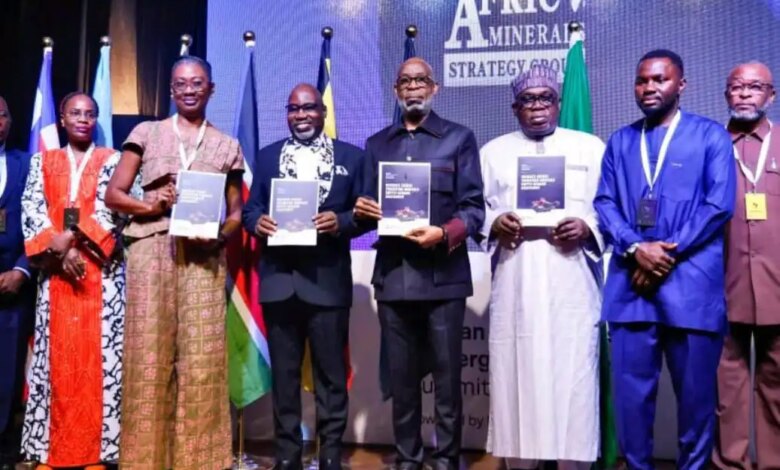
Nigeria has taken another step towards harnessing its vast mineral resources for industrial development and clean energy transition following the presentation of a landmark Critical Minerals Report to the Minister of Solid Minerals Development, Dr Dele Alake, at the 5th African Natural Resources and Energy Investment Summit (AFNIS 2026).
The report, prepared by the Council for Critical Minerals Development in the Global South, provides a strategic blueprint for leveraging Nigeria’s abundant deposits of lithium, copper and bauxite to drive green industrialisation, expand domestic manufacturing and strengthen the country’s position in the global clean energy value chain.
The report was officially presented to the minister during a ceremony at the State House Conference Centre, Presidential Villa, Abuja.


Receiving the document, Dr Alake described the report as a critical policy instrument that aligns with the Federal Government’s agenda to transform Nigeria from an exporter of raw minerals into a producer of value-added products.
“By mapping domestic demand, supply, and trade patterns, this report provides mineral-specific policy pathways to leverage Nigeria’s resources for our own green industrialisation,” the minister said.
According to the report, Nigeria’s rich endowment of critical minerals, including lithium, copper and bauxite, closely matches the country’s growing demand for minerals required in solar photovoltaic systems, battery energy storage technologies and electric vehicles.
It assesses Nigeria’s domestic demand, current supply capabilities and trade patterns while identifying existing gaps and outlining strategies to close them through targeted investments, local processing and manufacturing.
The Council for Critical Minerals Development in the Global South said the next phase of collaboration with the Ministry of Solid Minerals Development would focus on developing a mineral-to-manufacturing localisation roadmap designed to retain greater value within Nigeria.
The initiative will also promote stronger South-South investment partnerships aimed at connecting Nigeria with manufacturers, investors and technology partners across emerging economies while supporting local stakeholders to advance green industrialisation projects.
The report marks the culmination of a collaborative process that began during AFNIS 2024, involving the Council, the Federal Ministry of Solid Minerals Development and Core International.
The Council, jointly hosted by Sustainable Energy for All (SEforALL) and the Global South Centre for Clean Transportation, was established to support emerging economies with data-driven strategies for building secure mineral supply chains that stimulate domestic industrialisation.
It also works with governments to develop policies that promote mineral beneficiation, encourage local value addition and strengthen manufacturing value chains capable of supporting sustainable economic growth.
Stakeholders at the summit said the report provides Nigeria with an opportunity to position itself as a leading supplier of processed critical minerals and clean energy manufacturing inputs, while accelerating economic diversification and supporting the country’s energy transition goals.
The presentation formed part of activities at AFNIS 2026, which brought together policymakers, investors, industry leaders and development partners to explore opportunities for unlocking Africa’s natural resources for sustainable development.