Nigerian govt outlines measures to reduce current 90% importation of medical equipment in West Africa

The administration of President Bola Ahmed Tinubu said it has introduced robust federal initiatives aimed at eliminating vulnerabilities in the supply chain and significantly enhancing local manufacturing capabilities in order to address the concerning fact that between 85% and 99% of medical equipment and in vitro diagnostics in West Africa are presently imported.
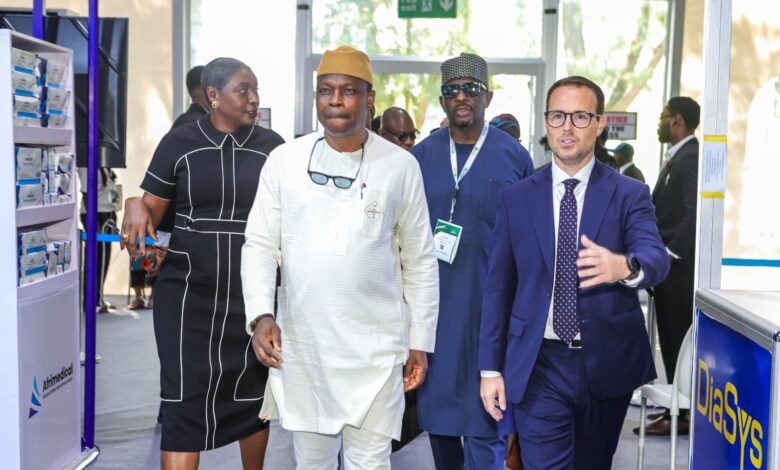
Dr. Isiaq Adekunle Salako, the Minister of State for Health and Social Welfare, represented President Tinubu and the Federal Government at the 2026 fiscal year of the World Health Expo (WHX) in Lagos, formerly known as Medic West Africa. He made this statement while welcoming over 8,000 healthcare professionals and 500 exhibitors from 40 countries at the event in Lagos State.
He noted that there are significant presidential directives in place, including the Presidential Initiative to Unlock Healthcare Value Chains, PVAC, and the Presidential Executive Order for the Pharmaceutical and Allied Sectors. Both initiatives are designed to enhance health security, stimulate economic growth, and create jobs through strategic collaborations with the private sector and Public-Private Partnerships (PPPs).
The Minister emphasized, “Our dedication to enhancing access to modern equipment and technologies in hospitals is supported by tangible actions.


The Federal Ministry of Health and Social Welfare has launched the $1.2 billion Sector-Wide Approach (SWAP) initiative, which is a comprehensive reform addressing financing, workforce development, and infrastructure. Additionally, for the 2025 fiscal year, the Federal Government has allocated N402 billion specifically for investments in health sector infrastructure.”
He mentioned that with Nigeria’s healthcare sector projected to grow by 7.1%, reaching a market value of $161.7 million by 2027, and the overall West African market valued at over $11 billion, there is a significant opportunity for global investors and innovators to engage with this market.
The Minister stated, “Nigeria is open for healthcare investment. We aim for platforms like WHX in Lagos to act as a vital channel for converting this investment ambition into concrete technological advancements.”
Addressing the financial obstacles that hinder the scalability of local health technology, Njide Ndili, President of the Healthcare Federation of Nigeria, HFN, and Country Director of PharmAccess, discussed the importance of HFN in breaking down long-standing barriers to capital.
Ndili stated, “HFN fills the gaps in health financing, establishing essential connections to achieve genuine health sovereignty.
“Access to finance for companies seeking long-term patient capital has been limited. We offer the capacity, platform, and expertise necessary to make healthcare businesses scalable. The critical question we must address is: How can we design products that cater to the Nigerian market, enhance local manufacturing, improve quality, and achieve scalability?”
The Commissioner for Health in Lagos State, Prof. Akin Abayomi, articulated the state government’s vision for health sovereignty, identifying its fundamental pillars as affordability and sustainability.
Prof. Abayomi highlighted the implementation of the National Health Insurance Authority, NHIA, Act in Lagos State as a significant regulatory achievement, noting that the Act requires health insurance for all residents, thereby structuring the financial landscape to ensure medical protection across diverse socioeconomic strata.
“This initiative positions the healthcare sector at the heart of the economy,” Prof. Abayomi asserted. “The government must establish the standards and trust necessary to create a conducive environment for both demand and supply.”
In his keynote address, Prof. Aliko Ahmed, Special Regional Representative of the Director General of the Africa CDC Western Regional Coordinating Centre, reflected on the insights gained from the Ebola and COVID-19 crises.
He noted that while these pandemics exposed severe vulnerabilities, they also revealed massive opportunities for Nigeria and Africa within the global health architecture.