0
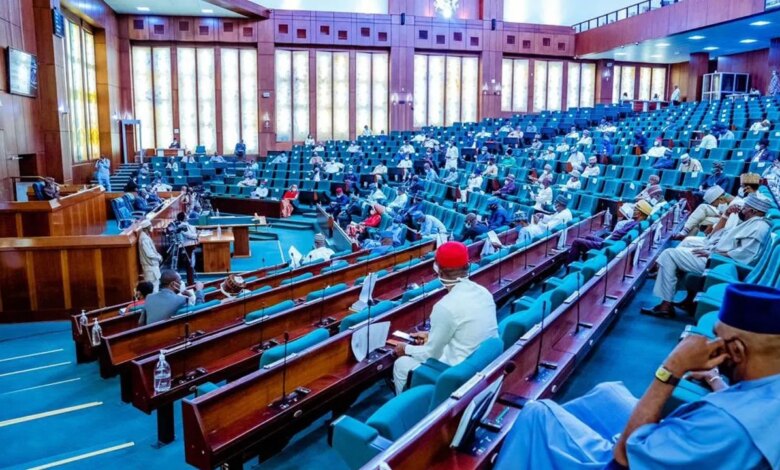
The House of Representatives has extended the implementation period for the capital component of the 2025 Appropriation Act by three months, shifting the deadline from June 30 to September 30, 2026, in a move aimed at allowing the Federal Government to complete ongoing projects captured in the budget.
The resolution followed the passage of a bill seeking to amend the Appropriation (Repeal and Enactment) Act, 2025, to extend the lifespan of the capital expenditure component of the budget. The legislation scaled first, second and third readings during an emergency plenary session presided over by the Speaker of the House, Rt. Hon. Tajudeen Abbas.
Lawmakers suspended relevant provisions of the House Standing Orders to fast-track consideration of the bill, reflecting the urgency attached to ensuring continuity in the execution of federal capital projects.
Leading debate on the legislation, House Leader, Prof. Julius Ihonvbere, argued that the extension had become necessary because a significant number of projects provided for in the 2025 budget remained unfinished.
“It is very straightforward. Because some aspects of the capital appropriation will not be fully implemented, if we do not extend the life of this particular law, it will have a very grave impact on the growth and development of the national economy,” Ihonvbere told lawmakers.
He clarified that the proposed amendment did not alter any provision of the budget itself but merely extended the timeframe for implementation.
“The purpose essentially is to extend the lifespan. We are not touching any part of the law. It is simply extending the lifespan from June 30, 2026, to September 30, 2026. I urge my colleagues to approve this so that we can continue with the work of developing and growing our economy and country,” he said.
Speaker Abbas also backed the extension, citing reports submitted to the House indicating that implementation of the capital budget was still ongoing.
“As you are aware, the 2025 budget was extended to June 30. From the records we received from the Chairman, Appropriations, and other relevant quarters, it has yet to be fully implemented.
“It is therefore in the best interest of this country and the National Assembly for us to extend the budget to September 30 to enable the Federal Government to fulfil its obligations under the 2025 budget,” Abbas said.
Following its adoption at second reading, the House dissolved into the Committee of Supply, where lawmakers considered and approved the bill clause by clause, including its explanatory memorandum and long title. The committee subsequently reported back to plenary, and its recommendations were adopted before the House suspended its rules to allow the bill to pass third reading the same day.
The extension grants Ministries, Departments and Agencies (MDAs) an additional three months to complete ongoing capital projects and utilise funds appropriated under the 2025 fiscal framework.
The development underscores a recurring challenge in Nigeria’s budget implementation process. Despite improvements in budget presentation and approval timelines in recent years, capital expenditure often suffers delays arising from procurement bottlenecks, revenue constraints and administrative hurdles. Such delays have frequently necessitated extensions to budget implementation periods to prevent disruptions to critical infrastructure and development projects.
Capital expenditure remains a key component of government spending, funding projects in transportation, healthcare, education, housing, water resources and other sectors considered vital to economic growth and job creation.
Meanwhile, the House announced the appointment of new chairmen for several standing committees following recent changes in the leadership structure of the minority caucus.
Among the appointments, Ali Madaki was named Chairman of the House Committee on Special Duties, while Ali Isa was appointed Chairman of the Committee on Shipping Services.
Pascal Agbodike was also appointed Chairman of the Committee on the Small and Medium Enterprises Development Agency of Nigeria (SMEDAN), while Kelechi Nwogu was named Chairman of the Committee on Hydrological Services.
Abbas charged the newly appointed committee heads to immediately assume their responsibilities and deploy their legislative experience toward advancing the work of the committees and strengthening the oversight functions of the House.
The changes form part of broader efforts by the House leadership to reposition its committee system, improve legislative efficiency and enhance oversight of government agencies and programmes across strategic sectors of the economy.