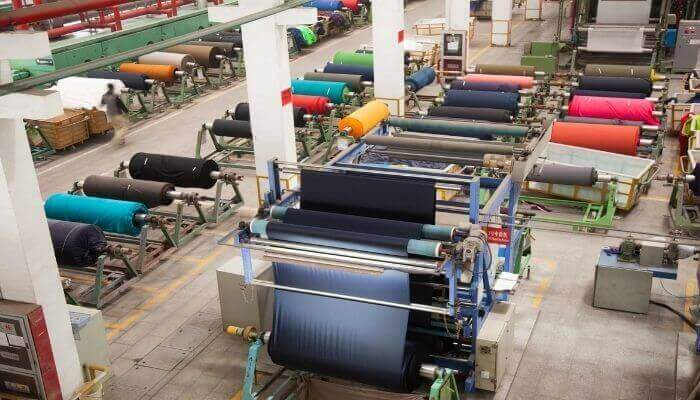
The Senate has called for a ban on the importation of textile products into Nigeria to revive the country’s struggling textile industry.
The clamour followed the adoption of a motion sponsored by Senator Sunday Katung, representing Kaduna South.
The motion was co-sponsored by Natasha Akpoti-Uduaghan representing Kogi central; Adams Oshiomhole of Edo North; Ibrahim Khalid (Kaduna North), Mohammed Tahir Monguno (Borno North) and Mustapha Khabeeb (Jigawa South-West) among others.
Presenting the motion, Katung said Nigeria’s textile industry was at a time one of the largest employers of labour in the country.
He noted that the first large textile manufacturing mill in Nigeria was established in Kaduna in 1957 and that government policies in the 1960s and 1970s helped the industry flourish.
According to him, Nigeria had 167 textile mills by the late 1970s and 1980s, employing about 500,000 workers.
Katung said Kaduna earned the nickname “Textile City” because of the concentration of major textile companies in the state.
Contributing to the debate, Jibrin Isah, senator representing Kogi East, urged the National Assembly to engage relevant government agencies to ensure the implementation of the resolutions.
“This motion is very important, but I don’t want it to die like other motions,” he said.
“I want us to engage the Federal Ministry of Industry. We have to sit down with the ministry and tell them how this thing should go. This is what we call financial engineering; we have to structure it,” he said.
Ogoshi Onawo, senator representing Nasarawa South, said reviving the textile sector could help tackle unemployment and insecurity.
“This motion wouldn’t have come at a better time than this. All that is happening in our country today is due to lack of jobs for our youths,” he said.
“I am sure we can come back on track, get our youths employed, get our farmers engaged, and this country will be better for it.”
Adamu Aliero, senator representing Kebbi central, said a total ban on textile imports was necessary to protect local manufacturers.
“Nigeria used to be the largest producer of cotton in the world,” he said.
“We were producing a lot of cotton, but because of a lack of protection and smuggling, textile mills started closing, and we saw a lot of textiles coming from Asia.”