0
ABUJA – The Director-General and Chief Executive Officer of the National Institute for Sports (NIS), Comrade Philip Shaibu, has renewed calls for stronger collaboration between government institutions and the private sector, saying such partnerships remain indispensable to repositioning Nigeria’s sports industry as a catalyst for economic growth, youth empowerment and national development.
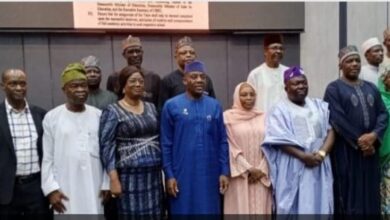
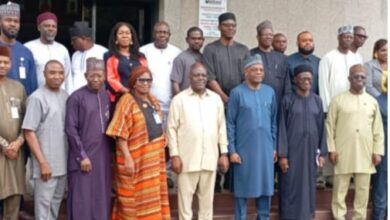
Addressing participants on the second day of the Nigeria Employers’ Consultative Association (NECA) Exhibition Workshop in Abuja, Shaibu said sustained cooperation between public institutions and private investors would accelerate reforms capable of unlocking the enormous potential of the country’s sports sector.
According to a statement issued by the Special Assistant on Media to the Director-General and Chief Executive Officer of the National Institute for Sports, Ben Ogbemudia, the NIS boss commended NECA for creating a platform that encourages dialogue between policymakers, businesses and other critical stakeholders.

He maintained that national development would be better served when both sectors work together toward common objectives rather than operating independently.
“Thank you for bringing all of us together to have a handshake. That is what we need for our country, and that is what will help us. For us at the National Institute for Sports, we have consistently advocated collaboration between the government and the private sector because it is critical to the growth of our economy. It is time for us to change our mindset,” Shaibu said.
Emphasising the need for greater confidence in Nigeria’s capacity to deliver efficient systems, Shaibu recalled an experience during a recent trip from the United Kingdom.
He narrated how he encountered difficulties while attempting to scan his passport at two automated immigration machines abroad before succeeding on the third attempt, noting that upon arrival in Nigeria, the same process was completed successfully on the first attempt.
He said the experience reinforced his belief that Nigeria possesses the capability to build and sustain systems that meet global standards when the right environment is created.
Turning attention to developments within the National Institute for Sports, Shaibu said the institution has entered a new phase aimed at strengthening sports education, talent development and professional training across the country.
“Today, the NIS is back to life after 52 years. If NIS works, Nigeria will work, but if NIS fails, Nigeria will eventually fail,” he stated.
The NIS Director-General argued that a thriving sports industry has the capacity to create employment opportunities for thousands of young Nigerians while contributing to broader socio-economic development.
He described sports as an emerging economic sector capable of supporting national prosperity through structured investment in talent development, coaching and sports administration.
“Sports is the new oil well, whether you like it or not. If we develop sports properly, unemployment will become a thing of the past, while insecurity, if not completely eradicated, will be greatly reduced.”
Shaibu further disclosed that the institute has expanded its operations across Nigeria’s six geopolitical zones with the support of President Bola Ahmed Tinubu, adding that plans are underway to establish a presence in all 36 states before the end of next year.
According to him, wider institutional presence would improve access to sports education and training while strengthening grassroots talent identification nationwide.
He stressed that Nigeria should prioritise developing its own athletes and sports professionals to compete consistently at the highest levels of international competition.
“We don’t need to remain on social media discussing other countries at the FIFA World Cup. We should also be there. It is time for us to change our mindset, and programmes like this help set the tone.”
Shaibu also appealed to private organisations, educational institutions and other stakeholders to partner with the National Institute for Sports in addressing the country’s shortage of professionally trained coaches.
He observed that while many Physical and Health Education teachers serve in secondary schools across the country, there remains a need to increase the number of certified coaching professionals.
“We are having a shortage of coaches in Nigeria. Many Physical and Health Education teachers in our secondary schools are not certified coaches. Coaching does not end on the streets; coaches must be properly trained and certified.”
He explained that the institute is implementing programmes designed to produce certified coaches who will subsequently train schoolchildren under a grassroots sports development initiative being executed in partnership with schools nationwide.
Drawing from his experience as former Deputy Governor of Edo State and as a sports administrator, Shaibu reflected on policy initiatives implemented during his time in office, noting that strategic investment in sports can yield measurable results in youth development and athletic performance.
He also observed a gradual shift in public perception towards sports, saying increasing numbers of parents now view sporting careers as viable opportunities for their children compared with previous years.
The NIS Director-General encouraged parents and guardians to enrol their children and wards in the institute’s programmes, expressing optimism that sustained investment in grassroots sports, athlete development and coaching education would strengthen Nigeria’s competitiveness in international sporting events.
He added that with consistent planning and systematic talent development, the country could improve its participation and performance on the global stage.
“Register your children and wards for NIS courses and be part of Nigeria’s sports success story,” he urged.