The resignation of United Kingdom Prime Minister Keir Starmer has sparked widespread reactions among Nigerians, with many drawing comparisons between leadership accountability in Britain and Nigeria.
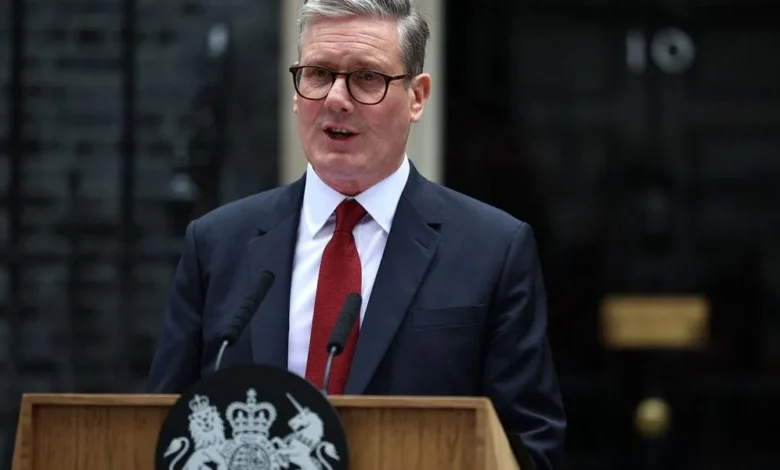
Starmer on Monday announced his resignation as both Prime Minister and leader of the Labour Party, saying he had come to accept that he was no longer the best person to lead the party into the next general election.
READ RELATED STORY
Keir Starmer resigns as UK prime minister after losing party support
Speaking in an emotional statement outside 10 Downing Street, Starmer said Labour members had been questioning whether he remained the right person to lead the party forward and that he had “heard the answer.” His decision followed months of growing pressure within the party over declining public support and internal disagreements.
Reports indicate that several factors contributed to his resignation, including falling popularity ratings, divisions within the Labour Party, the ongoing cost-of-living crisis, controversies surrounding some government appointments, and concerns over national security issues.


The development quickly attracted attention in Nigeria, where many citizens viewed Starmer’s departure as an example of political accountability. Among those who reacted was former Anambra State Governor and Labour Party presidential candidate in the 2023 election, Peter Obi.
Obi, who recently emerged as the presidential candidate of the Nigeria Democratic Congress (NDC) for the 2027 elections, argued that President Bola Tinubu should consider stepping down over what he described as failures in governance.
In a post on social media, Obi said Starmer’s resignation demonstrated the importance of accepting responsibility when leaders fail to meet public expectations. According to him, several promises made during Nigeria’s 2023 election campaign remain unfulfilled, while economic hardship has worsened for many citizens.
He further stated that concerns about insecurity, infrastructure, transportation and anti-corruption efforts point to a decline in governance standards, adding that the country is facing one of its most difficult periods.
Many Nigerians also took to social media to express their views. An X user identified as @paschaline called on President Tinubu to “honourably resign,” arguing that public office should be seen as a sacred trust rather than an entitlement.
Another user, Louisfire, questioned whether Nigeria would ever witness a similar level of political accountability, asking, “When are we ever going to see this happen in Nigeria?”
Starmer’s resignation comes after months of poor local election results, falling approval ratings and growing dissatisfaction among Labour lawmakers. Several ministers had resigned in recent weeks, while dozens of party members publicly urged him to step aside, ultimately leading to his decision to leave office.
The development has since reignited discussions among Nigerians about leadership responsibility, public trust and accountability in government.
For more details, visit New Dailyprime