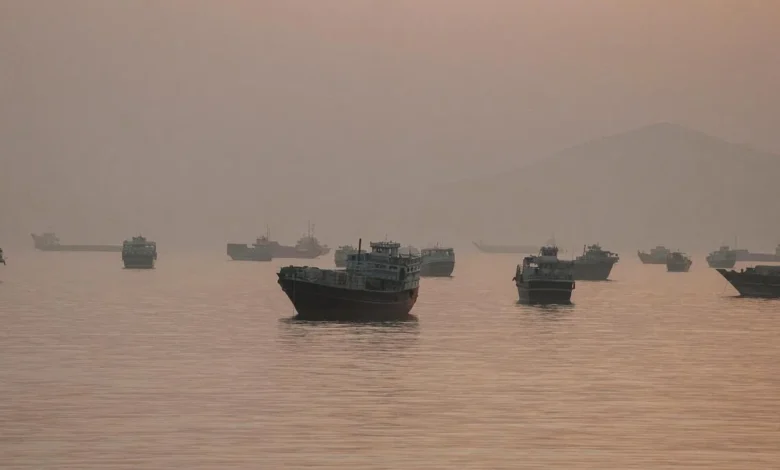
WASHINGTON – Commercial traffic through the Strait of Hormuz was limited to just a few ships over the past 24 hours as peace talks between the US and Iran show little sign of advancing.
No commercial transits were observed on the morning of June 5, with three passages in each direction seen on June 4, according to ship-tracking data compiled by Bloomberg.
The US and Iran have made little progress in talks over an interim peace accord this week. Iran is insisting on a ceasefire in Lebanon before it will accept a deal with the US that’s meant to reopen the Strait of Hormuz and extend their truce by two months. The two sides still have significant gaps between their demands.
The US Central Command denied Tehran’s claims that Iranian forces had fired on its warships in the Gulf of Oman. Centcom said in a separate post that the US Navy had now redirected 129 commercial vessels and disabled six others to ensure compliance with its blockade of Iranian ports.

Four Iranian crude tankers that were reported to have exited the Persian Gulf on June 1 are anchored off Bandar-e-Jask, just outside the Strait of Hormuz, according to Tankertrackers.com, which specialises in monitoring the clandestine movements of dark-fleet ships.
The arrival of four oil tankers of the same sizes as those reported to have left the Persian Gulf was confirmed in satellite images examined by Bloomberg. These ships have not been included in the outbound count.
Outbound traffic on June 4 was restricted to three vessels, led by an Iran-linked fuel tanker and followed by two small general cargo carriers. Inbound ship movements were limited to an Iran-linked bulk carrier, an asphalt carrier and a general cargo ship.
Visibility on commercial shipping remains limited by ongoing GPS jamming and tracking disruptions across the strait, with vessel movements likely to be revised as ships re-emerge beyond high-risk waters.
The US naval presence may also be distorting the observations. Iran-linked vessels entering or leaving the Gulf could be switching off transponders to avoid detection, making it harder to track flows in real time.
Even before the US barred movement to and from Iranian ports, it was common for Iran-linked vessels to “go dark” when approaching Hormuz. Signals were often not restored until well into the Strait of Malacca – around 13 days’ sailing from Iran’s Kharg Island. BLOOMBERG