The Nigerian experience is physical, emotional, and sometimes international. No one knows it better than our features on #TheAbroadLife, a series where we detail and explore Nigerian experiences while living abroad.
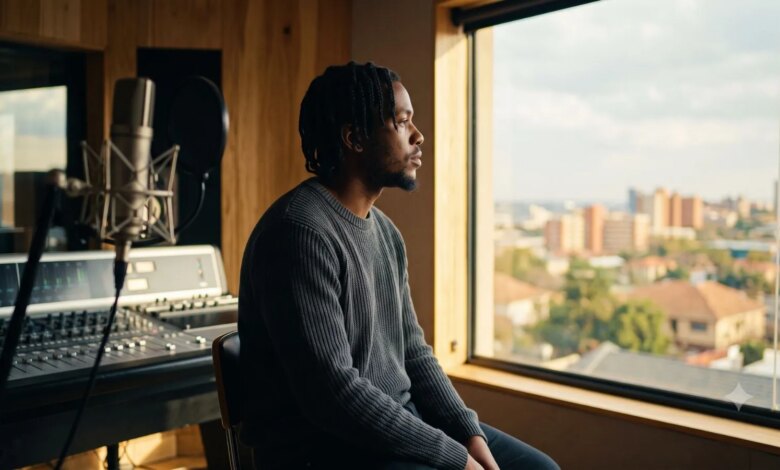
When Peter (24) left for South Africa to study music production, everyone warned him to “be safe” due to xenophobic attacks. In this story, he talks about his time and experiences in Johannesburg and how South Africans have turned out to be far more welcoming than he ever expected.
I live in Johannesburg, South Africa, and I left Nigeria in early 2025.
I left for creative school. By my second year of studying electrical engineering at university, I had mentally checked out and only saw it through because my parents were paying for it. What I really wanted to do was music production and sound engineering, so I told my parents I wouldn’t be doing a 9-5 job once I graduated.

After school, I interned with a major music producer in Nigeria for a while. When I left that, I ventured into working with media, learning about sound for media at EbonyLife Creative Academy. It was around that time that my mum suggested I pursue a formal education and actually become certified.
The initial plan was to go to the United States, but the school fees were too expensive. So I looked at other options and found an opportunity in South Africa. I applied and got admitted to study Sound Production at the SAE Creative Media Institute here.
I didn’t see any options for exactly what I wanted in Nigeria. Most of the options I saw there were theoretical music training. But training for music and training for sound production are two different things.
Unlike the music schools in Nigeria, we don’t have traditional exams where you sit down with pen and paper. Our assignments make up our grade. For example, they can give you a set of multi-tracks and tell you to mix them for your test. It is more hands-on than just learning theory. It’s rare to see that in Nigeria.
It was so cold. You see snow on TV and think it looks nice. Trust me, it doesn’t feel nice. I arrived in the autumn, just before winter, but I was already shaking. The actual winter came around May, and that was when I really knew what cold was.
I was also anxious about experiencing Xenophobia because of the things I had heard, so when I got here, I decided not to move around too much. But when I did, I didn’t see any visible hatred.
Because people here can easily tell you’re Nigerian from your accent, so once they hear that, they ask where I’m from, and I tell them Nigeria. What follows is them asking me things like, “Oh, do you know Davido?”
There was no visible hatred. What I’ve learned is that xenophobia exists here, but only in certain parts of the country, mostly in the townships, which are more rural. You don’t see it in the cities. And even in the places where it’s more common, if you have South African friends around you, you’ll be fine.
I feel like the media has made it look bigger than it is. immigration is an actual issue in South Africa, but it has been hijacked by xenophobic people to attack everyone. And the xenophobic ones are a small minority.
But the media picks it up and presents only one perspective, and that’s dangerous. When the news of xenophobia breaks, it makes people react blindly. I remember when I was in Nigeria, and news of xenophobic attacks literally made people raid a Shoprite near where I lived.
I haven’t had any reason to be afraid of attacks. My school is far away from the townships where it usually happens. And the South Africans I have met have been friendly when they learned I was from Nigeria. There are traits that a Nigerian has that we take for granted but are fascinating to them. For example, how entrepreneurial we are.
But others don’t find it as fascinating. Nigerians come here and maybe open a business, and in just a couple of years, they grow more than the South Africans who have been here for years. Some of them look at that and say, “Wow, these Nigerian men are so enterprising.” However, some take it negatively and say, “They should just go back to their country, what are they doing in my place?” So it is two-sided. But from my personal experience, I haven’t had to be afraid because of the xenophobic attacks.
No, definitely not. No South African I’ve met has given me reason to think they are prejudiced. I simply haven’t experienced that.
My community is made up mainly of people I met at school or church. At school, our assignments are usually group-based practical projects. So after class, we work together on these projects, and in doing that, we learn about each other and form bonds.
The majority of my friends here are South African, and a few are Nigerian. At church, my pastor is Nigerian, but the majority of the congregation is mostly South African.
The calmness. Coming from Lagos, it’s very shocking how calm and chill it is here in Johannesburg.
Another shock is that hip-hop is still a big deal here. Back home, it is mostly Afrobeats. But here, hip-hop is a massive thing among young people. Amapiano is big too, but hip-hop seems to be bigger.
Also, marriage is not seen as a big deal here, the way it is in Nigeria. Back home, parents are constantly asking when you are going to get married because they want grandchildren. The parents here don’t do that; after all, they, too, are probably not married, they just cohabit. Marriage is not seen as a sacred cultural necessity.
Another thing that shocked me here was the language barrier. They speak English, but their traditional languages are quite important to them. In Nigeria, nobody might bat an eye if you can’t speak your mother tongue, but here, that is almost like a taboo.
Those are the three major things that shocked me when I got here. The fact that they were more welcoming than I expected was the biggest shock of all.
Yes, I usually come back in December. There is a July break for about a month, but because of flight prices, it makes more sense to come home in December. My school session doesn’t start until March, so if I am back home by late November or December, I get to stay through December, January, and February. That is three months as opposed to just one month in July.
The plan has always been to go back; it still is. Not because I don’t want to be here, but because I have many things I need to do at home. But I am trying to build relationships and contacts here.
What matters in my industry is the clients, not your physical location. Meeting artists here and building that relationship means that when they need work done, they will call me, no matter where I am.
The Naira Life Conference is returning on August 22, 2026, in Lagos! Come learn from finance experts and industry leaders, and partake in unfiltered conversations about building wealth and diversifying your income stream in a country like Nigeria. Real stories, expert advice you can actually use, and a community ready to build wealth together. Secure your spot here.
Easily, my first week here. As part of the visa process, you have to book your accommodation before coming here. I wanted a place close to school, but the area has very high rents. So I picked the cheapest accommodation I found. You don’t pay the actual rent until you arrive, but I paid the documentation and booking fee to hold the space. That was about 200 Rand.
When I arrived, a cab driver took me from the airport to the place. When we got there, he told me, “This does not seem like a good place.” He insisted it wasn’t safe and suggested we confirm first. He told me to leave my things in the car while we went in to check.
We went inside and found a lot of drug dealers smoking heavily, homeless people, and prostitutes. It was a terrible place. We got my key from the receptionist, and when we opened the room, we saw weed on my bed. That was the final straw. I video-called my parents and showed them. They asked me to leave immediately.
The driver took me to a hotel. He came back the next day, and we drove around the city, house hunting.
It took a couple of days, but we finally found a good place just a couple of minutes from school. I was only able to get it because the original renter had just cancelled their booking. It was more expensive than I had planned, but after that initial experience, I was just happy to have a good place.
That week was my worst experience here, but the driver was really helpful.
Yes, he was South African.
I can think of a couple. First, was a spicy food eating competition with some friends from school. One of us had this extremely hot sauce and started vomiting.
I know that sounds crazy as a best experience, but it was a really nice bonding moment for all of us. I am not a very expressive person when it comes to friendships, but that situation brought out an expressive side of me. It went from having fun to me becoming genuinely concerned and going into protective mode. It reminded me that these people are actually my friends whom I care about.
Some other really awesome experiences have been at school, having the opportunity to meet industry professionals. Our lecturers like to bring industry professionals to speak to us. Meeting Ndabo Zulu and being able to ask him questions about music really stuck out to me.
It is really the people. They are much more welcoming than I thought. I had an expectation based on how things are portrayed.
A lot of them have actually researched Nigerian culture. I met a new acquaintance recently, and when she found out I was Nigerian, she started trying to speak Pidgin. She didn’t have our accent, but she was trying. They try to relate to you on your own terms. I’ve had South Africans ask me about the security situation back home, even the kidnapped children in Oyo. I wondered how they knew about that from all the way over here. It touched me in ways I didn’t expect.
What do you think about this?
Drop your opinion in the comment section.
FOLLOW US & Share this with someone who needs to see this.