WASHINGTON – A month after US President Donald Trump announced – and then abandoned – a plan to escort commercial ships through the Strait of Hormuz, the US military is trying less public ways of protecting vessels in the vital waterway.
Rather than announcing an open challenge against Iran, the US is quietly coordinating with shippers willing to take a different approach.
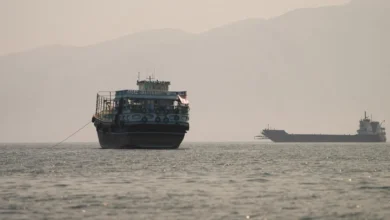
Evidence gleaned from US Central Command statements, shipping data and people with knowledge of the transits suggest ships are turning off transponders and sticking close to the Omani coast on the strait’s south to avoid Iranian mines, with the US military assisting if needed.
The latest evidence came on the night of June 2 amid a flareup between the US and Iran.

Central Command issued a statement saying its forces shot down Iranian attack drones aimed at “civilian mariners that were rightfully transiting regional waters.”
US forces also conducted “self-defence strikes” on an Iranian military ground control station.
The effort marks a change in tactic from Trump’s previous effort, dubbed Project Freedom, that he rolled out in early May.
That initiative, unveiled with a social-media post and detailed in a formal White House briefing, provoked attacks from Iran and risked collapsing a fragile ceasefire between the two adversaries.
Trump later said he was scrapping the idea after allies in the region asked him to back down.
The latest US push has no title and the administration has offered little public explanation.
But it’s been accompanied by other signals that suggest the US is working with shippers in ways that officials have declined to specify.
Centcom, which has oversight over American military assets in and around the Persian Gulf, has shifted its tone to leave open that possibility.
In a social media post in late May, Centcom denied as “FALSE” reports that the US Navy “has restarted escorting or assisting commercial vessels during transits through the Strait of Hormuz.”
After more evidence emerged in recent days that several vessels had gotten through, the command changed its messaging.
“Though US forces are not escorting, we continue to communicate and coordinate with commercial ships seeking to freely and safely transit the Strait of Hormuz, a critical international corridor for regional and global economies,” US Central Command’s public affairs director, Navy Captain Tim Hawkins, said in a statement on June 1.
US Defence Secretary Pete Hegseth alluded to the US effort over the weekend, saying traffic would eventually resume thanks to “what we’re able to do, and are doing – whether it’s known or unknown – in the strait.”
Two shippers said previously they were in touch with the US military, which advised them on how best to navigate the waterway, Bloomberg News reported earlier.
When one vessel was approached by suspected Iranian fast attack boats on a recent transit, helicopters appeared and drove them away, according to the person with knowledge of that transit.
“If the commercial ships are hugging the coast opposite of Iran and turning off their AIS transponders, Iranian forces would need to use radar or spotters to detect the movement and direct drone or missile attacks,” said Bryan Clark, a senior fellow at the Hudson Institute.
“The US Navy could detect these efforts and counterattack the Iranian units,” he said.
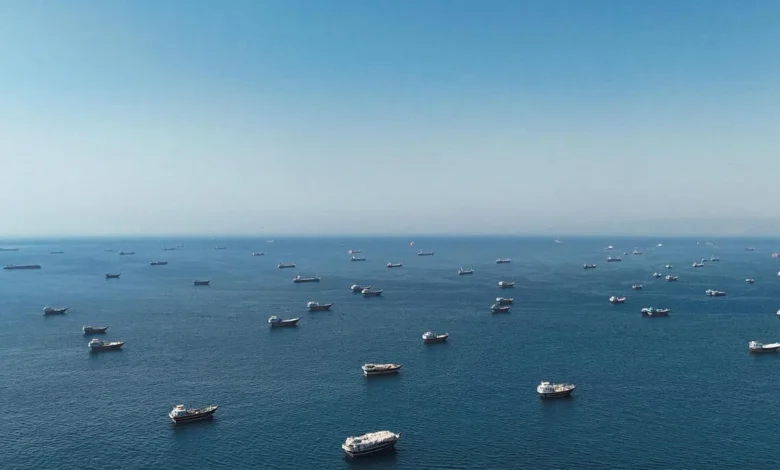
While some shippers are growing more optimistic about a pickup in traffic, ship-tracking data compiled by Bloomberg indicates that movement through the strait has been limited.
Just two inbound commercial transits were observed on the morning of June 2, following two outbound ships on June 1.
Steve Wills, a naval expert at the Navy League’s Center for Maritime Strategy, said the US military can coordinate protection for vessels using Navy ships equipped with a modern AEGIS command-and-control system that integrates air and missile defense as well as early warning E-2D aircraft to provide an overall picture of the area.
That “makes possible a kind of distant but direct coverage” of the strait, Wills said. BLOOMBERG