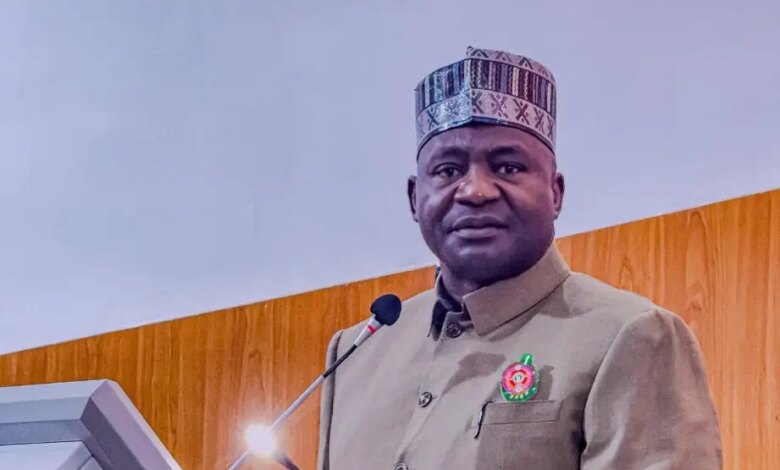
The Minister of Defence, General Christopher Musa (retd.), has said the fight against terrorism, banditry and insurgency in Nigeria remains difficult because criminal groups receive support from sponsors and some members of the public.
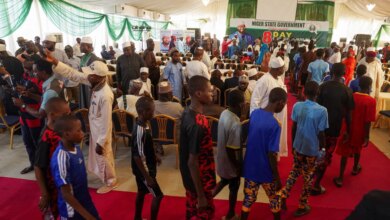
Naijaonpoint reports that Musa spoke on Friday at the 2026 edition of The Platform Nigeria, an annual national discourse organised to mark Democracy Day.
The event, monitored on Channels Television, was hosted by the Senior Pastor and Founder of The Covenant Nation, Pastor Poju Oyemade.
Speaking on the theme, “Governance, Democracy and National Security,” the minister said terrorists and bandits depend on local collaborators for food, water, intelligence, logistics and funding.


According to him, security agencies can only make lasting progress if citizens reject and expose those assisting criminal elements.
“Everything revolves around the people. If the people are ready and willing to make changes, changes will occur. If the people are not willing, nothing will happen,” Musa said.
“I can tell you that with what is going on with the challenges we have in the country — banditry, insurgency and terrorism — why does it seem so difficult to deal with them? Perhaps, we have people who are also encouraging and supporting these things because the terrorists and bandits survive among the people.
“There are several stories of how people have aided them by giving them food, water and information, and these are the things that keep them going. We call this the oxygen. Who are those funding them? Who are those giving them information? Who are those providing the logistics that keep them going? It is still the people.”
The minister said the nature of modern insecurity had made security operations more complex than conventional warfare.
He explained that unlike state-to-state conflicts where enemies were easily identified, current security threats were often driven by individuals living within communities.
“Conventional warfare in the past used to be state-to-state, country-to-country, so you know who your enemy is. The most dangerous aspect of battles or campaigns is when the enemy is within,” he said.
“That individual whom you are protecting may be the number one enemy trying to take you out immediately he gets the chance.”
Musa stressed that no matter how much effort security agencies put into operations, their success would remain limited without the cooperation of citizens.
“It is important for us to always remember that the armed forces and the security agencies, no matter what they do, if the people are not ready to support them, it makes the task extremely difficult,” he added.
The defence minister urged Nigerians to remain united, warning that terrorists and criminal groups often exploit divisions within society.
“We must continue to work in unity because it is these gaps that exist between us that these individuals see and try to widen in order to separate and divide us, and we must not let that happen,” Musa said.
Also speaking at the event, former Senate President, Bukola Saraki, stressed the need for an independent legislature to sustain democracy and ensure accountability in governance.
Saraki said a parliament that simply approves executive proposals without proper scrutiny has failed in its constitutional responsibility.
“A legislature that cannot say no is not a legislature at all. A legislature that simply receives executive proposals, approves them without scrutiny and goes home has not fulfilled its constitutional mandate. It has merely performed a ceremonial function,” he said.
He added that the independence of the National Assembly should not be seen as rebellion against the executive but as a requirement for legitimate governance.
“The independence of the National Assembly is not rebellion against the government of the day. If the National Assembly is independent, it is the very thing that makes the government legitimate because a mandate that is never tested is a mandate that no one can trust,” Saraki said.