0
Chibuzor Emejor
African governments, the African Union, development partners and private sector investors have launched a continental drive to transform pastoral livestock from an overlooked traditional livelihood into a major engine of economic growth, trade, industrialisation and job creation.
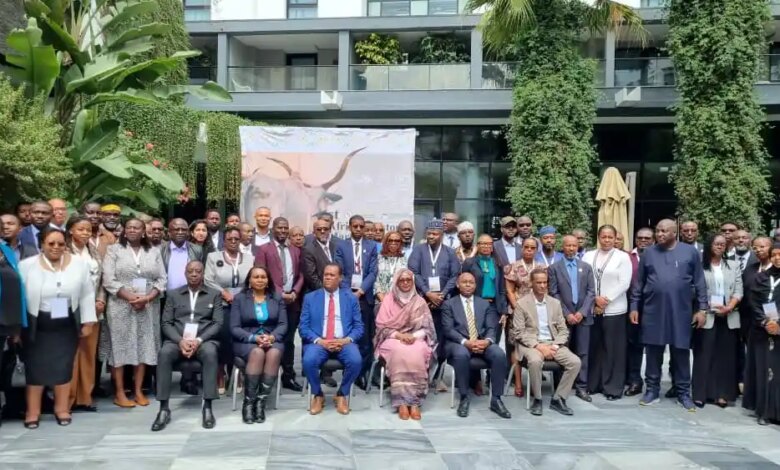
The call came at the opening of the First African Pastoral Markets Forum, organised by the African Union Inter-African Bureau for Animal Resources (AU-IBAR) under the African Pastoral Markets Development (APMD) Platform in Addis Ababa, Ethiopia.
Leaders at the forum said Africa’s vast livestock resources remain one of the continent’s most underexploited economic assets despite supporting hundreds of millions of livelihoods and contributing significantly to agricultural output.
They argued that stronger investments, modern market infrastructure, harmonised trade policies and private sector participation could unlock billions of dollars in economic opportunities while strengthening food security, creating jobs and accelerating implementation of the African Continental Free Trade Area (AfCFTA).
Opening the forum, Ethiopia’s State Minister of Livestock and Fisheries, Dr. Fikru Regassa, said the continent must move beyond recognising the challenges facing pastoral communities and begin implementing practical, scalable and investment-driven solutions.
He described pastoralism as far more than a traditional way of life, noting that it remains a critical production system supporting food security, employment, exports and rural economies across Africa.
“Pastoral communities have sustained livestock production under some of Africa’s most difficult environmental conditions through indigenous knowledge, mobility and climate adaptation,” he said.
Despite their contribution, Regassa said pastoral producers continue to face poor market infrastructure, limited access to finance, climate change, weak transport systems, inadequate market information, trade barriers and difficulties meeting international standards.
He also highlighted the disproportionate challenges confronting women and young people, who remain active across livestock value chains but continue to face limited access to productive assets, finance, technology and decision-making opportunities.
According to him, the forum provides an opportunity to develop concrete investment models capable of expanding livestock trade corridors, improving market infrastructure, strengthening financial systems and attracting private capital into Africa’s pastoral economy.
He urged governments, investors, financial institutions, development partners and pastoral communities to build stronger partnerships capable of transforming livestock enterprises into globally competitive businesses.
Regassa said Africa’s livestock industry requires substantial investments in veterinary services, animal health systems, processing facilities, transport networks, cold-chain infrastructure, digital technologies, traceability systems and market centres.
He noted that while the AfCFTA offers unprecedented opportunities for expanding regional livestock trade, those opportunities can only be realised through the removal of tariff and non-tariff barriers, improved sanitary standards and stronger cross-border trade corridors.
Highlighting Ethiopia’s commitment, the minister said the country is implementing reforms to improve livestock productivity, strengthen veterinary systems, develop market infrastructure and expand export opportunities.
He also referenced Prime Minister Abiy Ahmed’s livestock transformation initiative aimed at boosting productivity, improving food and nutrition security, reducing imports and creating employment opportunities.
He stressed that pastoral challenges—including drought, animal diseases, market disruptions and climate-related shocks—transcend national boundaries and require coordinated regional responses.
“We must share knowledge, harmonise our approaches, coordinate investments and develop solutions that benefit pastoral communities across Africa,” he said.
Earlier, AU-IBAR Director Dr. Huyam Salih challenged long-held perceptions of pastoralism as merely a humanitarian concern, insisting it should instead be recognised as one of Africa’s most strategic economic sectors.
“For far too long, the narrative around pastoralism has focused on drought, conflict and marginal lands.
The fuller truth is economic,” she said.
According to Salih, livestock contributes nearly a quarter of agricultural GDP in sub-Saharan Africa and accounts for between 30 and 80 per cent of agricultural value added in several African countries.
She said pastoral production systems support more than 268 million pastoralists and agro-pastoralists, describing them as one of the world’s most climate-resilient food production systems.
Despite Africa possessing one of the world’s largest livestock populations, Salih observed that the continent captures only a fraction of its potential value because pastoral economies remain under-financed, under-invested and poorly integrated into formal markets.
She explained that AU-IBAR established the African Pastoral Markets Development Platform with support from the Gates Foundation to reposition pastoral livestock as a strategic economic asset capable of attracting investment, strengthening regional trade and accelerating industrialisation.
Drawing on lessons from pilot projects in Nigeria and Kenya, Salih said the platform has already demonstrated viable business models capable of integrating pastoral producers into structured markets.
She noted that the forum is designed to move beyond policy discussions by creating a marketplace where governments, investors, financial institutions, development partners and pastoral enterprises can negotiate partnerships and mobilise investments.
“We are here to shift the conversation from policy discourse to market activation,” she said.
Representing the African Union Commissioner for Agriculture, Rural Development, Blue Economy and Sustainable Environment, Dr. Janet Edeme said transforming pastoral livestock markets represents far more than an agricultural agenda.
“It is an economic transformation agenda, a peace-building agenda, a climate resilience agenda and an Agenda 2063 agenda,” she said.
The African Union called for accelerated implementation of harmonised livestock trade regulations, stronger veterinary systems, improved regional trade corridors and increased investments in processing industries to enable Africa to export higher-value livestock products instead of mainly live animals.
Edeme stressed the importance of strengthening climate resilience through sustainable rangeland management, drought preparedness, early warning systems and digital technologies, while ensuring women and young people become central beneficiaries of livestock sector transformation.
She also called on governments, regional economic communities, financial institutions, development partners and the private sector to work together to unlock Africa’s vast pastoral economy.
Representing the Gates Foundation, Senior Officer for Livestock and Economic Opportunity in Africa, Dr. Tom Osebe, said Africa owns approximately 20 per cent of the world’s cattle, 27 per cent of its sheep, 32 per cent of its goats and more than 15 per cent of its camels, yet earns only a small fraction of the value generated by those assets.
He described the disparity as one of Africa’s greatest untapped economic opportunities.
Osebe said investments in pastoral livestock markets directly support improved maternal and child nutrition, stronger disease surveillance and prevention systems, and expanded economic opportunities for more than 268 million pastoralists across over 40 African countries.
Rather than treating pastoral development as an aid programme, he urged governments and investors to approach it as a long-term investment capable of driving inclusive economic growth.
The Gates Foundation, he disclosed, is supporting AU-IBAR through the African Pastoral Markets Development Platform to help unlock an estimated US$3 billion in planned pastoral investments over the next three to five years by strengthening policy frameworks, improving market integration and expanding data systems that increase investor confidence.
Throughout the five-day forum, participants will examine livestock trade corridors, blended financing mechanisms, digital traceability systems, animal health, market intelligence, standards harmonisation and investment opportunities aimed at repositioning Africa’s pastoral livestock sector as a globally competitive industry.
The forum is expected to produce concrete commitments on livestock market development, regional trade integration, private investment mobilisation and stronger continental cooperation, with pastoral communities, women and young entrepreneurs placed at the centre of Africa’s livestock transformation agenda.