For decades, industrial disputes have remained a recurring feature of Nigeria’s university system, with disagreements over funding, welfare, conditions of service and the implementation of agreements frequently pushing lecturers out of the classrooms.
From nationwide strikes that have paralysed public universities for months to local disputes triggered by unpaid salaries and other financial obligations, the consequences have often extended far beyond the negotiating table. While governments and university authorities engage in discussions over funding and workers’ welfare, students are frequently left at the receiving end, losing valuable academic time and facing uncertainty over examinations, graduation and their future plans.
The situation has also raised questions about the welfare of university lecturers, some of whom continue to work under difficult conditions while waiting for salaries and other entitlements owed to them. For academic staff, delayed salaries can place enormous financial pressure on individuals and families, while prolonged disputes over payment can eventually push unions to resort to industrial action.
When such strikes occur, however, it is the students who often bear the immediate and long-term consequences.
Academic calendars are disrupted, lectures are suspended, examinations are postponed and graduation timelines are extended. Students who should be preparing for examinations may instead find themselves at home, while parents and guardians continue to shoulder the financial burden of an education that has effectively been put on hold.
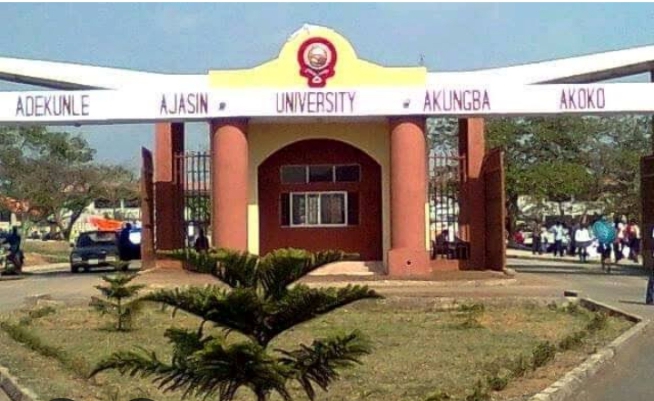
It is against this backdrop that the latest industrial crisis at Adekunle Ajasin University, Akungba-Akoko (AAUA), Ondo State, has become a source of concern for students, parents and other stakeholders.
The Academic Staff Union of Universities (ASUU), AAUA chapter, is currently engaged in an indefinite withdrawal of services over the non-payment of lecturers’ salaries for May and June 2026.
What began as a dispute over salary arrears has now developed into a wider crisis threatening to further disrupt the university’s academic calendar, with thousands of students caught between the demands of lecturers for their unpaid salaries and their own need to return to the classrooms.
ASUU-AAUA commenced the indefinite withdrawal of services at 11:59 p.m. on Friday, July 10, 2026, following a resolution reached at its congress.
In a notice signed by the Chairperson of ASUU-AAUA, Comrade Bolu Oshodi, the union reaffirmed earlier resolutions reached on April 28 and June 18, 2026, directing members to withdraw their services until the outstanding salaries were paid.
The union described the industrial action as “total, comprehensive and indefinite,” stressing that its members would not resume academic activities until the salary arrears were fully settled.
”The withdrawal of services is total, comprehensive and indefinite until all outstanding salaries are paid,” the union stated.
With the lecturers withdrawing their services, academic activities at the state-owned university have been disrupted. Lectures, student supervision, meetings and other official duties involving academic staff have been suspended, leaving students uncertain about when normal academic activities will resume.
The timing of the strike has further heightened concerns within the university community.
Students were scheduled to commence their second-semester examinations on July 20, but the continued absence of lecturers has thrown the examination timetable into uncertainty.
For students who had spent weeks preparing for their examinations, the development represents another setback in an already disrupted academic calendar.
The uncertainty is particularly concerning for final-year students and others whose academic progression depends on the completion of examinations, supervision and other academic requirements.
For them, every additional week of disruption could mean a further delay in completing their programmes and moving on to the next stage of their lives.
The Students’ Union of the university has therefore become increasingly vocal in demanding urgent government intervention.
The Adekunle Ajasin University, Akungba-Akoko Students’ Union (AAUASU) said the industrial action had persisted for 14 days and brought academic activities to a complete standstill.