
Borno State commissioner for Finance, Hon. Lawan Umar Dalorima, has underscored the urgent need for sub-national governments to treat sustainable development and climate action as core economic strategies rather than mere environmental concerns.
Hon. Dalorima made the assertion yesterday during a high-level Executive Capacity Building Programme on Sustainable Finance, Climate and Energy Transition and Strategic Public Financial Management for Commissioners of Finance in Nigeria.
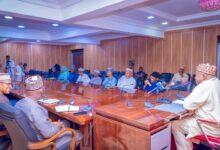
The intensive programme, held in Accra, Ghana, was organised by the Revenue Mobilisation Allocation and Fiscal Commission (RMAFC). It drew finance leaders from across the federation under the theme: “Financing the Future: Strengthening Fiscal Leadership for Sustainable Development, Climate Resilience and Energy Transition.”
Reflecting on the evolving challenges of economic uncertainty and global climate shifts, Dalorima noted that the Accra forum offered a critical platform to re-examine the traditional roles of public finance leadership.
Facilitated by renowned resource persons – including Prof. Albert Ahenkan of the University of Ghana Business School and Prof. Emmanuel Oladipo of the University of Lagos – the Borno finance commissioner emphasised five core takeaways vital for repositioning Nigerian states, which include Alignment of Fiscal Policy; Navigating the Energy Transition; Strengthening Public Financial Management (PFM); Innovative Fiscal Leadership; and Mitigating Climate Fiscal Risks.
Governments must actively synchronise their budgetary frameworks, fiscal policies, and investment decisions with long-term environmental sustainability, social inclusion, and economic resilience,” he said. Recognising that climate change directly drives infrastructure damage, food insecurity, and declining productivity, Dalorima stressed that climate-responsive budgeting is no longer optional but essential for sound public financial management.
The global shift toward green energy presents a dual landscape of challenges and opportunities. States must proactively mobilise resources to diversify regional economies, invest in renewable energy, enhance energy efficiency, and unlock avenues for private-sector participation. Obust PFM systems remain the bedrock of good governance, guaranteeing transparency, accountability, optimal resource allocation, and better service delivery to citizens.
“Modern fiscal leadership goes far beyond balancing ledger sheets. It demands ingenuity in domestic resource mobilisation, disciplined debt management, data-driven policymaking, and the aggressive leveraging of global climate finance.”
Emphasising the collective mandate of commissioners of finance nationwide, Hon. Dalorima stated that building resilient fiscal institutions is non-negotiable if states are to withstand emerging global shocks while fostering inclusive economic growth.
He lauded the leadership of the RMAFC for convening the impactful capacity-building initiative and praised the resource persons for equipping fiscal leaders with actionable knowledge.
“he knowledge shared will undoubtedly strengthen our commitment to developing innovative fiscal strategies that position our states for sustainable growth, climate resilience, and long-term prosperity, “Dalorima stated.