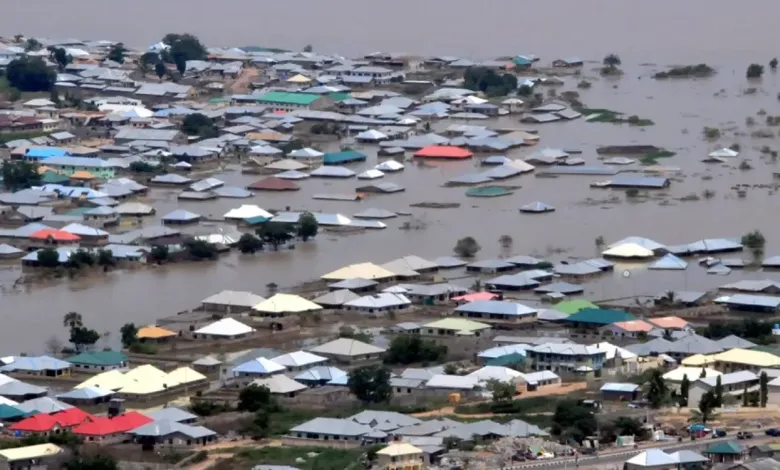
Benue, Plateau, C’River, Niger, Taraba among vulnerable states | Flood washes away graves, destroys 20 houses in Edo
By AZA MSUE, Makurdi; RICHARD NDOMA, Calabar; OKECHUKWU OBETA, Awka; ACHOR ABIMAJE, Jos; ANAYO OUKWUGHA, Port Harcourt; ATTAH ANTHONY, Jalingo; ABDULLAHI OLESIN, Ilorin; ALO ABIOLA, Ado-Ekiti; and ABU NMODU, Minna

Despite the federal government’s flood alert placing Benue, Plateau, Cross River, Niger, Taraba and more than 30 other states, including the Federal Capital Territory (FCT), at high risk of flooding, many residents in vulnerable communities have stayed in their homes, ignoring repeated warnings from emergency management agencies to relocate from flood-prone areas.
However, Rivers, Anambra, Kwara, Akwa Ibom, Cross River, Ekiti and a few other states said they had commenced dredging waterways, constructing emergency shelters and implementing other flood mitigation measures to reduce the impact of the anticipated flooding.
Many vulnerable residents in the affected states cited poverty, a lack of alternative accommodation and delayed government support, even as state authorities said they were intensifying efforts to avert another season of devastation.
A LEADERSHIP Sunday investigation across Benue, Cross River, Anambra, Plateau, Rivers, Taraba, Kwara, Ekiti and Niger states shows that although authorities have stepped up sensitisation campaigns, drainage clearance and evacuation planning, compliance remains low in several high-risk communities, largely due to economic hardship and a lack of alternative shelter.
The Ministry of Environment had earlier issued a Flood Prediction Advisory warning that heavy rainfall between 22 June and 5 July could trigger flooding in riverine settlements, floodplains, low-lying urban centres and areas with poor drainage infrastructure across the country.
Field reports from our correspondents indicate a mixed response across the states, with some governments ramping up preparedness measures, while others continue to struggle with infrastructure deficits and community-level challenges as the rainy season peaks.
In Benue State, our correspondent observed that many residents of riverine communities along Wadata, North Bank and the Makurdi-Gboko Road have yet to relocate despite repeated flood warnings.
Residents of the riverine communities have continued to express concern over their inability to relocate despite repeated flood warnings.
A resident of Fidi riverine settlement, Terdoo Samuel, said financial constraints had made it impossible for him to move to a safer location.
He said: “I heard about the warning, but there is nothing I can do because at the moment I don’t have the financial strength to relocate to a safer location. I am still looking for funds to move.”
One of our correspondents observed that the Benue State Government had constructed drainage canals in the flood-prone Wurukum area of Makurdi, linking them to River Benue, as part of efforts to reduce flooding in the area.
A resident of Wurukum, Onoja Peter, said the intervention would help ease the perennial flooding challenges in the area.
“The 2.1-kilometre drainage canal in Idye, Wurukum, Makurdi, in addition to the other drainage channels constructed, will minimise the flood challenges faced by the area in decades,” he said.
In response to the fresh flood advisory, the head of the information unit at the Benue State Emergency Management Agency (Benue SEMA), Tema Ager, said the agency had intensified sensitisation efforts and was arranging temporary shelters.
“Benue SEMA has produced jingles for awareness and is planning to designate places for victims to move to. There is also an awareness campaign encouraging people to move to upland areas even before the designated places are put in place,” he said.
Meanwhile, in Cross River State, residents of Efut Efio-Ene in Calabar South say they live in fear of flooding because a long-clogged drainage channel diverts stormwater into residential areas.
Residents blamed years of neglect for repeated flooding incidents that affected homes, livelihoods and public health, even as other parts of the state, such as Obubra, Biase and Boki, were yet to record significant incidents in 2026.
A resident, Sam Ebong, said the situation had persisted due to the blocked drainage outlet.