By Abigail David
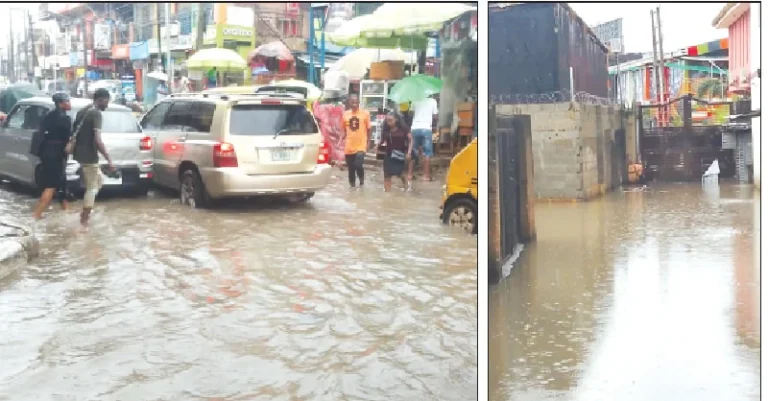
Hours of heavy rainfall on Tuesday caused widespread flooding across several parts of Lagos State, submerging homes and roads, disrupting movement and triggering power outages after critical electricity infrastructure was affected.
Communities including FESTAC, Gbagada, Ikeja, Ajah, Victoria Island, Lekki, Mushin, Mafoluku, Evans, Olushi, Anikantamo and Adeniji Adele experienced varying degrees of flooding, with residents wading through waterlogged streets and motorists stranded on submerged roads.
In Ikeja, floodwaters entered homes and shops, forcing some residents to temporarily relocate. Residents blamed the situation on blocked drainage channels, poor road design and indiscriminate construction that obstructs waterways.

The downpour also affected electricity supply after floodwaters damaged facilities at the Oworo 132/33kV Transmission Station. Ikeja Electric said flooding impacted two power transformers and several 33kV feeders serving areas including Ladilak, Bariga, Oworo, Pedro, Alapere, Agboyi, Araba and Gbagada. The utility said it is working with the Transmission Company of Nigeria to restore power as soon as repairs are completed.
The flooding extended to neighbouring Ogun State, where residents of Gloryland Estate in Ibafo appealed for urgent government intervention, citing damaged homes, disrupted movement and recurring flood incidents linked to blocked drainage channels.
Meanwhile, Babajide Sanwo-Olu has approved the dredging of 28 additional primary drainage channels to strengthen flood control across Lagos.
Commissioner for the Environment and Water Resources, Tokunbo Wahab, described the rainfall as an extreme weather event that overwhelmed existing drainage infrastructure, resulting in temporary flooding in several communities.
He said Lagos’ coastal geography naturally slows the discharge of stormwater during high tide, making temporary flooding more likely after exceptionally heavy rainfall. Wahab urged residents to stop dumping refuse in drainage channels, avoid illegal reclamation of wetlands and refrain from building on drainage alignments, while advising motorists to stay off flooded roads and comply with safety advisories.