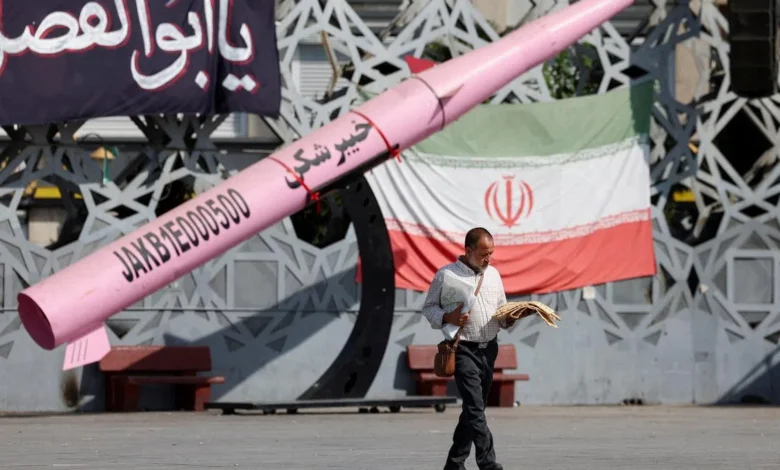
NEW YORK, July 17 – A new wave of U.S. attacks on Iran has plunged Iranians back into deep uncertainty and anxiety after a period of relative calm while a shaky ceasefire held.
Iranians contacted by Reuters via an encrypted messaging app said economic problems were mounting and they were consumed by worries over what will happen next.
Sharing a photograph of her weekly grocery shopping, Somayeh, 40, a photographer in Tehran, said the pre-war prices had almost doubled.
“The most important thing overall in the middle of the war is the economy. Everyday our situation is worse and more difficult,” she said.


“The thing that’s the most stressful is the back and forth: one day it’s war, the next it’s peace. We don’t know what’s actually going to happen. We can’t even make plans for two days in the future.”
Like everyone else interviewed by Reuters, she spoke on condition of partial anonymity, declining to let her full name be used and citing fears of government reprisals.
Amir, a 30-year-old software engineer in Sanandaj in the western Kurdistan province, said he had married shortly before the war began with U.S.-Israeli attacks on February 28.
He had been worrying about how to provide for his family and struggling to find work since Iran’s leaders cut internet connectivity during protests against the authorities in January.
“Within a month or so when the internet was reconnected, the war began. The internet was cut off again, businesses were again severely impacted, there was a lot of trouble in my industry,” said Amir.
“I had crippling debt. There were no other pathways for me because I’m in Sanandaj and I’m a remote worker who relies on the internet. I couldn’t work at all,” Amir added.
He found work only a few days ago, but now hostilities have intensified again in the more than four-month-old war, with the ceasefire reached in June descending into daily attacks and counterattacks.
STAYING IN IRAN DESPITE AIRSTRIKES
Nazanin, a 34-year-old psychotherapist who also spoke from Sanandaj, said she used to want to leave Iran to pursue her PhD in psychology. But the value of the rial currency has plummeted, and she can no longer afford to leave her homeland.
“I could probably go to Turkey and stay for two months but I neither have the money nor the possibility to make that happen,” she said.
Nazanin said her decision to stay in Iran had also been shaped by how much she worried when she was away from her family during earlier rounds of attacks.
“During the war, whenever I was away from my family, I would start thinking if I was hit with an airstrike, how would this affect my family?” she said.
“And then I would think that if my family was killed by a bomb, what would I do? The thought of not being with them and of having the destiny of a person living alone with grief was so difficult that it impacted my idea of emigrating.”
Somayeh, the photographer, said she had also once had plans to leave Iran. They were thwarted by the currency crisis, she said, but added that she would not leave now even if she had a viable way out of the country.
“Today even if I was able to go, I don’t think I would because my life, home and family are here. Even if I was able to leave for a few months, I’d have to return and continue my life here. I don’t think I’d ever leave,” she said.
Hiwa, who lives in the city of Mahabad, also said he had no desire to leave. He sees the mounting economic issues amplified by the war as seeds for social change.
“The continuation of this war can activate social elements because with the continuation of the current trend of inflation, there is no conceivable alternative but street riots,” he said.
Thousands of Iranians were killed when the authorities crushed January’s protests. Iran has since sought to forestall domestic unrest with arrests, executions and street deployments by security forces.
Amir detailed experiencing insomnia when he was unable to contact his father for months because he was away in Iraqi Kurdistan. He said that despite all these pressures, he would remain in the country.
“My mom was around during the (1980-88) Iran-Iraq War and she said then that my grandfather would say that it’s ok if we died, as long as we were under our own roof,” he said.
“We don’t want to leave our home. We don’t know what it would be like to leave. Will the borders be open? Will we be let into other countries and deal with the same situation that Syrian (refugees) did?” he asked, referring to Syrians fleeing their country’s 2011-24 civil war. REUTERS


