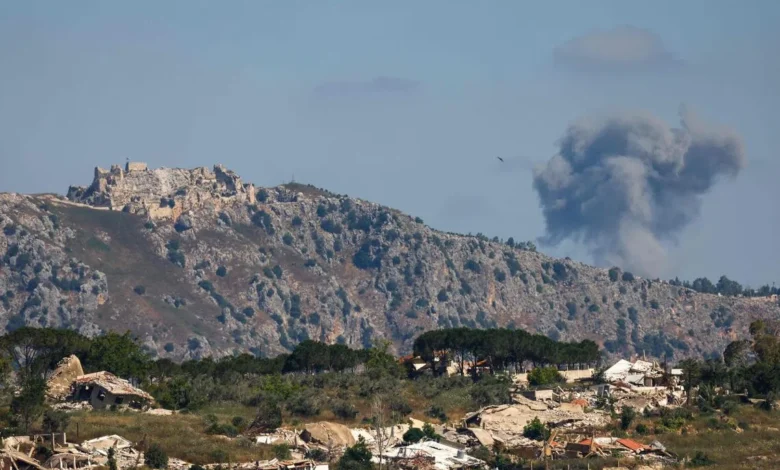
BEIRUT – Israeli forces carried out a series of detonations overnight near the UNESCO-listed Beaufort castle in southern Lebanon, Lebanese state media reported on July 31, with Israel saying it had destroyed tunnels used by the Iran-backed Hezbollah militant group.
“Israeli forces triggered very powerful explosions around midnight, specifically in the area of the Beaufort fortress,” the official National News Agency (NNA) said, adding that the huge blasts resounded over a large area, shattering glass in nearby villages.
The Crusader-era castle, located in the southern area occupied by Israel, was added last week to UNESCO’s List of World Heritage in Danger.
In a joint statement, Israeli Prime Minister Benjamin Netanyahu and Defence Minister Israel Katz announced that the army had destroyed “terror tunnels in the Beaufort area” using approximately 700 tonnes of explosives.


Lebanon’s Culture Ministry said the explosions struck “the area opposite the fortress”, warning that “the vibrations from the explosions may have caused damage” in the castle’s vicinity.
It said technical teams were unable to conduct an on-the-ground assessment because “the site is under occupation”.
An AFP correspondent in a nearby village heard large explosions overnight and saw dust covering a swathe of forest area.
AFP footage showed dust blanketing the mountaintop near where the castle sits.
The Israeli army said that “the tunnel network served as a central command centre” for Hezbollah and consisted of “several underground levels that were built over the course of two decades”.
Lebanese Parliament Speaker Nabih Berri, a Hezbollah ally, condemned the detonations and said they “must not be met with silence”.
Netanyahu and Katz said the explosions followed a “blatant violation of the ceasefire agreement” by Hezbollah, after Israel’s army on July 29 accused the militants of launching an explosive drone at an Israeli military vehicle in southern Lebanon.
Hezbollah has not claimed any attacks since a ceasefire with Israel came into force on June 20 after a US-Iran memorandum of understanding over the regional war.
While violence has declined since the US-Iran agreement signed in June and a Lebanon-Israel framework deal, Lebanon continues to report Israeli strikes and artillery shelling on the south, as well as detonations of buildings in southern villages.
The Iran-backed movement drew Lebanon into the wider Middle East war on March 2 with attacks on Israel.
Israel retaliated with a massive bombing campaign and a ground offensive that the Lebanese authorities say have killed more than 4,300 people.
Israel’s army continues to occupy areas of southern Lebanon extending about 10km into Lebanese territory along the border.
On July 28, UN peacekeepers said they had found around four tonnes of mainly ammonium nitrate explosives earlier in the month in a south Lebanon border village under Israeli occupation.
A source with knowledge of the matter told AFP news agency the containers had Hebrew writing on them and were “likely used for demolitions”. AFP


