The deal between the US and Saudi Arabia to help the Gulf kingdom develop nuclear energy is a coup for Mohammed bin Salman.
Some observers believe he played President Trump, letting it be known that if the US did not offer nuclear know-how, he would have happily collaborated with China, Pakistan, or even Russia.
However it came about, the announcement heralds the start of a nuclear arms race in the Gulf, which will play out across the region over the coming years.

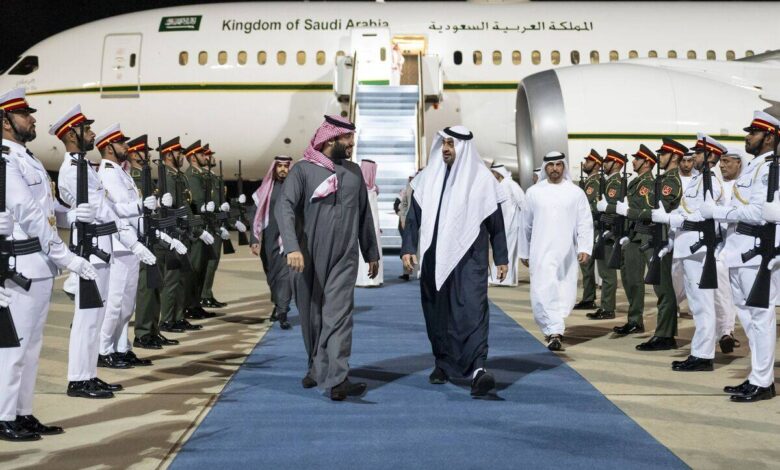
It throws into sharp relief the intriguing relationship between the region’s two most powerful figures: Saudi ruler Mohammed bin Salman (MBS) and Mohammed bin Zayed Al Nahyan (MBZ), President of the UAE and ruler of Abu Dhabi.
MBZ was already an experienced regional leader when MBS became Saudi defence minister in 2015 and became an early mentor, helping to shape his thinking and introducing him to international networks in Washington and elsewhere.
They shared a similar worldview, driven by mutual suspicion of Iranian influence and a desire to reshape regional politics after the upheavals of the Arab Spring. The 2015 intervention in Yemen; support for Egypt’s post-Arab Spring government; and the 2017 Qatar blockade were testament to their collaboration.
But a once warm relationship cooled long ago and became a personal battle for supremacy. Collaboration is ancient history; now the countries’ sovereign wealth funds compete against each other aggressively. In May, the UAE left the Saudi-led oil cartel Opec amid disagreement about managing production; Abu Dhabi has promised to pump millions more barrels of oil a day, threatening a future price war.
The impact will be felt across the Gulf, not least because the GCC has become little more than a talking shop where conflicting views prevent meaningful action. The only thing that unites them is shared animosity towards Iran and a determination to control Iranian nuclear capability.
READ: UAE oil break exposes deepening Saudi rift as Gulf power shifts
There is increasing factionalism within the GCC, Bahrain and Kuwait will increasingly side with UAE; Qatar and Oman will stay close to Saudi Arabia. Different alliances are forming too; even in the wake of the nuclear agreement with President Trump, Saudi Arabia will prioritise ties with Turkey and Pakistan while the UAE doubles down on its relationship with the US and Israel.
But the US’ role in the region is unclear, especially once President Trump leaves office, meaning that the rivalry between MBS and MBZ will increasingly define its future. Dubai’s long-time status as the Gulf’s business hub has been threatened by Saudi’s Vision 2030; foreign firms must now have a head office in Riyadh, and the state is investing heavily in tourism, technology and financial services whilst bidding to become the region’s air and sea logistics hub.
Cynics say that Vision 2030 is nothing more than a slick marketing trick; the country’s strategy has been outsourced to consultants. That may be true, but MBS has consolidated his power, eliminated political opposition and embedded his family for the future.
By contrast, MBZ has kept strategic thinking in-house rather than outsourcing it. The model is: small state, big global reach; a “Little Sparta” that is indispensable to international commerce. But his power is more limited; with six other Emirates to deal with, he does not have as free a hand as his Saudi rival.
MBS is also proving himself more pragmatic. The UAE chose not to participate in the state funeral of Iranian leader Ali Khamenei, with ceremonies held across six days in Tehran, Qom and elsewhere before his burial at the Imam Reza shrine in Mashhad. The Saudis were not invited, but sent a delegation headed by deputy Foreign Minister, nonetheless.
How should we expect to see the MBS vs MBZ feud develop? It is worth noting that tensions between two most populous countries and largest economies in the GCC pre-date the breakdown of their own relationship. For example, in 2009, the UAE withdrew from the Gulf Cooperation Council monetary union project in protest at plans for the council’s headquarters to be in Riyadh rather than Abu Dhabi.
Now, both will attempt to leverage their economic muscle and international relationships to project power on the world stage. Both want to be the architect of the Middle East’s future.
Diplomatically, Yemen will remain a potential flashpoint; economically, they will vie to attract foreign direct investment, trade, and tourism. We should expect to see continuing tension in the energy markets, less policy coordination in the Gulf and increasing uncertainty for its smaller states. The GCC will becomes less cohesive, regional conflicts will become harder to resolve and investors will face greater geopolitical uncertainty.
What will the US – who still see themselves as guardians of the region – and its allies do: force them to unite or continue playing divide and rule to see who offers the West more? In this case will China and perhaps Russia step into the fray and seize any opening? There is a great deal at stake because, depending on the US strategy, the $ hegemony might also be at risk, allowing the Yuan to gain ascendancy.
For now, it’s impossible to predict who will come out on top, but neither ruler would benefit if tensions escalated into a full-scale political or economic break-up.
OPINION: Reinventing the Gulf towards strategic neutrality
The views expressed in this article belong to the author and do not necessarily reflect the editorial policy of Middle East Monitor.