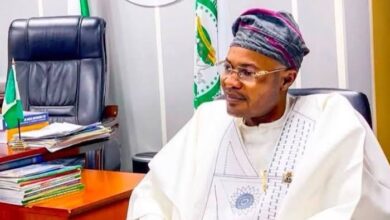
Senior special assistant to the President on Community Engagement (South West), Moremi Ojudu, has urged Nigerians to safeguard public infrastructure, warning that vandalism, indiscriminate waste disposal and the obstruction of drainage channels pose serious threats to the sustainability of the federal government’s multi-billion-naira road projects, particularly the Lagos–Calabar Coastal Highway.
Ojudu made the appeal during consultative stakeholder meetings with concerned landlords on the coastal highway corridor, attended by members of the National Assembly, officials of the Federal Ministry of Environment, presidential aides, traditional rulers, contractors and journalists.


She said President Bola Ahmed Tinubu’s administration remains firmly committed to transforming Nigeria’s infrastructure landscape through strategic investments in roads and other critical projects to boost economic growth, improve connectivity, and promote national integration.
According to her, the President’s Renewed Hope Agenda has prioritised the execution of legacy infrastructure projects across the six geopolitical zones, describing them as essential to unlocking Nigeria’s economic potential.
She listed some of the administration’s signature projects, including the Lagos–Calabar Coastal Highway, the Sokoto–Badagry Super Highway, the Akwa Ibom–Cross River Highway, and the Calabar–Ugep Highway, among others, currently under construction nationwide.
“The President is intentionally changing the narrative of infrastructure development in Nigeria. Through strategic economic decisions, regional integration initiatives and the execution of legacy projects, his administration is laying the foundation for sustainable national development,” she said.
Ojudu, however, expressed concern over what she described as the increasing destruction of public infrastructure by some citizens, especially along sections of the Lagos–Calabar Coastal Highway.
She alleged that some residents had converted designated drainage corridors into refuse dumps and temporary shelters. In contrast, others had continued to encroach on road setbacks and flood channels, thereby undermining efforts to protect the highway and mitigate flooding.
She stressed that such practices not only endanger public investments but also contribute to environmental degradation and flooding.
“Our roads are built with enormous public resources running into billions of naira. Every Nigerian has a responsibility to protect these national assets rather than destroy them,” she said.
She appealed to community leaders and residents along the project corridor to support government efforts by discouraging activities that could damage the highway or obstruct its drainage infrastructure.
According to her, protecting public infrastructure is a collective responsibility that requires the active participation of all citizens.