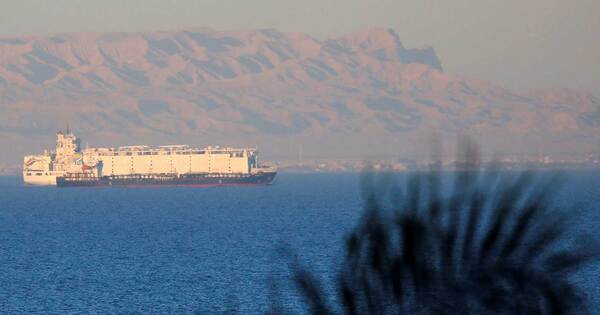
Mumbai, (Maharashtra) [India] July 28 (ANI): Commercial shipping through the Bab el-Mandeb Strait has slowed sharply in recent days as heightened security risks, insurance restrictions and evolving military developments in the Middle East prompt ship operators to reassess routes through the Red Sea, according to an S&P Global report.
The report said vessel crossings through the Bab el-Mandeb Strait fell to an average of 31 per day over the last three days from an average of 43 per day in the first half of July. Traffic through the Strait of Hormuz also moderated to an average of 17 vessel crossings per day over the past three days.
On latest shipping trends, S&P Global said, ‘Vessel crossings through the Bab el-Mandeb strait slumped over the last three days to an average 31 per day, down from an average 43 per day in the first half of July, while crossings through the Strait of Hormuz averaged 17 per day over the past three days.’
According to the report, security concerns remain elevated after the UK Maritime Trade Operations (UKMTO) reported two separate incidents involving commercial vessels. A tanker in the Gulf of Oman reported an encounter involving ‘military forces’, while another tanker operating in the southern Red Sea observed ‘a projectile impact in close proximity to the vessel’, highlighting the continuing risks to merchant shipping.
The report also noted that the Houthi military claimed responsibility on July 25 for drone and missile attacks targeting Saudi Aramco facilities in Jizan and Yanbu, including the 400,000 barrels-per-day refinery at Jizan.
S&P Global said daily traffic through the Bab el-Mandeb remained subdued, recording 32 vessel transits on July 26 after 26 on July 25 and 36 on July 24. The decline coincided with reports that several major insurers had suspended war-risk cargo cover for Saudi-linked vessels transiting the Red Sea, raising concerns over the impact of insurance constraints on regional trade.
Despite the challenging security environment, Saudi-linked vessels accounted for 24 per cent of all Bab el-Mandeb transits during the three-day period, recovering from an average share of 13 per cent immediately after the Houthis announced a blockade on Saudi ports on July 20.The report cited the VLCC NEW EXPLORER, which loaded one million barrels of Saudi crude from Yanbu on July 21 and successfully crossed the Bab el-Mandeb Strait on July 26 en route to Ningbo, China, as an example of continued Saudi-linked traffic.
However, S&P Global said shipping companies are increasingly adopting different strategies to mitigate risks.
‘Recent vessel movements suggest operators are adopting different strategies to manage the heightened security risks in the Red Sea. While some vessels continue to transit the waterway but appear to be avoiding direct calls at Saudi Red Sea ports, others have opted to bypass the Red Sea entirely and reroute via the Cape of Good Hope, despite the significantly longer voyage,’ the report said.
In the Strait of Hormuz, S&P Global said Iranian-linked vessels continued to dominate traffic, with 18 vessel transits on July 24 and 16 each on July 25 and July 26. Weekly average crossings eased to 17 per day for the week ending July 26 from 19 per day in the previous week.The report added that US forces paused further strikes against Iran from July 24 after nearly two weeks of sustained attacks, while Tehran also announced it had halted military operations, signalling that diplomatic engagement may be gathering momentum. (ANI)