By Taiwo Scholastica
The House of Representatives has called on the Federal Government and relevant agencies to step up efforts to strengthen food safety measures amid rising cases of foodborne diseases in Nigeria.
The resolution followed the adoption of a motion of urgent public importance presented during plenary on Tuesday by Edo State lawmaker, Billy Osawaru.
The motion, titled “Need to tackle the increasing rate of foodborne diseases, stiffen food safety regulations and increase public awareness in Nigeria,” was spurred by concerns over the severe health and economic consequences of consuming unsafe food.

Presenting the motion, Osawaru referred to a report by the World Health Organization (WHO), which estimated that unsafe food is responsible for about 600 million illnesses affecting roughly one in ten people worldwide and 420,000 deaths globally each year, with Africa bearing the highest burden.
Osawaru said the House was aware of the Federal Government’s efforts under Sustainable Development Goals 3 and 12 to promote healthy lives and sustainable food production, alongside the statutory mandates of the National Agency for Food and Drug Administration and Control (NAFDAC) under Cap N1 LFN 2004 and the Standards Organisation of Nigeria (SON) to regulate food safety.
“Commendable is Nigeria’s 2025 State Party Annual Report score of Level 3, which is a testament that Nigeria surpassed the WHO benchmark and became one of the leading nations in Sub-Saharan Africa with functional systems for detecting, reporting, and responding to foodborne disease outbreaks,” he said.
He, however, identified several factors contributing to the spread of foodborne diseases in the country.
The lawmaker said the House was “Aware that chemical hazards, poor hygiene among food handlers, open defecation, lack of potable water especially in rural areas weak regulatory enforcement by NAFDAC and SON, and inadequate infrastructure in markets and abattoirs are the major factors leading to the loss of tens of thousands of healthy lives owing to exposure to contaminated foods.”
Osawaru expressed concern that despite ongoing government efforts to address the challenge, Nigeria continues to record a high number of foodborne disease cases and deaths annually.
He said, “Nigeria still accounts for a high number of approximately 50 million foodborne disease cases and more than 53,000 deaths caused by unsafe food yearly, leading to an aggregate of 4.26 million healthy years of life lost annually to ill health, disability, and premature death due to foodborne diseases, with over 80 percent of these predominantly affecting children under five years of age.”
According to him, the economic impact of unsafe food remains significant, as the country loses billions of dollars annually through reduced productivity, medical costs, and trade restrictions, particularly across international borders.
Osawaru further linked recurring cholera outbreaks in different parts of the country to contaminated food and water sources, citing reports from the Nigeria Centre for Disease Control and Prevention (NCDC).
He noted that the situation exposes persistent weaknesses in Nigeria’s sanitation systems and basic infrastructure.
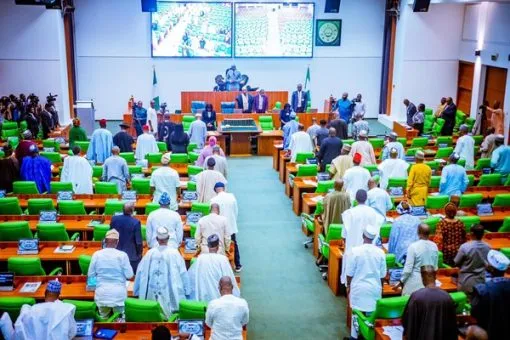
The motion received broad support from members of the House after Speaker Tajudeen Abbas, who presided over the sitting, subjected it to a voice vote.
Following its adoption, the House called on the Federal Ministry of Health and Social Welfare, NAFDAC, SON, and the NCDC to improve surveillance, inspection, and certification across the food production value chain.
The House also mandated its Committee on Healthcare, Food Safety, and Nutrition to work with NAFDAC, NCDC, SON, and other relevant stakeholders to ensure that adequate funds required for the procurement of food testing equipment are captured in subsequent supplementary budgets; training, retraining, and certification of food handlers are prioritized; and legislative gaps are identified and proposed for amendment to further strengthen food safety regulations in Nigeria.
Lawmakers also urged the Federal Ministries of Health and Water Resources to increase investment in clean and potable water while improving sanitation infrastructure to reduce the risks posed by contaminated water.
The House further directed the Federal Ministry of Information and National Orientation to develop a sustained public education campaign on food safety, personal hygiene, and the dangers associated with consuming food sold by the roadside.