0
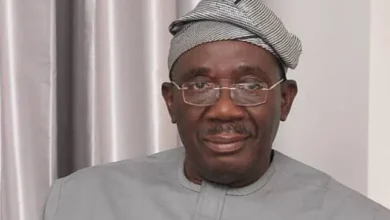
Babajide Olusola Sanwo-Olu, Lagos State Governor, has described the Climate Defence and Catalytic Fund (CDCF), as a landmark intervention that will strengthen Nigeria’s climate finance architecture by mobilising catalytic capital, supporting project preparation, reducing investment risks, and unlocking greater private sector investment for climate-resilient development.
While speaking at the Climate Finance Leadership and Recognition Night, which marked the official closing ceremony of the maiden Climate Finance Preparedness Clinic (CFPC) 2026, the Governor, who was represented by Dr. Kadri Obafemi Hamzat, his Deputy said the CDCF is far more than a financing mechanism.
He said it is a strategic platform designed to transform promising climate ideas into bankable, investment-ready projects capable of attracting domestic and international capital.
According to him, “capital follows confidence, and confidence follows preparation,” noting that the success of climate action depends not only on ambitious policies but on building credible institutions, preparing technically sound projects, reducing investment risks and strengthening public-private partnerships that inspire investor confidence.
He further said that the Climate Finance Preparedness Clinic is so important, stressing that “Its greatest contribution lies not simply in the conversations it has convened, but in the capacity it is helping to build.
“By bringing together policymakers, regulators, financial institutions, project developers and development partners, the Clinic has focused attention on one of the most critical dimensions of climate finance: preparing projects that are technically sound, commercially viable and investment-ready.”
While calling for a stronger collaboration among governments, financial institutions, development partners and the private sector to bridge Nigeria’s climate financing gap, the Governor noted that the country’s transition to a climate-resilient economy will depend not on the size of its ambitions but on its ability to finance them.
“Public resources alone will never be enough. The future demands blended finance, stronger partnerships and institutions capable of preparing projects that inspire investor confidence.”
The event also features the unveiling of the Eco-Label Certification System, which the Governor described as a System which responds to that need by promoting integrity in sustainability reporting, discouraging greenwashing and recognising organisations that uphold responsible environmental practices, noting that in doing so, it reinforces a simple but powerful principle: markets reward credibility, and credibility must be earned.
“Together, the Climate Finance Preparedness Clinic, the Climate Defence and Catalytic Fund and the Eco-Label Certification System form complementary pillars of an ecosystem designed to strengthen institutional capacity, improve project preparation, enhance investor confidence and mobilise the capital required to build resilient communities and sustainable economies,” he concluded.
Earlier in his welcome address, Mosopefolu George, the Commissioner for Economic Planning and Budget, who was represented by Lekan Balogun, Special Adviser to the Governor on Economic Planning and Budget, noted that climate finance has become an integral part of sustainable development and long-term economic growth, with its increasing importance shaping how governments finance infrastructure, strengthen resilience and unlock new investment opportunities.
The Commissioner underscored the importance of collaboration among government, the private sector and development partners, demonstrating what can be achieved when stakeholders work together towards a shared vision of a sustainable and resilient future.
Titilayo Oshodi, the Special Adviser to the Governor on Climate Change and Circular Economy, said the deliberations at the two-day Climate Finance Preparedness Clinic had reaffirmed that the future of climate finance depends not only on the availability of capital, but also on the systems that effectively connect policy, projects, institutions, data and investment.
Oshodi, who gave a recap of the two-day event, noted that leaders from government, financial institutions, development finance organisations, regulators, the private sector and development partners explored how investment-ready projects, climate risk governance and strategic partnerships can unlock more financing for climate action.
She added that Nigeria’s climate finance agenda took a major step from dialogue to implementation as stakeholders at the inaugural Climate Finance Preparedness Clinic committed to strengthening institutions, improving governance and mobilising greater capital for climate action.
Victor Ayodeji Fodeke, Co-Founder/Vice President/ Group Managing Director of Greenplinth Africa Limited, in his keynote address, tagged “Mobilising Climate Finance for Nigeria’s Green Economy,” called for an urgent investment in project preparation and local financing mechanisms to enable Nigeria seize emerging opportunities in the global carbon market, urging Lagos State to position itself as the country’s anchor jurisdiction for Article 6.4 carbon market transactions under the Paris Agreement.
He noted that Nigeria’s climate economy can only move from ambition to implementation if the country develops a strong pipeline of investment-ready climate projects.
“Africa did not lose because it lacked projects. It lost because it lacked the preparation layer that made projects bankable. Article 6 of the Paris Agreement gives us another opportunity, but only if we finance that missing layer ourselves,” Fodeke said.