0
Goddy Umukoro
The Delta State Government, Monday, said 25 prospective investors from Brazil and China have indicated interest in the forthcoming Delta State Investment and Economic Summit, as Vice President Kashim Shettima and Director-General of the World Trade Organisation, WTO, Dr Ngozi Okonjo-Iweala, Patrice Lumumba headline a high-powered list of participants.
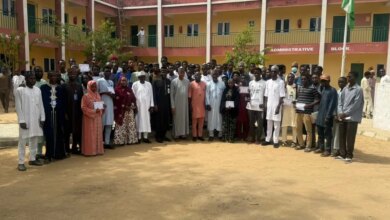
Secretary to the State Government, SSG, and Chairman of the Main Organising Committee, Dr Kingsley Emu, disclosed this during an interactive session with stakeholders in Asaba, saying the summit would connect the state’s vast economic potential with local and international capital.


Emu said the summit, themed “Harnessing Our Strengths and Potential,” would also attract the Minister of Finance and Coordinating Minister of the Economy, Mr. Taiwo Oyedele, development finance institutions and leading private-sector players, while renowned oil and gas industry leader, Engr. Austin Avuru, would serve as Chairman.
He said: “To date, 25 potential investors are coming in from Brazil and China. They have indicated interest and we are already making preparations for them.
“Our sister, Dr Ngozi Okonjo-Iweala, Director-General of the WTO, will be the keynote speaker. Engr. Austin Avuru is the Chairman of the Summit. The Minister of Finance has personally acknowledged his attendance, while the Vice President, Senator Kashim Shettima, has also confirmed his attendance.
“So, it is going to be a star-studded programme, with participation from the national level, development finance institutions and a host of others.”
Emu stressed that local businesses would play a critical role in translating foreign investor interest into sustainable economic activity, noting that prospective investors were already seeking credible indigenous partners.
“For every potential investor who has expressed interest, they are talking about local partners, and those partners will come from among our people.
“The significant success we will achieve on this journey will depend on your cooperation, collaboration and positive disposition to what we want to do,” he told stakeholders.
The SSG said Delta was approaching the summit with clearly defined and bankable investment propositions rather than a broad promotional agenda, identifying agriculture, aquaculture, power, oil and gas, solid minerals, manufacturing and the blue economy as priority sectors.
According to him, Delta possesses strong economic fundamentals, including a youthful population, extensive land and waterways, abundant oil and gas resources, expanding infrastructure and a broad network of tertiary, technical and vocational institutions.
“We have a lot of strengths. We are one of Nigeria’s leading subnational economies, with a youthful population and enormous consumption potential.
We have vast land and water resources that give us a competitive advantage, particularly in the blue and marine economy,” he said.
Emu said the state was deliberately repositioning beyond its traditional identity as a leading oil-producing state, with services, agriculture and other non-oil sectors increasingly contributing to economic growth.
He said; “we have four universities owned by the state, so we are providing a new level of manpower. Potential investors can partner freely and easily with our institutions and technical colleges to train manpower tailor-made to suit their operations.
This presents enormous opportunities in human capital development and availability of skilled manpower.
“We are very strong in agriculture and we want to translate that strength across the entire value chain. Cassava is one of the areas we are looking at. We are also looking at rice and other agro-products. What we want is investment that creates value, jobs and sustainable economic activity”.
The SSG described aquaculture as one of Delta’s strongest but underdeveloped opportunities, saying the state has a huge concentration of fish farmers and fish ponds but requires significant investment in fish feed production, cold rooms and processing facilities.
“Fish feed is one of the most important, expensive and challenging issues for fish farmers. Once you have those feeds available, you can be sure that we will become a major fish basket.
“If we have cold rooms and processing facilities around, our farmers will produce much more. We are looking for investors, both foreign and local, to partner with us to bridge these gaps,” Emu said.
He said the state’s extensive waterways also offered opportunities for commercial fishing, processing and other blue-economy ventures.
On solid minerals, Emu listed kaolin, coal, silica, clay and lignite among resources with commercial potential, stressing that some deposits were already attracting concessions and commercial activity.
“Solid mineral opportunities exist here. It is no longer storytelling; the resources are proven and people are already doing business in some of these areas,” he said.
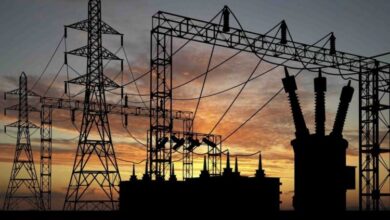
Emu also identified power as a major investment frontier, citing Delta’s gas resources and proximity to critical gas infrastructure as competitive advantages for industrial development.
He said the government was exploring decentralised electricity solutions, particularly mini-grids and captive generation, to provide more reliable energy for industrial clusters, manufacturing concerns and commercial centres.
“The preferred model for us is the mini-grid because the national grid has become a major challenge. We have opportunities for power across the state, particularly in our cities and industrial areas where demand is high.
“If you have consistent power supply, the economy will do much better. We have the gas, we have the strategic location and we have the opportunity to provide competitive power for industries,” he said.
Emu said the summit would go beyond speeches to include sector-focused engagements, investment matchmaking, site visits and structured follow-up aimed at converting investor interest into bankable projects.
Speaking on behalf of the Nigerian Association of Chambers of Commerce, Industry, Mines and Agriculture, NACCIMA, Janet Olisa said the organised private sector was fully on board and ready to partner with the state government.
She expressed confidence that sustained public-private collaboration would help translate the summit into tangible investments, job creation and broader economic growth.