5
Talks On His New PODCAST
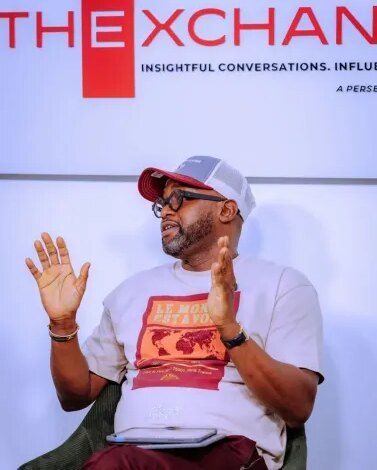
Femi Oladapo Soneye, respected journalist, media entrepreneur, and former Chief Corporate Communications Officer of NNPC Ltd, months back, launched his biweekly podcast, ‘The Exchange‘ with Femi Soneye. To say the suave journalist has hit the ground running from the get -go is an understatement. This is because the platform, in just a few months of its going on stream, has become a must – watch for many. Femi’s guests are A-list personalities from all spheres.So far, ‘The Exchange’ has played host to some of Nigeria’s and Africa’s most influential voices, spanning politics, business, sports, entertainment, and civil society. With Soneye’s decades of media experience and insider access, the show has ignited bold conversations, rare insights, and candid perspectives on issues shaping the nation and the world, moving forward.”The Exchange” is more than just another interview program, it’s a space for open, meaningful dialogue,” said Femi … “Listeners will hear the human side of leaders and changemakers, beyond the headlines.”
The podcast features 30–40-minute episodes released twice a month and is available on Spotify, Apple Podcasts, YouTube, Audiomack, and other major platforms. In this interview with City People’s Wole Alakija, SONEYE spoke on this new journey after leaving his role as the NNPC spokesperson.
Let’s talk about the transition. What made you decide to pick up a microphone instead of taking another corporate comms role right after NNPC?
I’ve always considered myself an all-round communications professional. My career has allowed me to wear different hats as a journalist, broadcaster, editor, reputation manager, and public relations specialist. Rather than limiting myself to one aspect of the profession, I’ve always embraced every opportunity to learn, evolve, and contribute across the entire communications spectrum.
Moving behind the microphone wasn’t so much a transition as it was a return to one of my earliest passions. Throughout my career, I’ve enjoyed telling stories, asking questions, shaping narratives, and helping audiences better understand complex issues. Broadcasting simply provides another powerful platform to do that.
The goal is straightforward: to give Nigerians direct access to the thoughts, experiences, and insights of leaders in government, business, and other sectors. In many cases, these are conversations the public would never hear through conventional news reports or press statements. Long-form interviews allow us to go beyond the headlines, explore the thinking behind major decisions, and provide context that informs, educates, and enriches public discourse.
For me, it’s not about choosing one career over another. It’s about continuing to communicate, educate, and serve the public using every platform available. Whether in journalism, corporate communications, public relations, or broadcasting, the mission remains the same: to tell meaningful stories, foster understanding, and contribute positively to society.
Was there a specific moment during your time as NNPC spokesperson when you thought “I wish I could tell this story my own way”?
When I joined NNPC Ltd., I found an organisation that, for many years, had developed a reputation for saying very little. Many Nigerians would agree that the company was often perceived as opaque, and that perception was largely shaped by an era in which communication was reactive rather than proactive. There was almost an unwritten culture of “don’t ask, don’t tell,” and that created a significant reputation challenge over time.
One of the first conversations I had with the management team was about changing that culture. My position was simple: Nigerians are the ultimate shareholders of NNPC Ltd., and they deserve to understand what their company is doing. We needed to be more transparent, more accessible, and more intentional about telling our story.
With the full support of the Group Chief Executive Officer and the management, we transformed our communications approach. We moved from simply issuing statements to actively engaging the public. We strengthened our digital presence, embraced social media, introduced infographics and multimedia storytelling, responded more quickly to issues, and built stronger relationships with our stakeholders and the media. We wanted Nigerians to hear directly from the company rather than rely on speculation or misinformation.
I was fortunate to have leadership that gave me the confidence and latitude to innovate. They trusted the communications function to do its job professionally. In fact, the GCEO never asked to preview or approve every media story. He often saw our reports and public engagements at the same time Nigerians did. That level of trust empowered us to communicate with speed, credibility, and authenticity.
So, to answer your question, I never felt, “I wish I could tell this story my own way,” because I was allowed to tell the story the right way. We built a communications culture that was open, factual, timely, and transparent. That freedom, backed by supportive leadership, enabled us to reshape public engagement and demonstrate that NNPC Ltd. was committed to greater openness and accountability.
At NNPC you were speaking for an institution. How does podcasting give you freedom that role didn’t?
As I said earlier, for me it’s about continuing to communicate, educate, and serve the public using every platform available. Whether in journalism, corporate communications, public relations, or broadcasting, the mission remains the same: to tell meaningful stories, foster understanding, and contribute positively to society.
The difference is that at NNPC Ltd., I was speaking on behalf of an institution. My responsibility was to communicate the company’s position accurately, protect its reputation, and ensure that every message aligned with its corporate objectives. It was a role I thoroughly enjoyed because it allowed me to make the company more transparent and accessible to Nigerians.
Podcasting, however, offers a different kind of freedom. It allows for deeper, longer, and more candid conversations. Instead of communicating through press releases or responding to the news cycle, I can sit down with leaders in government, business, sports, and other sectors and explore the ideas, experiences, and decisions behind the headlines.
What excites me most is giving Nigerians access to conversations they ordinarily wouldn’t hear. In a 30- or 40-minute discussion, guests can explain not just what happened, but why it happened, the challenges they faced, and the lessons they’ve learned. That depth is often impossible in traditional news formats.
So, I don’t see podcasting as a departure from what I’ve always done. I see it as an extension of my lifelong commitment to informing, educating, and connecting Nigerians with the people shaping our country and the world.
Who were you trying to reach with the podcast that you couldn’t reach through press briefings and official statements?
One of the privileges of my career has been having access to some of the biggest names in business, industry, government, and public service. During my time at NNPC Ltd., I interacted regularly with decision-makers at the highest levels. However, those engagements were always within the context of official communication and the business of the organisation.
The podcast serves a different purpose. It’s not about reaching people I couldn’t reach before; it’s about giving Nigerians access to conversations they ordinarily wouldn’t hear.
Newspapers and broadcast news are excellent at reporting events and breaking news, but they are often constrained by time, space, and the demands of the news cycle. A podcast allows leaders to go beyond the headlines and to explain their thinking, share personal experiences, discuss the challenges behind major decisions, and offer insights that rarely make it into a press statement or a news report.
My goal is to bridge that gap. I want Nigerians to hear directly from the people shaping policy, driving the economy, leading major institutions, and influencing society. Those authentic, in-depth conversations help the public better understand not just what happened, but why it happened. I believe that kind of engagement enriches public discourse and creates a more informed society.
Why podcasting, and why the topics you chose? Did you want to stay in energy/policy, or did you deliberately want to go beyond NNPC and oil/gas?
Podcasting is something I’m genuinely passionate about. It’s another platform that allows me to do what I’ve always loved—communicate, educate, and tell meaningful stories.
The idea was never to remain within the energy or oil and gas space simply because of my time at NNPC Ltd. While energy is an important sector and will always feature on the show, I deliberately wanted the podcast to have a much broader appeal.
The objective is to give Nigerians the opportunity to know and hear directly from the people leading our nation and shaping society. Every leader has a story, a journey, and lessons that can inspire, educate, and inform. Those conversations often reveal perspectives that don’t come across in news reports or official statements.
That’s why the podcast covers virtually every sector. We host leaders in government, business, sports, entertainment, technology, energy, entrepreneurship, academia, and public service. The common thread is simple: every guest must have a story worth telling and insights worth sharing.
Ultimately, the podcast is about creating meaningful conversations that go beyond the headlines, helping Nigerians better understand the people behind the positions and the decisions that shape our country.
What from your years in corporate communications at NNPC turned out to be most useful, and what did you have to unlearn for podcasting?
One of the most valuable lessons I took from my years in corporate communications at NNPC Ltd. was the importance of strategic storytelling. Communication is not just about issuing statements; it’s about building trust, creating understanding, and engaging people consistently.
When I joined the company, one of my priorities was to help transform the way NNPC communicated with Nigerians. We diversified our communication channels, embraced digital platforms, used infographics and multimedia to simplify complex issues, and encouraged our stakeholders to become ambassadors for the company’s story. We also placed a strong emphasis on transparency. We began communicating more openly about the company’s financial performance, announcing major projects, and proactively sharing information that Nigerians had traditionally not been exposed to. As a result, the public gained a better understanding of the company, and we began to receive commendation for our openness and responsiveness.
Those experiences have been invaluable in podcasting because they reinforced the importance of making complex issues simple, engaging, and relevant to the audience.
As for what I had to unlearn, it was the discipline of speaking almost exclusively from an institutional perspective. In corporate communications, every word represents an organisation, so the messaging is necessarily structured and carefully calibrated. Podcasting is different. It thrives on authentic, free-flowing conversations. As a host, my role is not to deliver corporate messages but to ask thoughtful questions, listen carefully, and create an environment where guests feel comfortable sharing their experiences, insights, and perspectives.
In many ways, both roles are about effective communication. The difference *is that one speaks for an institution, while the other creates a platform for others to tell their own stories.
What’s been the hardest part of building an audience from scratch after leaving a role where people already had to listen to you?
Interestingly, building an audience hasn’t been the hardest part because I’ve always believed that people are hungry for honest, thoughtful conversations with their leaders.
Nigerians want to hear directly from the people making decisions that affect their lives. They want more than headlines and sound bites, and they want context, sincerity, and the human stories behind leadership. That’s exactly what the podcast offers* .
What we’ve discovered is that when you create a platform where leaders can speak openly, explain their decisions, share their experiences, and answer difficult questions in a relaxed setting, people listen. They appreciate authenticity.
So, rather than convincing people to listen, the real challenge has been consistently producing conversations that are meaningful, credible, and worth their time. If you respect your audience with quality content and honest dialogue, they will keep coming back.
Ultimately, the podcast isn’t about me; it’s about creating a bridge between Nigerians and the leaders shaping our country. I believe there will always be an audience for that.
Is there anything you learned about how Nigerians consume information at NNPC that directly shaped how you format your podcast?
Absolutely. One of the biggest lessons I learned is that Nigerians value transparency and genuine communication. People don’t just want information; they want to know that you’re listening to them, that their concerns matter, and that you’re willing to engage openly and honestly.
At NNPC Ltd., we changed our communications philosophy from simply speaking to Nigerians to having a conversation with them. We became more transparent, more responsive, and more proactive in sharing information. We also paid close attention to public feedback because communication is most effective when it is a two-way process.
Ultimately, the format is built on a simple principle: transparency, meaningful communication, and letting the audience know that their voices and concerns are being heard. I believe that’s how trust is built, whether you’re speaking on behalf of an institution or hosting a conversation.
What kind of feedback or conversation from listeners has made you feel like “yes, this is why I started”?
The feedback has been overwhelmingly positive, and that’s been very encouraging.
One of the things I hear most often is, “I never knew this about that person.” Even when the guest is a well-known public figure, listeners are often surprised by the stories, experiences, and perspectives they share during the conversation. That tells me the podcast is achieving exactly what I set out to do and going beyond the headlines and introducing Nigerians to the person behind the public image.
I’ve received countless messages from listeners saying they now have a better understanding of a particular leader or issue because of the depth of the conversation. Those comments are especially rewarding because they confirm that people are looking for thoughtful, authentic discussions rather than just sound bites.
Moments like those remind me why I started the podcast. The goal has always been to create a platform where Nigerians can hear directly from leaders in an honest and relaxed setting, discovering things they would never read in a newspaper or hear in a typical news bulletin. When listeners tell me they learned something new or changed their perspective after an episode, I know we’re making a meaningful impact.
What’s next? Now that you’ve made the leap, how do you see podcasting fitting into the next chapter of your career? Is this a side project or the main thing?
Podcasting is not a departure from my career; it’s an extension of it. It’s one of the things I’m deeply passionate about because it allows me to continue informing, educating, and connecting Nigerians with the leaders shaping our country and the world.
That said, it is one part of a much broader professional journey. I remain actively engaged in strategic communications, public affairs, and international advisory work. I’m an Advisor with one of Washington, D.C.’s leading public strategy firms, where I work on government relations and strategic communications. I also serve as a Consultant to the Government of the Republic of Grenada in Washington, D.C., advising on international engagement and public policy initiatives and helping to develop the energy space in Grenada.
Through my communications company in Abuja, we continue to provide strategic communications and reputation management services to the Federal Government of Nigeria, government agencies, and private-sector organisations.
So, I don’t see podcasting as a side project or as replacing what I’ve done throughout my career. Rather, it complements everything else I do. Whether I’m advising governments, helping organisations build trust, managing reputations, or hosting conversations on my podcast, the common thread is communication.
The next chapter of my career is about leveraging every platform available to make a positive impact through strategic counsel, thought leadership, and meaningful conversations that inform, educate, and inspire. The podcast is an important part of that vision, but it sits alongside a career that continues to evolve across journalism, public relations, corporate communications, and international public affairs.
What do you think about this?
Drop your opinion in the comment section.
FOLLOW US & Share this with someone who needs to see this.