0
The town that was once celebrated for its bustling markets , thriving palm oil business and vibrant rural economy Orsu Local Government Area of Imo State became a symbol of fear and displacement after years of violence that forced thousands of residents to abandon their homes and livelihoods.
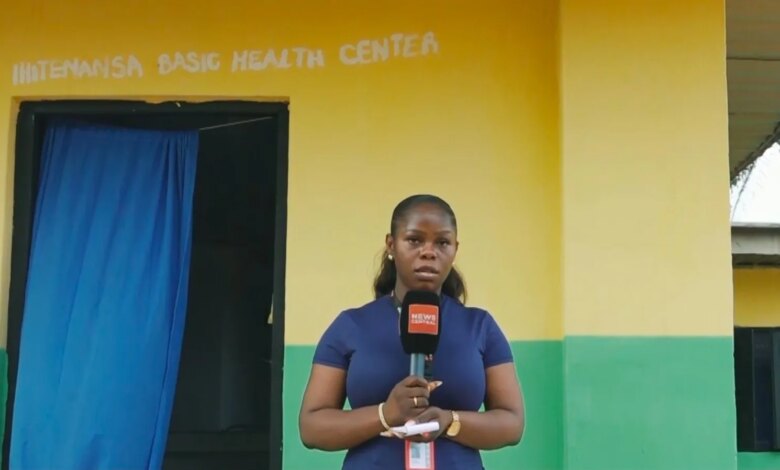
A special report by the News Central revisited the crisis that engulfed the area between late 2020 and mid-2025, documenting the experiences of residents whose lives were upended by attacks linked to non-state actors, including operatives of the Eastern security Network (ESN) and the Indigenous People of of Biafra ( IPOB), as well as security operations.
Although communities are gradually witnessing signs of recovery , survivors say the physical destruction and emotional trauma remain difficult to erase.

The report paints the picture of a community whose identity changed dramatically within a few years. Where traders once converges daily and farmers cultivate their land, is now being envelopes by silence as many communities that were emptied at the height of the violence.
According to the report, the crisis claimed thousands of lives, although the exact numbers remains difficult to independently verify. It also displaced families from villages across the local government, forcing many into neighboring communities, and adjoining states in search of safety.
For many of those who fled, returning home has been anything but easy.
Some came back to find houses reduced to rubble. Others found
Some came back to find houses reduced to rubble. Others found overgrown compounds where family homes once stood. Several returned without the loved ones they had fled with.
Among the stories that best captures the human cost of the conflict is that of chukwunonso, an indigene of Orsu whose life took an indigene of Orsu whose life took and unexpected turn while living in India.
Far from home, he had build a new life overseas. But frequent calls from relatives in Nigeria began painting a frightening picture of events unfolding in his hometown.
Each update suggested that the security situation was worsening.
Then came the news that would alter the course of his life forever.
His brother had been abducted.
According to the report, Chukwunonso managed to establish contact with the kidnappers, hoping to negotiate his brother’s release. When hope gradually faded, he made one final appeal—that if his brother had been killed, the family should at least be allowed to recover his body for burial.
The response, he recalled, was devastating.
The kidnappers reportedly rejected his plea and made it clear that once they killed their victims, their bodies would not be returned.
For Chukwunonso, the conversation marked a turning point.
Instead of remaining abroad, he abandoned his overseas plans and returned to Orsu.
What greeted him was no longer the community he remembered.
The commercial centre that had once attracted traders from different parts of the country had become a shadow of itself.
Markets that once bustled with commercial activities had fallen quiet.
Roads that previously connected communities became routes many residents feared to travel.
Homes stood deserted and families had scattered.
The report recalls that Orsu was widely known for the Eke Ututu International Market, its flourishing palm oil trade and the Afia Ekete Basket Market, all of which contributed significantly to the local economy before violence disrupted daily life.
Perhaps nowhere illustrated the collapse of normal life more than the education sector.
According to the report, repeated gunfire and persistent insecurity forced schools to shut their doors, leaving children out of classrooms for years.
For many families, education ceased to be a priority as survival became the immediate concern.
Parents who once worried about school fees suddenly found themselves searching for safe places to shelter their children.
Healthcare also suffered enormous setbacks.
The report states that hospitals and health facilities in affected communities were attacked and burnt, leaving residents with little or no access to medical care.
Pregnant women were among those most affected.
With hospitals no longer functioning, many reportedly depended on makeshift delivery centres established inside the homes of local midwives.
Medical emergencies became even more dangerous because travelling through affected communities carried enormous risks.
The destruction extended to agriculture, the backbone of many households in Orsu.
Residents reportedly abandoned farmlands for fear of attacks, ambushes and other security threats.
As farming activities declined, incomes disappeared.
The local economy, which depended heavily on agricultural production and trade, struggled under the weight of prolonged insecurity.
The report also highlights the significance of a deep forest ravine known historically as Udeke Valley.
During the conflict, the area reportedly became a major hideout for armed groups and earned the grim nickname “Murder Valley” among residents because of the violence associated with it.
Its difficult terrain presented major challenges for security forces and deepened fears among surrounding communities.
As the violence persisted, many residents realised that restoring normalcy would require more than waiting for outside intervention.
Community leaders, bereaved families and members of the diaspora came together under an initiative known as Odimma Orsu, with the goal of supporting efforts to reclaim their communities and encourage displaced residents to return home.
Chukwunonso became one of those at the centre of that effort.
He volunteered as the Chief Security Officer of a local vigilante group, working alongside a Joint Task Force made up of the military, the police, the Nigeria Security and Civil Defence Corps and other security agencies.
According to the report, members of the local vigilante group served as guides because of their knowledge of the terrain, helping security operatives identify routes and locations that had become difficult to access during the conflict.
Reflecting on his decision, Chukwunonso said returning home was a sacrifice he believed he had to make.
He spoke of the pain of contributing to the development of another country while watching his own community descend into violence.
His story reflects the difficult choices faced by many Nigerians in the diaspora whenever insecurity strikes their hometowns.
For some, distance provides safety.
For others, it brings helplessness.
The report also captures differing views about the origins of the crisis.
One community leader, who requested anonymity, linked the violence to the Federal Government’s handling of the case involving IPOB leader Nnamdi Kanu, arguing that political decisions surrounding the matter contributed to tensions in the region.
That position represents one perspective expressed by some residents and forms part of wider conversations surrounding insecurity in the Southeast.
Today, signs of recovery are beginning to emerge.
The report notes that displaced residents and members of the diaspora are returning through what has been described as a “Mass Return” campaign.
Families are clearing bushes that have overtaken their compounds.
Damaged homes are gradually being rebuilt.
Some children have returned to classrooms.
Small traders are once again opening roadside shops in parts of the community.
These developments have rekindled hope that Orsu can slowly regain the life it once knew.
Yet residents acknowledge that rebuilding homes is only one part of the recovery process.
The emotional scars left by years of violence remain visible in families that lost loved ones, children whose education was interrupted and communities still mourning those who never returned.
The report notes that true recovery will require more than improved security.
Residents believe lasting peace must also include the rebuilding of schools and health facilities, restoration of livelihoods and sustained support for families whose lives were permanently altered by the conflict.
For many people in Orsu, peace is no longer measured simply by the absence of gunfire.
It is measured by whether children can attend school without fear, whether farmers can cultivate their land again, whether traders can reopen their businesses and whether families forced to flee can finally return home with confidence.
Those aspirations remain at the heart of Orsu’s gradual journey from conflict toward recovery.
Even as rebuilding continues, the experiences documented in the News Central report serve as a reminder that behind every statistic are families whose lives were changed forever.
While damaged buildings can be reconstructed and abandoned markets reopened, the memories carried by survivors may take far longer to heal. For the people of Orsu, the road ahead is not only about restoring physical structures but also about rebuilding a community whose greatest loss was the sense of safety it once took for granted.