Nigeria has developed a strange talent for treating investigations as a fancy thing rather than a red flag. Politicians accused of diverting billions, forging credentials, or hoarding wealth don’t disappear from the public eye; instead, they resurface on ballots and campaign posters, asking for your vote like nothing is happening.
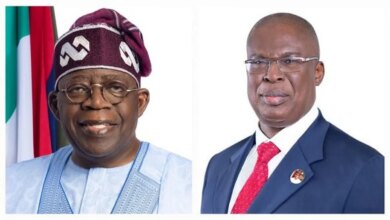
The most recent example is the former Attorney-General of the Federation (AGF) Abubakar Malami, who is running for governor of Kebbi State under the African Democratic Congress (ADC).
On July 15, 2026, a Federal High Court in Abuja ordered the permanent forfeiture of 48 properties linked to him, valued at about ₦213.2 billion. The forfeiture is part of an ongoing Economic and Financial Crimes Commission (EFCC) investigation into Malami’s assets, tied to a 16-count money-laundering charge the commission filed against him, his wife, and his son, all of whom have pleaded not guilty.
Everyone who has heard this news has rightly expressed shock at the sheer number of properties owned by Malami and has urged the EFCC to be thorough with the investigation. We totally agree, but here’s a question that’s been bugging us ever since: Why is he still running for office?
Of course, the investigation doesn’t automatically mean he’s guilty, but the question was never really about guilt. It’s about why a person whose character is being scrutinised by the EFCC is asking for a public role.
The scary thing is, Malami isn’t an isolated case; he’s just the most recent name in a much longer pattern.
Former Delta State governor Ifeanyi Okowa is under investigation by the Economic and Financial Crimes Commission (EFCC) over the alleged diversion of about ₦1.3 trillion from the 13 per cent derivation funds allocated to the state between 2015 and 2023. He is also the All Progressives Congress’ (APC) Delta North senatorial candidate for 2027.
Former Kogi governor Yahaya Bello is standing trial for laundering about ₦80.2 billion allegedly diverted from the state’s funds, as well as a separate ₦110.4 billion fraud and criminal breach of trust case. Pick your jaws from the floor, because he just won the APC’s senatorial primary for Kogi Central and will be contesting in 2027.
Oh, and there’s former Minister of Innovation, Science and Technology, Uche Nnaji, who went viral in 2025 after a Premium Times investigation found that he had forged his university and National Youth Service Corps (NYSC) certificates.
He is currently seeking to become the next governor of Enugu State, and has been cleared by a faction of the PDP, even though he is under active investigation by Nigeria’s Independent Corrupt Practices and Other Related Offences Commission (ICPC) for the same issue.
At this point, it’s safe to say that in Nigeria, “under investigation” is a signal to politicians to run for office.
Malami’s is the only one of the four in which a judge has actually issued a ruling. Justice Joyce Abdulmalik found that the assets were reasonably suspected to be proceeds of unlawful activities and not acquired from legitimate sources of income, leading to his forfeiture of everything from a ₦56 million foundation building to an ₦11.2 billion, 131-room hotel.
The Big Daily is your weekday shortcut to the biggest news shaping Nigeria. We cut through the noise, connect the dots, and explain why the news actually matters, all in one quick read.
Okowa’s number is so large that we had thought it was a typo, but apparently it’s not.
His camp says the investigation is politically motivated and insists the funds were accounted for. We don’t dispute this, but at this time, it’s just his word against the EFCC’s, and that’s simply not enough for a person hoping to be a Senator, making our laws.
In April 2025, he defected to the APC, and little has been heard about the investigation, but the EFCC says the probe continues regardless of which party he belongs to. Somehow, none of this stopped Delta North APC delegates from handing him their senatorial ticket.
Bello’s situation might be the most jarring of them all; In addition to his ongoing EFCC trials, people couldn’t quite decide whether he was truly cleared for the primaries.
He somehow emerged with 72,399 votes to defeat his nearest rival’s 319.
The EFCC keeps reminding everyone that Bello is innocent until proven guilty, which is true, but also not the point. Nobody’s asking Bello to be convicted; we’re asking why an active fraud trial isn’t enough to put his character in question.
Nnaji’s story doesn’t involve a single naira — just a degree that, as far as anyone can tell, only existed in his imagination.
Shortly after Uche Nnaji’s ministerial screening in August 2023, a whistleblower tipped off Premium Times about suspected discrepancies in his school and National Youth Service Corps (NYSC) certificates. Two years later, the newspaper published an investigation indicting Nnaji, and he responded to the growing scrutiny the way innocent people definitely do: by trying to block the university from releasing his own records. That didn’t work.
The University of Nigeria, Nsukka (UNN) disowned the certificate he had presented, which was apparently forged, and three days later, Nnaji resigned. The ICPC eventually caught up to him, arresting and arraigning him for forgery. Naturally, none of this is stopping his second attempt at the Enugu governorship, this time on a borrowed PDP ticket.
None of these men is legally barred from running for office because Nigerian law only disqualifies candidates after a criminal conviction, not during an investigation or a forfeiture, and the parties know this.
This means the burden of vetting has been quietly outsourced to you, the voter, standing in front of a polling unit.
The National Assembly has to close the conviction-only loophole in the Electoral Act so that pending trials over public funds actually affect eligibility. Follow the money yourself. Right, the only people keeping score are EFCC prosecutors, and their case files move a lot slower than election season does.
Most importantly, we have to be a nation and society in which people with questionable character do not dare to hold public office.
The Naira Life Conference is returning on August 22, 2026, in Lagos! Come learn from finance experts and industry leaders, and partake in unfiltered conversations about building wealth and diversifying your income stream in a country like Nigeria. Real stories, expert advice you can actually use, and a community ready to build wealth together. Secure your spot here.
What do you think about this?
Drop your opinion in the comment section.
FOLLOW US & Share this with someone who needs to see this.