La Roja's masterclass: How Spain cracked toothless Argentina's code to claim their second World Cup

The two also had several verbal exchanges, including the late incident where Messi appealed for Cucurella to be punished after Enzo Fernandez’s red card.
Argentina’s midfield trio, Alexis Mac-Allister, Enzo Fernandez and De Paul, all of them are central midfielders, with barely any of them taking attacking midfielder (playmaker) responsibility.
The absence of a proper playmaker made Argentina struggle in the last third, with all of the build-ups fumbling before reaching anywhere near Spain’s box.
This, along with the pinning of Messi, totally isolated Argentina’s forward line from the midfield.


Besides their football, Argentina relied heavily on physical and aggressive tactics throughout the match — committing fouls, grabbing bodies, pulling jerseys, and engaging in constant verbal confrontations.
Even after the final whistle confirmed Spain‘s victory, tensions spilled over.
Angry Argentine players clashed with their Spanish counterparts, exchanging heated words and pushing each other. In one particularly unsavory moment during the post-match chaos, Argentina’s Leandro Paredes grabbed Spain‘s Eric Garcia by the neck.
Then there was Messi‘s unsportsmanlike attempt to get Marc Cucurella sent off. The Argentine captain was also caught trying to move the ball forward several metres during a free kick, but the referee immediately stopped him.
Argentina‘s players also stood with their backs turned to the presentation while Spain lifted the World Cup, facing their own fans instead. This was widely slammed as classless and unsportsmanlike act by the Argentina squad.
Related
Smarter substitutes, superior tactics
Spain, on the other hand, knew what to do and exactly when to do it.
After taking the lead, Spain slowed the tempo when necessary, retained possession under pressure and forced Argentina to expend energy chasing the ball.
Even when Argentina pushed forward late in the match, Spain maintained their shape, cleared dangerous deliveries and denied clear scoring chances.
Spain’s substitutes maintained the intensity and energy levels, allowing them to continue pressing and controlling possession in the closing stages while Argentina struggled to change the momentum.
The best example of this is Williams and Torres. Williams provided a refreshing and much-needed exploit on the left flank, and even scored a goal that was disallowed for a foul.
Torres scored the winner and another goal that was disallowed for offside.
The victory capped a remarkable tournament for Spain, who combined the possession-based philosophy that has long defined their football with a more direct and dynamic attacking approach led by a new generation of stars.
After eliminating Portugal, Belgium and France in the knockout rounds, Spain overcame the holders in the final to complete one of the toughest routes to the title.
For Argentina, the defeat brought an emotional end to their reign as world champions and likely marked Messi’s final World Cup appearance.
Despite another resilient run to the final, Lionel Scaloni’s side struggled to impose themselves against Spain’s relentless control, falling just short of becoming the first nation since Brazil in 1962 to successfully defend the men’s World Cup.
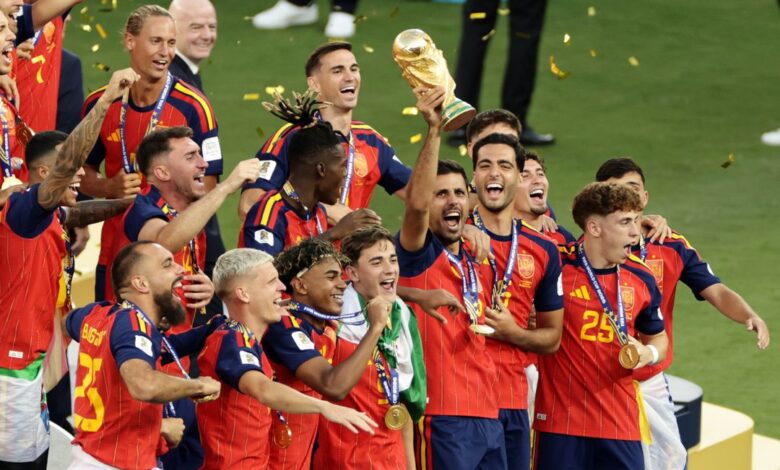
Instead, the night belonged to Spain, whose second world title confirmed the country’s return to the summit of international football under De la Fuente’s youthful and fearless squad.


