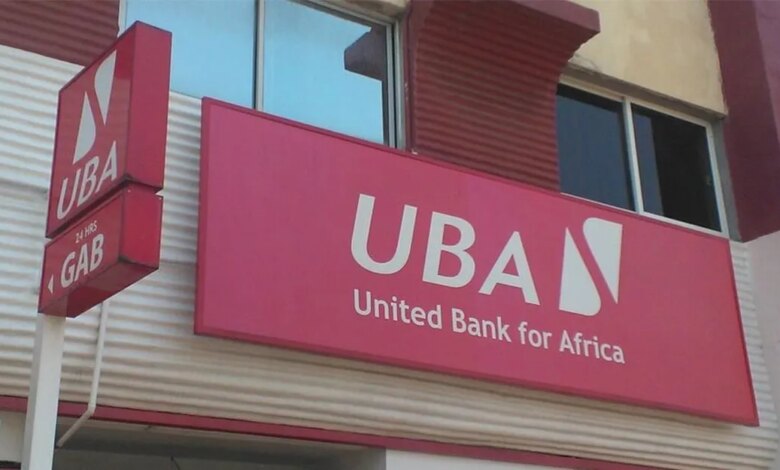
The Supreme Court upheld a N5m award of aggravated and punitive damages against United Bank for Africa (UBA) over unauthorised ATM withdrawals from a customer’s savings account.
The apex court held that the bank acted with reckless disregard for the customer’s rights.
In a judgment delivered on June 20, 2025, Justice Mohammed Baba Idris, who delivered the lead judgment, held that the judgment of the Sokoto State High Court, in Suit No. SS/69/2010, was right to award aggravated and punitive damages after finding that UBA breached its fiduciary and contractual duties to the customer.
Justice Bello Abbas of the Sokoto State High Court had on March 30, 2012, granted all the reliefs sought by the bank customer.


The Court of Appeal had affirmed the liability but reduced the compensation to N200,000 on the grounds that the trial court’s award was arbitrary and unsupported by evidence.
However, the Supreme Court restored the N5m compensation awarded by the Sokoto High Court and set aside the appeal court’s decision.
The dispute arose after the bank customer, Abdullahi Isiyaku, discovered that N350,000 had been withdrawn from his savings account through ATM transactions without his authorisation.
According to court documents, the customer had deposited N955,000 in his account but later found that N350,000 had been withdrawn without his consent.
He reported the incident to the bank, insisting that his ATM card remained in his possession at all times while the withdrawals were made in Asaba, Delta State.
According to the customer, he said he had never visited the state nor authorised anyone to use his ATM card.
But UBA denied liability, contending that the disputed transactions were carried out using the customer’s ATM card and the correct Personal Identification Number (PIN).
The bank argued that the loss resulted from the customer’s negligence in choosing an easy PIN.
At the trial, the customer testified that UBA personnel assisted customers in activating their ATM cards and that he chose the PIN “1234” because it was easy to remember.
He also told the court that the bank did not warn him about the risks of using an easy PIN.
The bank admitted during the proceedings that the CCTV camera at its ATM stand was not functional when the disputed withdrawals occurred.
Following the bank’s refusal to refund the money, the customer sued at Sokoto State High Court, seeking a refund of the N350,000, damages for the unlawful invasion of his privacy and deprivation of his right to use his funds, an unreserved written apology and other reliefs.
The trial court found the bank liable for the unauthorised withdrawals and ordered it to refund the N350,000, issue an unreserved written apology and pay N5m in compensation.
The customer challenged the Court of Appeal’s decision, which reduced the compensation to N200,000, at the Supreme Court.
In its judgment, the Supreme Court held that the appeal court had jurisdiction to entertain the appeal.
The apex court also held that the issue of whether the N5m award was excessive was properly raised before the Court of Appeal and was not introduced by the appellate court on its own.
The apex court, however, held that the trial court’s award of aggravated and punitive damages was supported by both the evidence and settled legal principles.
The court held that the respondent “gravely breached its fiduciary and contractual duties by unjustifiably and persistently denying the Appellant access to his funds, thereby causing severe and prolonged hardship to him and his dependants.”
It further found that the bank’s conduct “was not only negligent but also oppressive and demonstrated a reckless disregard for the Appellant’s rights,” making aggravated and punitive damages appropriate “to compensate for the enhanced suffering, punish the wrongdoing, and deter similar conduct.”
The Supreme Court reaffirmed that aggravated, punitive or exemplary damages may be awarded where a defendant’s conduct is particularly egregious, outrageous or high-handed, relying on Odiba v. Azege (1998), G.K.F. Investment (Nig.) Ltd. v. NITEL Plc (2009) and Odiba & Anor. v. Muemue (1999).
The court held that the Court of Appeal erred in concluding that there was no basis for the N5m award. It described the substituted N200,000 compensation as “grossly inadequate and unjust.”
The Supreme Court, therefore, restored and affirmed the High Court’s award of N5m in damages in favour of the customer.
What do you think about this?
Drop your opinion in the comment section.
FOLLOW US & Share this with someone who needs to see this.