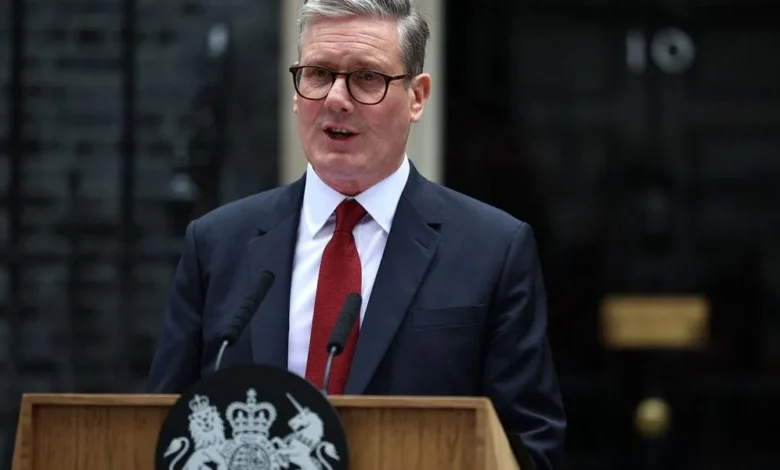
Following the preparation to leave office, Prime Minister Keir Starmer has argued that his successor will not be able to spend less time on foreign affairs because international events have a direct impact on life at home.
Speaking in a video titled With Keir, which was shared on X on Saturday, Starmer dismissed the idea that a prime minister can simply focus on domestic issues while paying less attention to global developments. According to him, the challenges facing Britain today mean that foreign and domestic policies are closely connected.
Read also: Starmer, Burnham hold private talks ahead of labour handover
“There’s often this discussion about the right balance between dealing with international affairs and dealing with domestic affairs,” Starmer said. “They’re one and the same thing.”
When asked whether the next prime minister could devote less time to diplomacy than he had during his time in office, Starmer gave a straightforward answer. “No, I don’t think it is possible,” he said.


Throughout his premiership, Starmer has faced criticism from political opponents who argued that he spent too much time on international engagements instead of concentrating on problems at home. However, he insisted that Britain’s global role has strengthened under his leadership and that the country is once again seen as a trusted partner on the world stage.
Among the achievements he highlighted were the UK’s continued support for Ukraine and its active participation in international coalitions tackling major global challenges. Starmer said these efforts have helped restore Britain’s reputation and influence after years of uncertainty.
“The fact that now other countries look to us for that leadership is something I’m really proud of having delivered in the two years we’ve had in government,” he said.
Starmer’s remarks come as Labour lawmaker Andy Burnham, who is widely expected to succeed him, has promised to place greater emphasis on domestic priorities. Burnham has outlined plans to improve living standards, increase investment in housing and infrastructure, and give more powers to Britain’s regions as part of his agenda.
Despite the political debate over priorities, Starmer maintained that his government had also delivered meaningful progress at home. He pointed to efforts to stabilise the economy, reduce child poverty and improve the National Health Service (NHS) as key accomplishments during his time in office.
As Britain prepares for a change in leadership, Starmer believes the next prime minister will quickly discover that global diplomacy and domestic policy cannot be separated. In his view, decisions made on the international stage have a direct impact on the economy, national security and the everyday lives of people across the United Kingdom.
For more details, visit New Dailyprime