0
…Says It Is Helping States Unlock, Deploy Resources
ABUJA – Vice President Kashim Shettima has said that the Federal Government has been able to unify and liberalise the foreign exchange market, including ending distortions that for too long frightened away serious investors, and put public finances on a more honest footing.
He said President Bola Tinubu adopted some of these strategies to improve the ease of doing business in Nigeria.
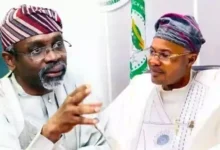
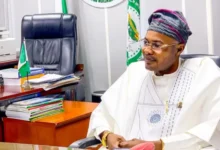
According to him, through the Presidential Enabling Business Environment Council (PEBEC) as well as the bold structural and fiscal reforms, the Federal Government has replaced gatekeeping with partnership that has enabled the subnationals to unlock their economic potential.
Shettima, who stated this on Wednesday when he declared open the Jigawa State Investment Summit 2026, in Dutse, the state capital, noted that across the federation, the President Tinubu-led Federal Government has taken difficult but necessary decisions to put the economy back on a path of sustainable growth.
“On our part, we have made it easier to do business in Nigeria. Through the Presidential Enabling Business Environment Council, we have simplified registrations and permits, and brought the cost and time of starting and running a business steadily down. The Business Facilitation Act has given these reforms the force of law, binding our agencies to transparency, predictability and speed.
The vice president observed that even though it had been a journey for which patience is required, the outcomes indicate that it is paying off, as the currency markets are now functioning more transparently, and reserves are now firmer.
He said for the first time in over ten years, the world’s leading rating agencies have started raising Nigeria’s sovereign credit standing, while the reforms at the centre are helping the states to unlock and deploy resources prudently.
Explaining how the administration’s reforms have opened the strategic sectors of the economy to private capital, VP Shettima cited the Electricity Act 2023, which he said “stands as a consequential reform, devolving real power to the states to license, generate and distribute electricity, and inviting investors to build the power infrastructure our industries and homes so urgently need.
“From power to agriculture, from solid minerals to the digital economy, we have replaced gatekeeping with partnership. And we have redirected the savings from hard reform toward the things that build a nation, into infrastructure, into human capital, and into support for our most vulnerable citizens, so that growth, when it comes, is felt in the household and not only in the headline,” he added.
Senator Shettima acknowledged, however, that reform at the centre would make little or no impact if it does not reach the states, noting that it is the reason why the Federal Government, through the National Economic Council and the Federal Executive Council, has prioritised healthy debates and deliberations to harmonise ideas for the nation’s economic direction.
The healthy debates, he noted, are aimed at strengthening the fiscal health and transparency of states, “to help them unlock and deploy resources prudently, to channel support toward agriculture, food security and the protection of our environment and livelihoods, and to open doors for sub-national governments to access development finance and climate finance on fair terms.”
Acknowledging that Jigawa State had been “a place of immense economic opportunities and untapped potential”, the vice president said the investment summit is an assurance of the efforts and readiness of the state governor, Mallam Umar Namadi, “to revitalise the investment ecosystem of the state.”
While wooing both local and foreign investors, the VP reminded them “that the Federal Government has done the hard work of reform, and that, in partnership with the Jigawa State government,” the Tinubu administration is convinced that the promise of Jigawa State “is one of high yields.
“We will be here to offer support and to ensure that you experience no bureaucratic bottlenecks in setting up here and enjoying the dividends of courage,” he assured.
Earlier, the governor of Jigawa State, Namadi, explained that the summit was designed as a working platform to move the state beyond aspiration to disciplined execution, creating viable and valuable opportunities for investors.
Namadi reaffirmed confidence in Jigawa’s capacity to achieve sustainable prosperity through vision, credible investment and purposeful partnership.
He said Jigawa has over 24,700 square meters of fertile arable land, including more than 411,000 hectares of Fadama suitable for a year round farming, with water and irrigation assets, welcoming business climate, capable and hardworking population as well as access to market across northern Nigeria and neighbouring Niger Republic along the ancient Tran-Saharan corridor.
“Our development direction is anchored on Jigawa vision and our 12 Points Agenda with priorities that include agricultural transformation, infrastructure, energy, the digital economy, private sector growths, revenue expansion, security, social protection, health, education and vocational skills development,” the governor said.