The African Democratic Congress (ADC) has said it can defeat President Bola Tinubu in the 2027 presidential election without relying on a coalition of opposition parties.
The party’s spokesperson, Bolaji Abdullahi, expressed confidence in the ability of its presidential candidate, Atiku Abubakar, to defeat Tinubu independently.
Abdullahi spoke on Channels Television’s Politics Today programme on Friday night while discussing the opposition’s strategy ahead of the 2027 general elections.
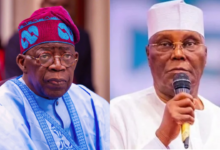
He said the ADC initially believed that a broad-based opposition coalition would make it easier to defeat the ruling All Progressives Congress (APC), but developments within the opposition had changed the situation.
“When we started building this coalition, we started on the assumption that if we are able to build a broad-based coalition, it will make our job of beating the APC easier. But that didn’t pan out the way we expected,” Abdullahi said.
According to him, some prominent figures who were initially part of the coalition had since moved to other political platforms.
“Now, one of the key players, leaders in the coalition, has gone to the NDC, and that’s His Excellency Peter Obi, and, of course, Governor Rabiu Kwankwaso.”
Despite the development, Abdullahi maintained that the ADC could win the election without a coalition.
“So what I’m saying is that we are going to win. We don’t need a coalition to win this election. The African Democratic Congress does not need a coalition to win this election,” he said.
“If we are able to build the kind of coalition that we started, maybe it will make our job easier. But we don’t need that coalition. We don’t necessarily need the coalition to win the election.”
Asked whether Atiku could defeat Tinubu without the backing of a coalition, Abdullahi said, “Absolutely, we don’t. Atiku can so amicably do the job. I believe so.”
The ADC spokesperson also rejected the argument that Tinubu would easily defeat opposition candidates in a one-on-one contest, saying the real contest would be between the president and Nigerian voters.
“What about Bola Tinubu versus Nigerians?” he asked.
Abdullahi said Nigerians’ experiences under the Tinubu administration over the past three years could influence their voting decisions in 2027.
He argued that some Nigerians who supported Tinubu in the 2023 presidential election could switch allegiance if they believed the president had failed to fulfil his promises.
“They will say, oh, this man, I voted for him in the last election, he has betrayed me. He didn’t do what I wanted him to. He betrayed the social contract. I therefore will not vote for him. This time I will vote for somebody else,” he said.
According to Abdullahi, the ADC believes Atiku currently represents a clear alternative for Nigerians.
“And the only candidate today that is saying, I will make your life better, in concrete terms, is a larger Atiku Abubakar,” he said.
He further attributed what he described as growing opposition to the Tinubu administration to the economic hardship being experienced by Nigerians.
“But what I’m saying is that the experience of Nigerians in the last three years has pushed people to the extent that they are saying that anybody but President Bola Tinubu,” Abdullahi said.
On possible cooperation among opposition parties, Abdullahi said discussions were ongoing but stressed that the focus had shifted from producing a single presidential candidate to identifying areas where the opposition could work together.
“We are still having conversations among ourselves, our opposition political parties. And there are different areas. You’ve heard about the G100,” he said.
He said the G100 was focused on mobilising opposition groups, adding that discussions were increasingly centred on cooperation rather than a merger behind one presidential candidate.
“The conversation is not about how do we produce a single presidential candidate. The conversation predominantly is about what areas of cooperation are possible,” Abdullahi said.
He identified election monitoring and vote protection as areas where opposition parties could collaborate.
“For example, if we are able to develop a common protocol for election monitoring and for policing our votes, that is major,” he said.
Titilope Adako is a talented and intrepid journalist, dedicated to shedding light on the untold stories of Osun State and Nigeria. Through incisive reporting, she tackles a broad spectrum of topics, from politics and social justice to culture and entertainment, with a commitment to accuracy, empathy, and inspiring positive change.
What do you think about this?
Drop your opinion in the comment section.
FOLLOW US & Share this with someone who needs to see this.
