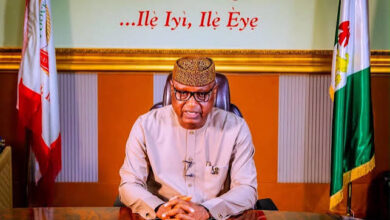
Kaduna State Governor, Uba Sani, has said his administration has not taken a fresh loan since assuming office, even as the state pays about N6.7bn every month to service debts inherited from previous governments.
Sani made the disclosure during an interview on Channels Television’s Politics Today, where he defended his administration’s financial decisions and outlined some of the programmes he said had defined his tenure.
The governor said the state’s improved revenue had given his government room to fund projects without adding to its debt burden.
“Since I became governor, I’ve not borrowed with one kobo,” Sani said.

He explained that the decision was driven by what he called prudent management of public funds and careful selection of projects.
“It’s about being prudent. It’s about selecting or being very careful in where you invest the money,” he said.
READ RELATED NEWS UPDATES
Sani, who assumed office in May 2023, said his administration had instead been servicing financial obligations inherited from previous administrations. He disclosed that Kaduna spends approximately N6.7bn every month on loan repayment.
“But we pay 6.7 billion every month from the loan we inherited,” the governor said.
The disclosure places the governor’s claim in a wider fiscal context. While Sani says he has avoided fresh borrowing, a sizeable portion of the state’s monthly resources is still committed to servicing liabilities accumulated before his tenure.
He said the approach had required his administration to decide carefully where government money should go, rather than financing every proposed project through borrowing.
Sani also used the interview to defend his record in education, agriculture, infrastructure, skills development, and security.
On education, he clarified reports that Kaduna had taken 500,000 out-of-school children back to classrooms. He said the figure was based on a household-mapping exercise rather than an estimate made without supporting data.
According to the governor, officials visited 36,000 households across Kaduna State over the past two years to identify children who were outside the school system.
The exercise, he said, established that about 550,000 children were out of school when his administration began addressing the problem.
“So when we’re talking about out-of-school children in Kaduna, we’re not just talking from our decision. It’s on the issue of data,” he said.
Sani said more than 300,000 of the identified children had since returned to school, although he acknowledged that the intervention was still underway.
The state subsequently sought partnerships with several organisations to expand the programme and tackle the factors keeping children away from classrooms.
The governor also rejected the suggestion that his administration had failed during its first three years in office.
“For me, I can say we have really succeeded in many areas. Agriculture, education, infrastructure, skill development, all those ones, and security,” he said.
His comments are likely to attract attention as Kaduna’s financial position comes under scrutiny ahead of the 2027 political season. The central question is whether the state can sustain major investments, service inherited obligations, and expand social programmes without resorting to additional borrowing.
For Sani, the answer lies in fiscal discipline, stronger revenue, and a deliberate choice of where public money is deployed.