The Nigeria Governors’ Forum have dismissed allegations that state governments had not been accountable for funds received following the removal of the fuel subsidy.
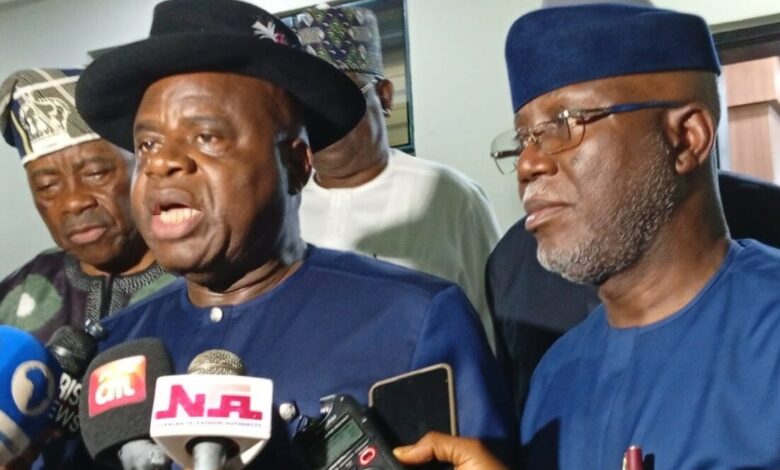
The Bayelsa State governor, Senator Douye Diri, stated this while responding to questions from journalists after the third meeting of the Nigeria Governors’ Forum on Thursday morning .
Diri, who read the communiqué issued at the end of the meeting, was asked if the forum had discussed the controversy surrounding fuel subsidy removal and calls by some political stakeholders for the subsidy to return.
The governor said the issue was addressed through the forum’s consideration of the proposed National Affordable CNG Transit Programme, which is expected to reduce transportation fares.
“Now, these are part of the issues that have been addressed, particularly with the number two that I just talked about today about transportation fares,” Diri said.
He said the rising cost of transportation had contributed to the increase in the cost of other goods.
“And you see that the rise in the cost of every other thing is also hinged on the increase in transport,” he said.
According to Diri, the forum was working with the private sector to bring in CNG, which he said was cheaper than petrol and could reduce transportation costs.
“And it will have a multiplier effect on every other sector,” he said.
He added that the expected impact of the subsidy-related measures was on ordinary Nigerians.
“And that’s because there is now the removal of subsidies. And the impact is expected to be on our people—the very common man that we all talk about,” Diri said.
Asked whether the forum would accept blame for allegations that sub-national governments had not been properly accountable for funds received from the removal of the fuel subsidy, Diri rejected the claim.
“That cannot be true. That cannot be true. But we’ll leave that debate for another day,” he said.
The governor was also asked what would happen to sectors other than transportation, with the journalist asking whether they would be allowed to suffer while the proposed intervention focused on transport.
Diri responded, “Transportation is key. Transportation is key to several other factors.”
He explained that transportation costs were reflected in the prices of food and other commodities.
“Say, for instance, you are talking about foodstuffs—increase in the cost of foodstuffs. They will tell you that ‘I’m moving from point A to point B, the transport cost is XY.’”
“And so for that reason, the cost of my yam, the cost of my garri, this…” he said.
Diri maintained that reducing transportation costs would have a multiplier effect on other sectors.
“And so by the time you reduce the cost of transport, as I said earlier, it will have a multiplier effect on several other,” he said.