Water can run uphill if there’s adequate propulsion; let no one see impossibility where potentialities are hiding in plain sight. Yes, a rose by any other name will still smell as sweet, but we all know that its timeless symmetry, vibrant colours, and cultural symbolism are contributory factors that make it the flower of choice. Apply that to politics and you will begin to understand how an immensely underrated Nurudeen Jackson Ademola Adeleke danced his way back into power in the 2026 Osun State gubernatorial elections.
What was supposed to signal the end of the world—considering the violent rhetoric and brigandage that attended the campaigns—turned out to be a universal beaming of the world’s attention on a tiny part of Nigeria witnessing not the predicted bloodbath but the celebration of a very public love affair between a politician and his people.
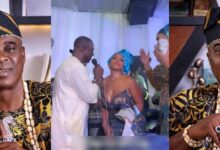
I had no dog in the fight; therefore, I was able to enjoy the entire drama dispassionately from the reassuring safety of my pad, hundreds of kilometres away. However, technology bridged the distance. It was possible for any interested person to follow events in Osun on polling day live and directly.
Dancing To Victory
Adeleke’s victory has now gone down as historic, demonstrating, as it did, that free and fair elections are possible in Nigeria and that the masses of the people are not a mere unthinking throng.
Adeleke had a solid support base at the grassroots. He had strategically executed landmark projects in the three senatorial districts, irrespective of party leanings. He was a “people’s man”.
He had been criticised for his dancing habit by the opposition, but that very ‘weakness’ turned out to be one of his major strengths, as it bonded him to the electorate more than anything else could, to the extent that his rallies wore the toga of massive street parties.
His victory was an eclipse that dimmed the sun of mythical ‘federal might’ – and will be studied by media professionals for many years to come. Among the hundreds of analyses that followed the announcement of the results, I single out the brilliant disquisition of Lolu Akinwunmi, a marketing guru and Group CEO of Prima Garnet Africa who is, likewise, not a politician. I commend his masterful post-mortem (edited at my discretion) to all my readers.
Akinwunmi asked: How did a man derisively labelled the ‘Dancing Governor’ turn that very characterisation into one of the most distinctive assets of his political brand?”
Branding
For years, Adeleke’s dancing has been mocked. Some people find it irritating. Others consider it unbecoming of the serious business of governing a state. (I confess that sometimes I also find the endless dancing rather unusual.)
But perhaps we have been looking at it only from one perspective. From a branding point of view, the dancing has become an enormously powerful distinctive asset. Adeleke has never really been positioned as the cerebral, policy-wonk politician who mesmerises audiences with complex economic and political theories. Perhaps he understands this.
Rather than pretend to be what he is not, he has built his public personality around qualities that come more naturally to him: warmth, accessibility, informality, entertainment, humour and an ability to connect with ordinary people. And, of course, dancing. What started almost as a caricature has gradually become a recognisable part of the brand.
There is an important lesson here: Sometimes the marketplace gives a brand a positioning it did not deliberately create. The smart brand asks whether that perception can be owned, shaped and converted into an advantage. And in this case Adeleke’s distinctiveness also made a difference.
One of the great challenges in branding is simply being remembered. Adeleke has little difficulty with that. Put 20 Nigerian governors in a room and ask the average Nigerian to describe something distinctive about each one. Many may struggle. Mention Adeleke and somebody will probably start dancing!
That is mental availability at work. You may like the dancing or dislike it, but you recognise the man and remember the brand. Great brands build distinctive assets: colours, sounds, symbols, characters, slogans, shapes and behaviours that make them immediately recognisable. For Adeleke, dancing has become one of those assets.
Plus the man has demonstrated a key attribute of branding: he has remained consistent. Adeleke does not dance occasionally. He dances consistently… In branding, consistency builds memory. Do something once and people may notice it. Do it repeatedly and distinctively over time, and people begin to associate it with you. Eventually, the behaviour becomes part of the brand.
