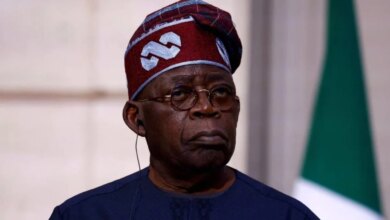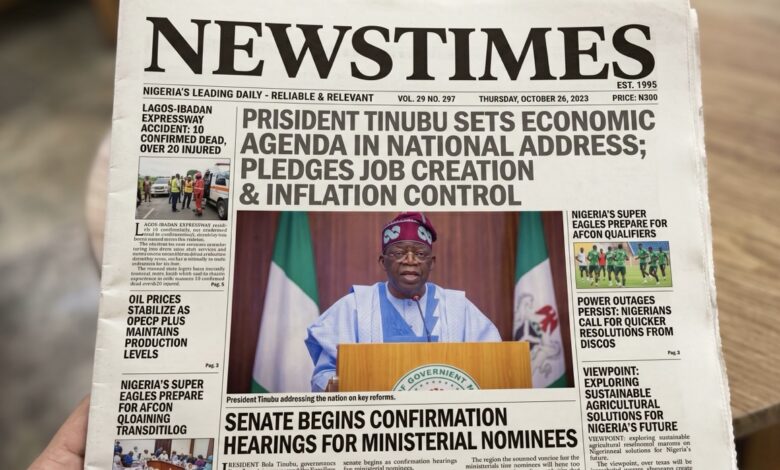
President Bola Ahmed Tinubu has announced plans to reduce transportation costs across Nigeria.
According to the president, commuters should begin to benefit from the lower cost of Compressed Natural Gas as the Federal Government and state governments intensify efforts to ease the impact of petrol subsidy removal.
Tinubu said on Thursday that governors had agreed to take immediate steps to lower transport fares in their respective states, with the measures expected to begin translating into cheaper fares from October 1, 2026.
The President made this known in a statement issued after his meeting with the Nigeria Governors’ Forum, where the rising cost of transportation and the need to pass the savings from alternative fuels to Nigerians were discussed.


According to Tinubu, the plan will rely heavily on the growing use of CNG and electric vehicles, while a joint committee involving the Federal Government and the states will coordinate implementation.
“I am pleased with my discussion with the Governors’ Forum this afternoon. The governors have, on their own initiative, resolved to take immediate measures to bring down the cost of transportation in their states, with a strong focus on leveraging the cost benefits of CNG and electric vehicles,” he said.
The President argued that the increasing availability of cheaper CNG should have a direct impact on what commuters pay, especially as the government continues to invest in infrastructure needed to support the transition from petrol-powered vehicles.
He disclosed that more than 120,000 vehicles had already been converted to CNG across the country under the Presidential CNG Initiative, while another 100,000 conversion kits were being processed.
“At the same time, we continue to expand conversion centres and refuelling infrastructure nationwide,” Tinubu added.
The administration is also expanding the network of CNG stations to make the fuel more accessible to motorists and commercial transport operators. Tinubu said the Midstream and Downstream Gas Infrastructure Fund was financing more than 100 gas projects nationwide, including 15 mother stations and 86 daughter stations.
He recalled that four of the projects were inaugurated in Lagos, Abuja and Owerri in May, including a refuelling network in Lagos and an Abuja facility designed to serve up to 1,000 cars and tricycles and 50 trucks and buses daily.
The President further announced plans to expand the refuelling network significantly.
“I have also directed the additional rollout of another 500 CNG refuelling stations nationwide, in addition to the 500 stations ordered earlier in the year by the Fund, bringing the programme to 1,000 stations across the country,” he said.
Tinubu said state governments were particularly important to the plan because they have significant influence over intra-state transportation, which directly affects the daily lives of ordinary Nigerians.
“Intra-state transport is where Nigerians feel the cost most directly, and it is where the states hold the levers. I am encouraged that our Governors are moving to bring these benefits closer to the people they serve,” he said.
He said the joint federal-state committee would begin work immediately and set October 1 as the target date for commuters to start seeing the effect of cheaper fuel in transport fares.
“We have agreed to set up a joint federal and state committee to begin implementing these measures immediately. A vehicle running on CNG spends 60 to 80 per cent less on fuel than one running on petrol.
“From October 1, our goal is that Nigerians begin to partake in those savings through lower transport fares. We have agreed that cheaper fuel should result in cheaper fares,” Tinubu said.
The President urged the different levels of government to coordinate their efforts to ensure that the initiative achieves its intended purpose.
“Each tier of government must keep doing its part and work together for the benefit of every Nigerian. Nigeria First,” he said.
The announcement followed growing concerns that the benefits of CNG adoption were not being adequately reflected in the fares paid by passengers. The Director-General of the National Automotive Design and Development Council, Joseph Osanipin, disclosed on Wednesday that licensed CNG retail companies had increased from four to 81 nationwide.
Despite the expansion, fleet operators have continued to face pressure to transfer the savings from cheaper CNG to commuters.
The governors had earlier on Thursday endorsed a proposed National Affordable CNG Transit Programme designed to reduce transportation costs and soften the effects of the removal of petrol subsidy.
The initiative is being developed as a state-led programme in collaboration with private-sector operators. Under the proposed arrangement, states would support vehicle conversions, fleets and infrastructure, while participating transport companies would be expected to reduce their fares.
The Nigeria Governors’ Forum said it saw significant potential in the programme but acknowledged that details concerning its financing and implementation still needed to be worked out.
Bayelsa State Governor, Douye Diri, explained why the governors considered the reduction of transportation costs important to tackling the wider cost-of-living crisis.
“Transportation is key. Transportation is key to several other factors,” Diri said.
He pointed out that the amount spent transporting agricultural produce and other goods from one location to another eventually affects the prices paid by consumers.
“If, for instance, you are talking about foodstuffs—increase in the cost of foodstuffs, they will tell you that ‘I’m moving from point A to point B, the transport cost is XY.’ And so for that reason, the cost of my yam, the cost of my garri is this,” Diri said.
He added that cheaper transportation could therefore produce benefits beyond the transport sector.
“So, by the time you reduce the cost of transport, as I said earlier, it will have a multiplier effect,” he said.
The subsidy debate has remained a major political issue since Tinubu announced its removal during his inauguration on May 29, 2023. The decision immediately contributed to a sharp rise in petrol and transportation costs and has continued to generate arguments over how the resulting savings should be used.
Former Vice President Atiku Abubakar has become one of the prominent political figures calling for a different approach. The presidential candidate of the African Democratic Congress has promised to restore the fuel subsidy if elected president in 2027.
Atiku said he initially did not oppose the removal but questioned how the savings had been deployed and whether Nigerians had received sufficient benefits from the policy.
“I initially did not oppose the removal of the fuel subsidy. But now that it has been removed, where is the money? Where has the subsidy money gone? Has it been used to improve healthcare, education or security?
“If I win the presidential election, I will restore the subsidy. And anyone who stole Nigeria’s subsidy funds must return the money.”
Tinubu, however, has consistently defended the decision, arguing that the subsidy was too costly and had created opportunities for corruption while draining resources that could have been invested in public services.