By Chimezie Godfrey
The United Nations has called for increased support for millions of Nigerians facing worsening food insecurity, malnutrition and disease outbreaks, while urging greater protection for humanitarian workers operating in difficult and often dangerous conditions across the country.
The UN Resident and Humanitarian Coordinator in Nigeria, Mohamed Malick Fall, made the call on Wednesday in Maiduguri to mark World Humanitarian Day.
Fall, who thanked thousands of humanitarian workers supporting vulnerable communities across Nigeria, said humanitarian needs were increasing even as funding for relief operations continued to decline.


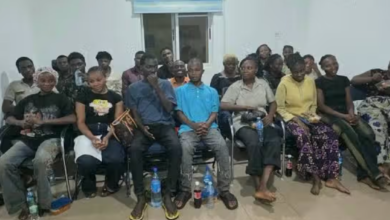
Earlier, Fall and members of the United Nations and Humanitarian Country Teams visited nutrition and cholera treatment centres in Maiduguri, where they interacted with government health workers, humanitarian personnel, caregivers and patients.
He said the humanitarian response in Nigeria’s Northeast reached almost 900,000 people in the first half of 2026, despite dwindling resources.
“Today, at the treatment centres we visited, I met humanitarian workers who continue to serve communities with extraordinary courage, dedication and compassion despite difficult and often dangerous conditions. We call for greater protection for these brave personnel so that they can do their critical work in safety,” Fall said.
He also highlighted the joint efforts of government authorities, health workers and humanitarian partners in tackling the ongoing cholera outbreak in Borno State.
According to him, more than 55,000 cholera patients have been treated, while hygiene promotion services have reached more than one million people and over 500 water points have been chlorinated to provide communities with safe drinking water.
Fall said the combined efforts had helped reduce the cholera case fatality rate to below emergency levels.
“On this World Humanitarian Day, we honour the commitment of these aid workers to saving lives and remember colleagues around the world who have paid the ultimate price while helping others,” he said.
“Humanitarian workers are not targets. Hospitals, treatment centres, relief supplies, assistance convoys and civilian infrastructure must be protected. International Humanitarian Law must be respected by all parties, at all times.”
The UN coordinator stressed that the protection of humanitarian workers and supplies was critical to ensuring that assistance reached people in need.
“When humanitarian workers cannot safely reach communities with assistance, it is vulnerable women, men and children who suffer the consequences. Protecting humanitarian personnel and ensuring safe, unimpeded access to people in need is both a moral imperative and a legal obligation,” he said.
Fall said funding remained significantly below what was required to meet Nigeria’s growing humanitarian needs.
He disclosed that $135.5 million had so far been distributed in 2026 through the Nigeria Humanitarian Fund and the Central Emergency Response Fund to address humanitarian emergencies.
However, he said Nigeria’s 2026 Humanitarian Needs and Response Plan still faced a $159 million funding gap for the remainder of the year, putting hundreds of thousands of people at risk of missing lifesaving assistance.
“We are deeply grateful to donors whose contributions through our pooled funds and bilaterally to aid organizations are helping save lives during this critical period. However, needs continue to rise faster than available resources,” Fall said.
“Additional international and domestic support is urgently required to help millions of people, particularly as we move towards a more locally led response in 2027.”
He also stressed the importance of Nigeria’s ongoing transition towards a nationally led humanitarian system, with international and national organisations working together to strengthen national leadership and local ownership of humanitarian action.
According to him, the transition must be properly funded and centred on the needs of affected communities, while greater investment should be made in national institutions and local organisations already delivering humanitarian assistance.
“Domestic funds mobilization will be critical given the global donor environment,” he said.
Fall called on governments, donors, civil society and the private sector to work together to support communities affected by humanitarian crises and protect the workers serving them.
“Behind every statistic is a family struggling to survive, a child battling malnutrition, a mother seeking treatment for cholera, or a community trying to rebuild after years of crisis,” he said.
“On this World Humanitarian Day, let us #ActForHumanity and reaffirm our shared responsibility to protect those supporting the most vulnerable.”
What do you think about this?
Drop your opinion in the comment section.
FOLLOW US & Share this with someone who needs to see this.