The United States has opened a $1.97 million funding programme for Nigeria aimed at helping communities in the Middle Belt detect threats earlier and improve the speed of security responses to attacks. Eligible organisations and institutions have until 25 August 2026 to apply, and Nigerian groups interested in the scheme should check the registration and submission requirements immediately because some federal registrations can take several weeks.
The programme, titled “Early Warning and Response in Nigeria”, is being offered by the U.S. Department of State’s Bureau of Democracy, Human Rights and Labor.
According to the official funding notice, one award of $1,973,359 is expected to be made for a project lasting between 18 and 24 months, with an anticipated start date of 30 September 2026. The award is a cooperative agreement, meaning the successful organisation will work closely with the U.S. State Department during implementation.
The funding is focused on parts of Nigeria’s Middle Belt, where communities have faced repeated killings, abductions and displacement.


The U.S. government says the programme is intended to link community-based early-warning networks with government rapid-response structures so that threats can be reported before attacks occur and security agencies can respond more quickly.
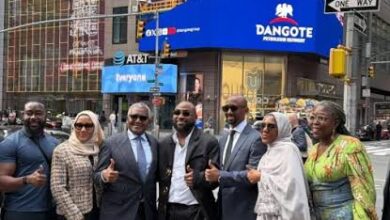
The plan comes as Nigeria-US security cooperation receives renewed attention, with National Security Adviser Nuhu Ribadu holding talks with senior American officials over terrorism, kidnapping and wider insecurity.
What the Nigeria security grant will fund
Under the proposal, community monitors would be trained to identify and report warning signs in vulnerable areas.
Secure communication systems could also be created between communities, security agencies and emergency response teams.
The funding notice proposes joint coordination centres linking federal, state and local responders to real-time threat information. It also envisages rapid notification systems that could alert residents when an attack appears imminent.
The U.S. programme says early-warning networks should eventually operate in at least 30 at-risk communities in the Middle Belt.
Other proposed activities include training community and religious leaders, improving threat-assessment systems, establishing mobile response teams and tracking how quickly security agencies act when warnings are issued.
The programme will also seek to include internally displaced people and other vulnerable groups in local warning networks.
The announcement comes against the background of continuing insecurity in north-central Nigeria. New Daily Prime has reported on the human cost of armed violence, including the case of 13 captives who died while being held in a Kwara forest.
Who can apply?
The funding notice says eligible applicants include not-for-profit organisations, think tanks, civil society groups, non-governmental organisations, public and private educational institutions, individuals, public international organisations and government institutions.
There is no compulsory cost-sharing or matching contribution.
However, organisations applying must generally have a Unique Entity Identifier, or UEI, and an active registration on SAM.gov, the U.S. government’s official system for organisations seeking federal awards.
The State Department warns that obtaining or renewing SAM.gov registration can take four to eight weeks, making timing important for organisations that have not already completed the process.
Each organisation is allowed to submit only one proposal. If an organisation submits more than one, all of its applications can be ruled ineligible.
Applications must be in English, budgets must be presented in U.S. dollars, and the main proposal must not exceed 15 pages. Applicants must also provide federal application forms, a budget, project objectives, implementation plans, monitoring arrangements and information about project partners.
US and Nigeria differ over nature of violence
The wording of the U.S. funding notice places particular emphasis on attacks against Christian communities and describes the programme as a response to anti-Christian violence.
That characterisation is politically sensitive.
Nigeria has previously rejected claims that the country is engaged in systematic persecution of Christians, arguing instead that terrorism and armed violence affect Nigerians from different religious backgrounds. Reuters reported that the Nigerian government has said its security challenges are driven by terrorism rather than a state policy of religious persecution.
Independent reporting has also shown that violence in central and northern Nigeria can involve overlapping factors, including extremist activity, land disputes, criminality, ethnic tensions and competition over resources.
At the same time, Christian communities in parts of the Middle Belt have suffered repeated deadly attacks, while international religious freedom organisations and the U.S. government have continued to raise concerns about their protection.
The new grant therefore sits within a wider and sometimes disputed debate over how Nigeria’s security crisis should be described and addressed.
The timing is also significant because Abuja and Washington are already deepening security cooperation. New Daily Prime reported that Ribadu’s recent Washington engagement focused on Nigeria’s security challenges and the need for stronger international support.
President Bola Tinubu and other political leaders have also warned against exploiting religion and ethnicity for political purposes, as reported by New Daily Prime.
For organisations interested in applying, the most important step is to study the full eligibility and registration rules before preparing a proposal. The official deadline is 11.59pm Eastern Time on Tuesday, 25 August 2026, and the U.S. government says applications should be submitted through Grants.gov.
Related news