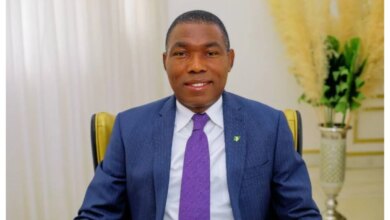
Federal Capital Territory Minister Nyesom Wike has claimed that the political crisis in Rivers State cost Governor Siminalayi Fubara the chance to seek a second term. Wike blamed the breakdown in their relationship on poor political advice, outside influence and Fubara’s early attempt to build a separate power base.
The former Rivers governor made the remarks during his August media chat, broadcast on Channels Television on Tuesday.
Wike said he had repeatedly advised Fubara to remain loyal to the political structure that helped him win the 2023 governorship election and to build on the work of the previous administration.
According to him, Fubara instead became close to people who had opposed his emergence as governor and later encouraged him to confront those who supported him.

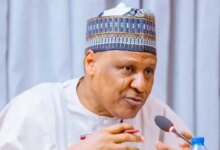
“At the end of the fight, I have not lost anything,” Wike said. “But you have lost.” He added that Fubara had wanted another term but was no longer contesting.
Wike’s comments represent his account of the dispute. Fubara has not said that poor advice forced him out of the race.
When announcing his withdrawal from the All Progressives Congress governorship primary in May, the governor said he acted after consultations and wanted peace, stability and unity to take priority over personal ambition.
Wike blames early struggle for political control
Wike said one of Fubara’s main mistakes was attempting to establish an independent political structure within his first 100 days in office.
He argued that the move suggested the governor no longer valued the group that worked for his election.
The minister said politicians must be careful about advice from people who may have personal interests or who previously opposed them.
Wike alleged that some of Fubara’s new allies encouraged him to challenge his former political benefactors because they wanted to weaken the existing power structure in Rivers State.
He also rejected reports that the disagreement began because he demanded money from the governor.
Wike said allegations about money were often used to gain public sympathy when political allies fell out. He maintained that his concern was to preserve the political organisation that produced the administration and ensure continuity in government.
There was no evidence included in the supplied material to prove that Wike requested money from Fubara. There was also no independent evidence confirming Wike’s claims about the motives of those advising the governor.
‘External forces saw Rivers as a cash cow’
Wike further alleged that outside interests tried to take control of Rivers State because of its financial resources.
“There are external forces who want to hijack Rivers State,” he said, accusing unnamed individuals of seeing the state as a “cash cow”.
The minister claimed that some influential people, including senior lawyers, supported Fubara’s camp and advised the governor to resist his former political allies.
He did not publicly name all those he accused or provide evidence that they committed any offence. His remarks should therefore be treated as political allegations rather than established findings.
Wike also said attempts were made to reconcile the two camps, but political considerations prevented an agreement at the time.
He claimed that some individuals feared they would lose political relevance if the governor and his predecessor settled their differences.
How the Rivers political crisis developed
The dispute began months after Fubara took office in May 2023.
The conflict later divided the Rivers State House of Assembly and led to repeated impeachment threats against the governor from lawmakers associated with Wike’s political camp.
The crisis reached a critical stage in March 2025 when President Bola Tinubu declared a six-month state of emergency in Rivers State. Fubara, his deputy and members of the state legislature were temporarily suspended before returning to office after the emergency period.
Fubara later moved from the Peoples Democratic Party to the APC and obtained the party’s governorship nomination form.
However, he withdrew from the primary on 20 May 2026, saying the interests of Rivers State were more important than personal ambition.
The governor promised to support whoever emerged as the APC candidate and said he would continue serving until the end of his current term.
Wike later said Fubara’s withdrawal was consistent with a peace agreement under which impeachment efforts would be dropped and the governor would not seek another term. That claim has not been confirmed in a publicly released copy of any agreement.
In July, Fubara said the period of political conflict had ended and publicly backed the Wike-led Rainbow Coalition, President Tinubu’s re-election and the coalition’s preferred governorship candidate.
Wike defends record as Rivers governor
Wike said he expected his successor to continue the development programme he began before leaving office.
He cited the Port Harcourt Ring Road and 12 flyovers as part of the infrastructure foundation he wanted Fubara to build upon.
The minister said his ambition was for Rivers State to compete more strongly with Lagos in infrastructure and economic development. He argued that the political struggle distracted the administration and slowed progress.
Wike also claimed that he renovated the Government House and provided official vehicles for the incoming governor, deputy governor and governor’s wife before handing over power.
Wike Says Rivers Crisis Cost Fubara Second Term, Blames Poor Advice