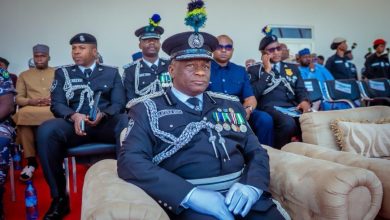
Ogun State has launched a four-month traffic enforcement operation featuring day-and-night patrols, rapid-response teams and round-the-clock monitoring of high-risk locations to reduce road crashes, fatalities and congestion during the busy ember months.
The Traffic Compliance and Enforcement Agency (TRACE) announced the initiative, tagged Operation Safe Roads 2026, on Thursday in Abeokuta, as the state prepares for increased road movement associated with the end-of-year travel period.
TRACE Acting Corps Commander, Adedayo Omonayajo, said the operation would run from September to December, focusing on safer roads, responsible driving, roadworthy vehicles and safer communities.
“Operation Safe Roads 2026 is designed to enforce traffic laws, reduce road crashes and fatalities, and reduce traffic congestion and violations across major highways, urban centres, and accident-prone locations in Ogun,” Omonayajo said.

The operation will cover major highways, the Lagos-Ibadan corridor, roads across Abeokuta, inter-state routes, major intersections, motor parks and commercial centres. These locations serve commuters, commercial drivers and travellers moving between Ogun, Lagos and other parts of the country.
READ RELATED NEWS UPDATES:
TRACE targets dangerous driving
TRACE will concentrate enforcement on speeding, reckless driving, driving under the influence of alcohol, overloading, dangerous overtaking, mobile phone use while driving and failure to wear seat belts.
Officers will also target motorists driving without valid documents, using unroadworthy vehicles, parking illegally, obstructing traffic, disobeying traffic signals, driving against traffic or using road shoulders without authorisation.
The agency plans to deploy traffic-control personnel, surveillance teams, public enlightenment officers, vehicle recovery units and towing coordination teams. Rapid-response officers will attend crashes, vehicle breakdowns and other emergencies.
Omonayajo said high-risk locations would receive 24-hour or extended-hour coverage where necessary. TRACE will also work with the Federal Road Safety Corps, the Nigeria Police Force, emergency management agencies, fire and rescue services, ambulance providers, road authorities and transport unions.
Can enforcement prevent avoidable deaths?
The operation addresses several behaviours that increase crash risks, particularly excessive speed, impaired driving, dangerous overtaking and poorly maintained vehicles. Yet its success will depend on more than the number of patrols deployed or motorists arrested.
TRACE intends to monitor the exercise through daily reports covering personnel deployment, traffic violations, casualties, cleared obstructions and emergency response times.
These indicators could help the agency assess whether its interventions are improving road safety. However, a meaningful assessment would also require comparisons with previous periods, including crash frequency, deaths, injuries and response times.
The command has not disclosed a numerical target for reducing crashes or fatalities, nor has it published a budget for the operation.
Omonayajo called on motorists to inspect their vehicles before travelling and avoid speeding, overloading, drink-driving and dangerous overtaking. He also directed officers to enforce the law professionally, impartially and with respect for road users’ rights.
“Enforcement is not the end; safety is the objective. The operation’s motto is rapid response saves lives; every second counts, every life matters,” he said.
As year-end journeys gather pace, the test for Operation Safe Roads will be whether sustained enforcement and quicker emergency intervention translate into fewer preventable deaths on Ogun’s roads.