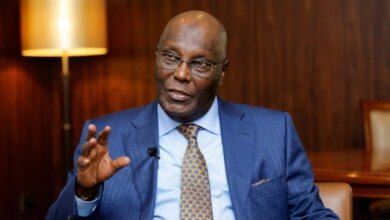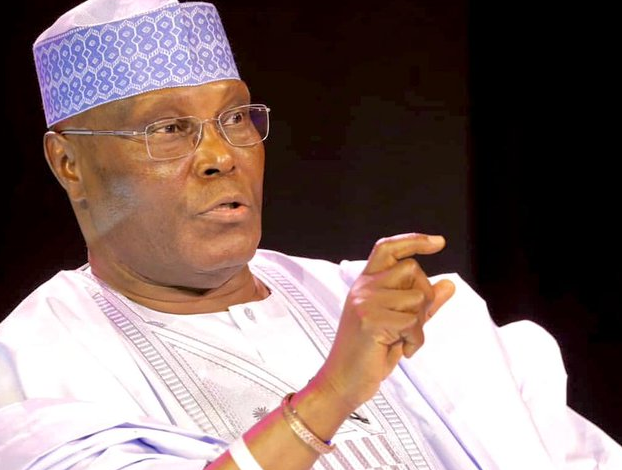
Former Vice President and African Democratic Congress (ADC) presidential candidate, Atiku Abubakar, has backed organised labour’s demand for a substantial increase in Nigeria’s ₦70,000 minimum wage, accusing President Bola Tinubu’s administration of worsening the cost-of-living crisis.
Atiku, in a statement issued by the Director of Strategic Communications of the ADC Presidential Campaign Council, Phrank Shaibu, said the government had increased workers’ wages “on paper” while allowing the rising cost of fuel, food, transportation and housing to erode their purchasing power.
He described the situation as a “ruthless economic squeeze” and criticised the removal of the petrol subsidy, which he said pushed up living costs without adequate protection for working families.
“The government pulled away the floor, offered workers a flimsy umbrella and now applauds itself while the rain beats down on them,” Atiku said.
According to him, the increase in the minimum wage from ₦30,000 to ₦70,000 had failed to translate into improved living standards because of the steep rise in the cost of essential commodities.
“At ₦1,400 a litre, the entire ₦70,000 monthly minimum wage buys just 50 litres of petrol. What does the worker take home to feed the children? What pays the rent? What gets that worker back to work on Monday?” he asked.
Atiku noted that when the national average petrol price stood at ₦254.06 per litre in April 2023, the ₦30,000 minimum wage could purchase approximately 118 litres of petrol. By comparison, he said, the current ₦70,000 wage could buy only about 50 litres at ₦1,400 per litre.
“The payslip has grown, but the fuel it can buy has more than halved. Tinubu has given workers a larger number and left them with a smaller life. That is hardship dressed up as a wage increase,” he said.
The ADC candidate also argued that Nigeria’s minimum wage compares poorly with those of several African and oil-producing countries.
He cited figures which put the equivalent monthly minimum wages in Libya at approximately ₦213,000, Algeria at ₦245,000, Equatorial Guinea at ₦302,000 and Gabon at ₦351,000, based on exchange rates as of July 24, 2026.
Atiku acknowledged that wage structures and living costs differ across countries but maintained that such differences did not make ₦70,000 adequate for Nigerian workers.
“The Nigerian worker is the engine of this country’s productive life, yet Tinubu expects that engine to run without fuel,” he said.
He challenged Tinubu to immediately agree to a substantial increase in the minimum wage that reflects the prevailing cost of food, transport, rent and electricity.
“If he has no intention of raising workers’ pay, he should say so plainly and stop stringing the Nigeria Labour Congress and other labour leaders along,” Atiku said.
The former vice president also promised that, if elected in 2027, his administration would prioritise policies aimed at raising workers’ incomes while reducing the cost of living.
“I will begin the work of raising the wage floor from my first day in office,” he said.
Atiku further proposed a targeted production subsidy for petroleum products refined in Nigeria and sold to Nigerians, subject to spending limits, public accounting and independent auditing.
He said increased wages alone would not resolve the hardship facing Nigerians unless accompanied by measures to reduce the prices of essential goods and services.
“Nigerians do not eat FAAC figures. A full treasury is no answer to an empty kitchen. The test of this government is whether the men and women who work all month can live on what they earn,” he said.
His comments came after labour leaders renewed calls for an urgent review of the ₦70,000 national minimum wage, arguing that rising inflation and the cost of living had significantly eroded its value.
Nigeria Labour Congress President, Joe Ajaero, had said the current wage was no longer adequate and called for fresh negotiations with the Federal Government and state governments.
Sodiq Yusuf is a trained media practitioner and journalist with considerable years of experience in print, broadcast, and digital journalism. His interests cover a wide range of causes in politics, governance, sports, community development, and good governance.
What do you think about this?
Drop your opinion in the comment section.
FOLLOW US & Share this with someone who needs to see this.