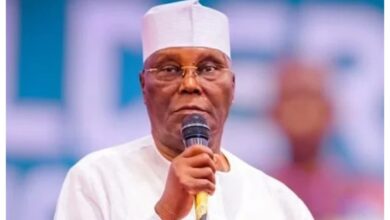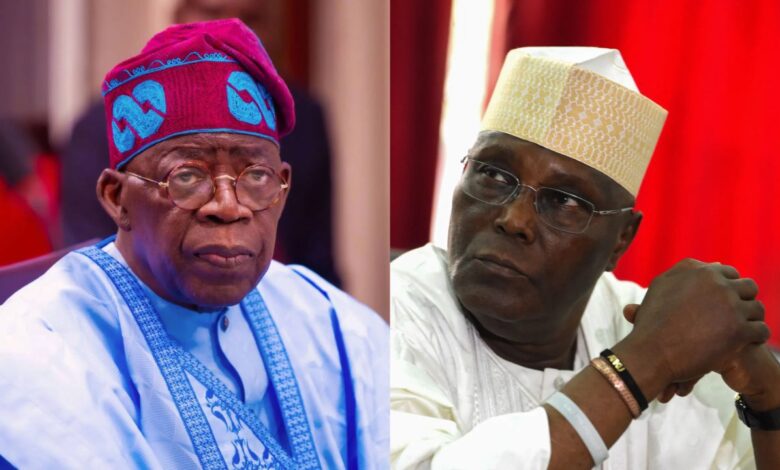
Former Vice President and presidential candidate of the African Democratic Congress (ADC), Atiku Abubakar, has called on President Bola Tinubu to immediately increase Nigeria’s national minimum wage, arguing that the current N70,000 wage has been eroded by rising costs of fuel, food, transportation and housing.
Atiku made the demand in a statement on Sunday issued by the Director of Strategic Communications of the ADC Presidential Campaign Council, Phrank Shaibu.
He argued that workers were experiencing a significant decline in their purchasing power despite the increase in the statutory minimum wage from N30,000 to N70,000 in July 2024.
The former vice president challenged the Federal Government to agree to what he described as a substantial wage increase that reflects prevailing living costs.
Atiku compared the purchasing power of the current minimum wage with the previous wage, citing petrol prices as an example.
“At N1,400 a litre, the entire N70,000 monthly minimum wage buys just 50 litres of petrol. What does the worker take home to feed the children? What pays the rent? What gets that worker back to work on Monday?” he asked.
According to Atiku, the N30,000 minimum wage at the April 2023 national average petrol price of N254.06 per litre could buy about 118 litres of petrol, while N70,000 at N1,400 per litre would buy only about 50 litres.
“The payslip has grown, but the fuel it can buy has more than halved. Tinubu has given workers a larger number and left them with a smaller life. That is hardship dressed up as a wage increase,” he said.
Atiku also criticised the removal of the petrol subsidy, arguing that the policy was implemented without adequate protection for working families.
“The government pulled away the floor, offered workers a flimsy umbrella and now applauds itself while the rain beats down on them,” he said.
He maintained that rising petrol prices had consequences beyond transportation, as higher energy and logistics costs also affected the prices of food and other essential commodities.
“Petrol does not stay at the pump. Its price follows the farmer to market, enters the baker’s oven and appears in the fare a parent pays to take a child to school,” Atiku said.
He also compared Nigeria’s minimum wage with those of some other African oil-producing countries, while acknowledging that wage structures and living costs differ across countries.
Atiku urged President Tinubu to clearly state whether his administration intended to increase workers’ wages, saying labour leaders should not be subjected to prolonged negotiations without a definite outcome.
“If he has no intention of raising workers’ pay, he should say so plainly and stop stringing the Nigeria Labour Congress and other labour leaders along. Nigerian workers deserve an answer, not another round of meetings that ends where it began,” he said.
The ADC presidential candidate promised that, if elected in 2027, his administration would begin work on raising the minimum wage from its first day in office.
“I will begin the work of raising the wage floor from my first day in office,” Atiku said.
He also proposed measures aimed at reducing the cost of living, including support for domestic production, targeted social protection and interventions in the petroleum sector.
Atiku said his proposed targeted production subsidy would support petroleum products refined in Nigeria and sold to Nigerians, subject to spending limits, public accounting and independent auditing.
“Government support must produce measurable relief at the pump,” he said.
He further called for measures to stabilise the prices of essential goods and energy, arguing that higher wages alone would not adequately address household pressures if the cost of living continued to rise.
The Tinubu administration has previously defended the N70,000 minimum wage, which was agreed after negotiations with organised labour and other stakeholders in 2024. President Tinubu had also said the wage would be reviewed after three years.
Atiku, however, maintained that the purchasing power of workers should remain the central consideration in assessing the adequacy of the wage.
“Nigerians do not eat FAAC figures. A full treasury is no answer to an empty kitchen. The test of this government is whether the men and women who work all month can live on what they earn.
“A living wage must buy a living. It is not a privilege; it is a basic right.
“Tinubu has made life painfully expensive. I will make life affordable again,” he added.
READ RELATED NEWS
Police begin shift to CNG vehicles as new buses arrive
FG to roll out 500 CNG stations nationwide in three-year clean energy drive
Nigeria&’s CNG sector attracts $980m investment, drives 100,000 vehicle conversions
Atiku demands audit of Nigeria’s ₦166.79tn debt