The All Progressives Congress Presidential Campaign Council (APC-PCC) has described former Vice President Atiku Abubakar’s proposed petrol production subsidy as an uncosted promise lacking a clearly identified legal and operational framework.
The council also challenged Atiku to explain how his proposal would guarantee lower petrol prices for consumers and comply with the Petroleum Industry Act (PIA).

The council’s spokesman, Dele Alake, raised the posers in a statement issued yesterday.
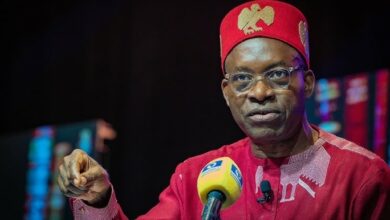
Atiku reiterated his proposal for a “production subsidy” for locally refined petrol, which he said would reduce pump prices, while calling on President Bola Tinubu to cut petrol and diesel prices.
Reacting, Alake said the proposal raised important legal, fiscal and practical questions that required clarification.
He cited Section 205(1) of PIA, which provides that unrestricted free-market conditions shall determine the wholesale and retail prices of petroleum products.
The APC-PCC spokesman also referred to a statement by the Nigerian Midstream and Downstream Petroleum Regulatory Authority, which said it did not fix pump prices or issue administrative price templates except where statutory conditions for intervention were met.
According to Alake, the regulator had stated that no such market failure had been declared.
He therefore asked Atiku to explain whether refineries receiving the proposed subsidy would be required to sell petrol at a prescribed price.
“If the answer is yes, he should identify the legal framework under which the government would impose that price condition and explain how it would operate consistently with the Petroleum Industry Act,” the statement said.
Alake added that if no mandatory price condition was proposed, Atiku should explain how public support to refiners would guarantee lower prices at filling stations.
The APC-PCC also questioned the financial implications of the proposed intervention, saying its cost could run as high as N17 trillion or N21 trillion annually, depending on the discount size, the volume covered and whether the support applied to the entire barrel or only to petrol sold domestically.
The council urged Atiku to clarify the proposed subsidy rate, annual spending ceiling, the volume of crude or petrol to be covered, and the source of funding.
It also demanded details of safeguards against diversion, smuggling and fraudulent claims, as well as clarification on whether amendments to the Petroleum Industry Act would be required.
Alake argued that an appropriation by the National Assembly could authorise expenditure but would not, by itself, resolve every regulatory question arising under the PIA.
The spokesman further challenged Atiku to reconcile his latest position with his previous support for downstream deregulation.