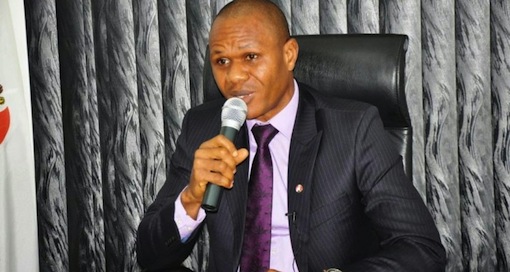
The Economic and Financial Crimes Commission (EFCC) will extend its accountability work to local governments as more public funds reach the third tier of government, its Chairman, Ola Olukoyede, has said on Tuesday.
Olukoyede, represented by Director of the EFCC’s Public Affairs Department Wilson Uwujaren at the maiden Annual National Conference of Local Government Council Chairmen and Traditional Rulers Councils in Abuja, said the commission would not limit its work on transparency and accountability to the federal level.
READ RELATED NEWS
EFCC asks Sylva to face $14.86m fraud probe after APC exit
’Policy reforms, not arrests, hold key to tackling corruption,’ says EFCC chair
‘Be gatekeepers, not facilitators of financial crime’ Olukoyede to banks
The EFCC chairman said the test of increased funding for local governments would be whether the money produces better living conditions for people at the grassroots.
“The EFCC is equally committed to transparency and accountability at the sub-national level and would want to see the improved resources flow to the third tier of government translate into improvement in the quality of lives of the grassroots population,” he said.
Recovered funds for public projects
Olukoyede also talked about how recovered proceeds of crime had been used for public investment.
He said the Federal Government had directed ₦50 billion each from recovered funds to the Nigerian Education Loan Fund, NELFUND, and the Nigerian Consumer Credit Corporation, CREDICORP.
He said more funding had since been approved for the two institutions.
The EFCC chairman also cited the former NOK University in Kaduna State as another example.
The university was forfeited and later converted into the Federal University of Applied Sciences, Kachia. Olukoyede said the institution had enrolled 1,909 students by December 2025.
He said the EFCC’s work covered several areas of economic crime that also affect national security.
These include terrorist financing, illegal mining, cross-border cybercrime, money laundering and fraud involving virtual assets.
The commission’s specialised enforcement portfolio had recorded 920 cases and 212 convictions, Olukoyede said.
He said investigations and court cases were still ongoing in the areas covered by the portfolio.
The EFCC chairman also disclosed that almost 60 per cent of the commission’s processes and operations had been digitalised.
He said the commission was also investing in its Cybercrime Rapid Response Centre and investigative technology to protect Nigeria’s digital economy from fraud and abuse.
“We will investigate professionally, prosecute on the strength of evidence and respect the constitutional role of the courts in determining guilt or innocence. No title should place anyone outside the reach of the law, but neither should the fight against corruption be separated from due process.”
₦1.2tn recovered
Olukoyede said the EFCC had recovered more than ₦1.233 trillion between October 2023 and the period covered by its recent stewardship account.
The recoveries also included about $684.48 million, £373,905.78 and €9.34 million.
He said about two-thirds of the naira recovered had been returned to ministries, departments and agencies, state revenue services, companies and individuals.
Federal and state tax recoveries alone accounted for about ₦288.1 billion, he said.
Olukoyede said the EFCC’s accountability work supported every part of President Bola Ahmed Tinubu’s Renewed Hope Agenda.
He told the local government and traditional rulers’ representatives that accountability must reach the level where public resources are used directly for grassroots development.
For More News Details, Visit New Daily Prime.