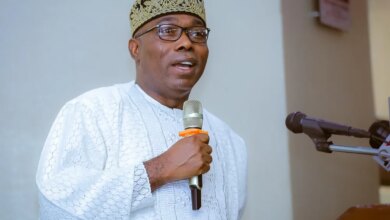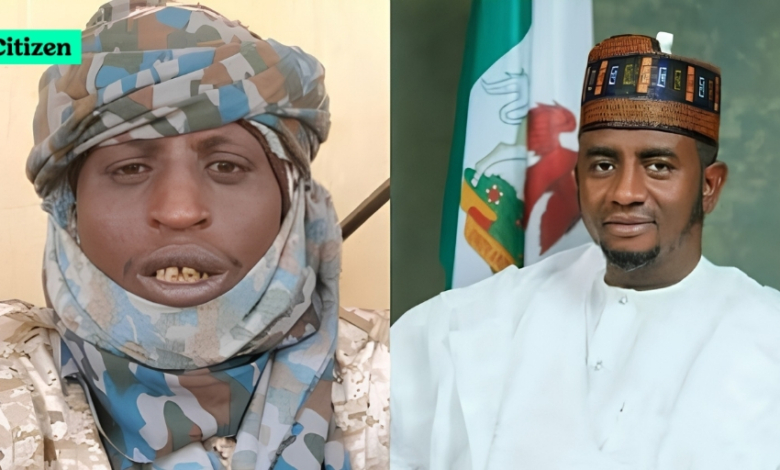
A senator from Bauchi State with governorship ambitions is at the centre of one of the messiest political scandals of 2026. Senator Shehu Buba Umar has spent the better part of the last two years denying that he’s connected to bandit kingpins terrorising Nigeria’s north, and on September 14, 2026, he did something we don’t quite see politicians do: he asked the secret police to investigate him.
For many who have never heard of this man, let’s have a bit of a history class. Senator Shehu Buba Umar was born on October 2 1976, in Nabordo village, Toro LGA, Bauchi State. He began his career as a classroom teacher before serving as a Special Assistant and then a Senior Special Assistant under then-Governor Isah Yuguda’s administration. He built out a business portfolio, too, serving as executive director of business development at Aquawave Oil and Gas.
In February 2023, Umar won the Bauchi South Senatorial District seat with 175,505 votes, defeating the People Democratic Party’s (PDP) Garba Dahiru. By July that year, he had become chairman of the Senate Committee on National Security and Intelligence, a position that put the first-term senator at the centre of legislative oversight of the agencies tasked with identifying illegal armed groups and preventing terrorist attacks. That’s why this story is almost unbelievable; somehow, the man overseeing Nigeria’s security intelligence is now the man accused of funding terrorists and bandits
The allegations against Buba trace back to September 2024. Then-Bauchi Governor Bala Mohammed wrote to President Tinubu after Department of State Services (DSS) operatives flagged two people who were registered for the 2024 Hajj through the state pilgrims’ board.


Governor Mohammed’s petition alleged that Buba had sponsored a bandit kingpin for the pilgrimage through an aide named Yahaya Ibrahim. One of the two travellers, Abubakar Idris, was detained by the DSS on suspicion of banditry and kidnapping in Zamfara State.
Around the same time, a civil society group, the Nigeria Democratic Front (NDF), alleged Buba was affiliated with a notorious bandit linked to kidnappings across Zamfara.
Since 2024, Buba’s defence has remained consistent: that he has only nominated pilgrims whom local traditional rulers recommended to him, not people he personally vetted.
In November 2024, Buba was removed as chairman of the Committee on National Security and Intelligence and moved to chair the Committee on Livestock and Animal Husbandry instead.
Afterwards, Buba left the All Progressive Congress (APC) for the Peoples Redemption Party (PRP) and became its 2027 Bauchi State governorship candidate. That’s when the allegations resurfaced, and this time with more fire.
In September 2026, a content creator known as “D English Alhaji” ran an interview with a man named Hassan Husseini, who accused Buba of harbouring bandit kingpins at his residence and claimed people connected to bandit leader Dogo Gide were taken to Abuja for training with help from the senator’s aide.
Buba called the videos fabricated and politically motivated, tied the timing directly to his defection and governorship run, and filed criminal defamation complaints against his accusers in courts in both Nigeria and Niamey, Niger Republic. That defamation case is now proceeding in a federal court.
To prove his innocence, Buba asked the State Security Service (SSS), the Defence Intelligence Agency (DIA), and the Nigeria Police Force (NPF) to formally investigate the allegations against him. He also voluntarily submitted himself to the SSS for questioning and publicly challenged anyone with actual evidence to hand it to security agencies rather than social media.
This story is far from over, and here’s what to track: Watch the federal court defamation case; its outcome will shape whether these allegations are ever legally tested.
Follow up on whether the SSS, DIA, and police actually publish the findings from the investigation Buba himself requested, since that’s the clearest path to the facts.
This is a test of whether Nigeria’s institutions can hold powerful people accountable when the accusations point at their own. That’s worth watching, no matter how the Buba case ends.
What do you think about this?
Drop your opinion in the comment section.
FOLLOW US & Share this with someone who needs to see this.