For steering NNPC Limited to N19.04 trillion in revenue and N2.28 trillion in profit after tax in the first half of 2026, a period in which the company produced roughly 297 million barrels of crude oil and condensate and about 1.38 trillion standard cubic feet of natural gas; for pushing the OB3 and AKK gas pipelines to 98 and 94 per cent completion, respectively; and for confronting years of loss-making inertia at the state refineries with a hard-nosed commercial reset, Engr. Bashir Bayo Ojulari is the CEO of the Year 2026 in the Public Sector category.
In Nigeria’s oil and gas industry, where opacity has long been a defining criticism of the national oil company, Engr. Bashir Bayo Ojulari has spent 2026 pursuing a markedly different approach: putting the numbers in the public domain, openly defending difficult decisions, and continuing to push major infrastructure projects forward under intense scrutiny.
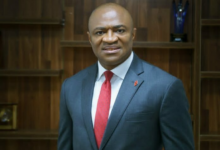

Under his leadership, the Nigerian National Petroleum Company Limited has increasingly sought to replace secrecy with transparency and rhetoric with measurable performance. Through its Monthly Financial and Operations Reports, NNPC Limited has provided the public with a running account of its revenue, profitability, production, remittances and infrastructure milestones.
An aggregate reading of the company’s six reports covering January to June 2026 shows a business whose performance fluctuated sharply from month to month but ultimately gained momentum as the first half progressed.
Profit after tax opened the year at N385 billion in January, then fell to N136 billion in February. It recovered to N276 billion in March, surged to N481 billion in April, and eased marginally to N462 billion in May. By June, however, NNPC Limited had recorded N535 billion in profit after tax—the strongest monthly performance over the six-month period.
Revenue followed a similar upward trajectory. From N2.571 trillion in January, the company’s monthly revenue rose to N4.389 trillion in June, bringing the cumulative half-year revenue to N19.04 trillion. Over the same period, statutory remittances to the Federation reached N6.286 trillion.
The figures tell an important story: despite volatility in the operating environment, NNPC Limited ended the first half of 2026 in a stronger position than it began.
Production performance was equally significant, though not without setbacks.
Over the six months, NNPC Limited produced an estimated 297 million barrels of crude oil and condensate. Daily output rose from a February low of 1.51 million barrels per day to a peak of 1.73 million barrels per day in May, before slipping marginally to 1.72 million barrels per day in June. The company attributed the decline to operational disruptions and subsurface challenges affecting some assets.
Gas production, however, told a more consistent story. Output rose month after month from January through June, reaching a cumulative total of approximately 1.38 trillion standard cubic feet in the first half of the year.
For a country seeking to build its industrial future around gas, that steady growth is more than an operational statistic. It represents progress towards a broader ambition to deepen domestic gas utilisation, support power generation and expand the energy infrastructure required to drive industrialisation. The company’s infrastructure programme also continued to advance.
By June, the Obiafu-Obrikom-Oben (OB3) gas pipeline was 98 per cent complete. The project, whose construction had been delayed for years by the technical complexity of crossing the River Niger, moved closer to completion after NNPC successfully executed the challenging crossing. Final tie-in works were underway, with first gas targeted for August 2026.
The Ajaokuta-Kaduna-Kano gas pipeline, another strategic project with implications for industrial development and energy access across northern Nigeria, had also reached 94 per cent completion by the end of June. The project was progressing towards early gas delivery to Abuja by the end of the year.
But perhaps one of the most striking features of Ojulari’s leadership in 2026 has been his willingness to publicly confront some of NNPC Limited’s most difficult problems.
Speaking at the Nigeria International Energy Summit in Abuja on February 5, 2026, Ojulari disclosed that an internal assessment had found the state-owned refineries in Port Harcourt, Warri and Kaduna operating at only 50 to 55 per cent capacity utilisation despite continued crude supply.
At the Nigeria Oil and Gas Conference in Abuja in July 2026, Ojulari announced that the company was ending the practice of financing the Port Harcourt and Warri refineries through crude-backed loans. In its place, NNPC Limited was moving towards a performance-driven funding structure, under which financing would be linked to each refinery’s operational performance rather than being supported by pledged barrels of crude.
It was a significant departure from a financing culture in which future oil production could be committed to sustaining assets that were yet to demonstrate corresponding commercial returns.
Born in Ilorin and trained as a mechanical engineer at Ahmadu Bello University, Zaria, Ojulari built a career spanning upstream engineering, project development and energy operations. His experience includes serving as Managing Director of Shell Nigeria Exploration and Production Company, followed by his appointment by President Bola Ahmed Tinubu as Group Chief Executive Officer of NNPC Limited on April 2, 2025.
His challenge at NNPC Limited has been formidable: to transform one of Africa’s most strategically important state-owned companies while navigating volatile oil markets, production constraints, infrastructure deficits, refinery failures, financing pressures and intense public scrutiny.
The first half of 2026 does not suggest that every problem has been solved. Indeed, Ojulari has been unusually candid about the scale of the problems that remain.