Marriage Diaries: Amnesia, Infidelity and Abuse Nearly Broke My Marriage. I’m Still in It

When Adebola*, 36, got married, she thought she knew what marriage was supposed to look like. She had grown up watching her parents laugh, talk, dress alike and fiercely protect each other, so she expected to build something similar with her husband.
In this week’s Marriage Diaries, she shares how the reality of marriage hit her only months after the wedding, how having children affected her mental health and exposed cracks in her relationship, and why she chose to stay after experiencing physical violence and infidelity.
Got a marriage story to share? Please fill the form and we’ll reach out.
I always imagined marriage would be like a fairytale; eating together, laughing, having long conversations, raising children and just being in love. I knew there would be disagreements, but I never imagined they could reach the magnitude they did. My husband and I are both calm people, so I didn’t expect big arguments.


A lot of that expectation came from my parents. Growing up, I knew they were in love. They were always talking, laughing, eating together and going out. They even dressed alike. My dad would buy “His and Hers” watches or sunglasses for them, and if he wore a yellow shirt, my mum would wear a yellow blouse or a complementary colour.
He was also fiercely protective of her. He made sure nobody disrespected my mum, including elders in our family. Our home was warm and filled with laughter and love.
As I grew older, romantic movies reinforced that picture. So naturally, I thought marriage was meant to be like that.
A few months after our wedding, my husband and I had a disagreement that I hadn’t anticipated. My first instinct was to leave and go home. When he involved our mothers, I felt blamed instead of heard, and I started questioning whether I was ready for marriage.
I took a few days to cool off and reflect instead of reacting from anger. Eventually, we talked, and I chose to forgive and move forward. It taught me to pause before making major decisions.
I just didn’t know that was only the beginning of what marriage would teach me.
Nobody warned me how much having children could change a marriage. It affected my health, our finances, intimacy, communication and careers.
I had watched my aunties have children and continue working, so I didn’t understand how complicated it could become. Pregnancy caused me amnesia. I lost a huge chunk of my memory, which I’m only just beginning to regain, 10 years later, in bits and pieces.
I had my children via CS and suffered postpartum depression. Sometimes, I lost the zeal to live. It was a rollercoaster trying to be there for my children while also trying to stay sane myself, amid the fear of being stigmatised.
Eventually, I resigned from my job because of the mental pressure, which left me financially vulnerable for a while. My marriage struggled during that period and exposed a lot of cracks.
A few months after we had our second baby, we had an argument about baby food. My husband had gone out and forgotten to buy it. I was at home with a crying baby. After breastfeeding for hours, the baby eventually slept, but I was exhausted and highly irritable.
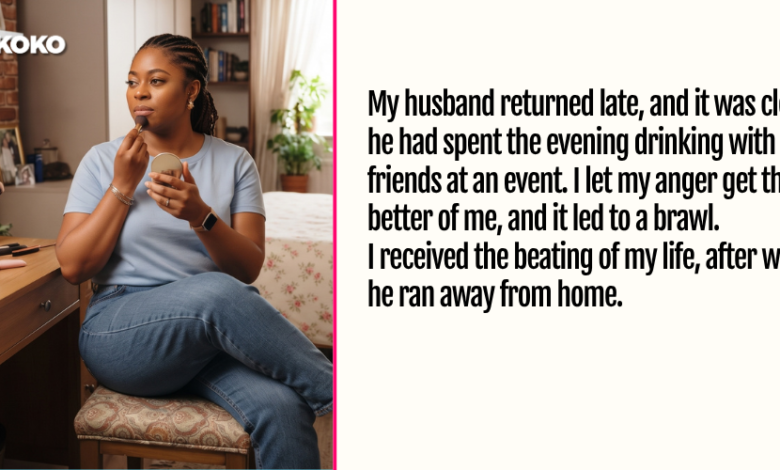
My husband returned late, and it was clear he had spent the evening drinking with friends at an event. I let my anger get the better of me, and it led to a brawl.
I received the beating of my life, after which he ran away from home. By morning, our compound was filled with immediate family members and church leaders who had come to beg me at his behest. But I was the one with the swollen face and black eyes.
I was taken to the hospital and treated. After that, I made a solemn promise to myself that it would never happen again.
That experience changed how I handle disagreements now. When I’m upset, I either send my husband a message or wait until my initial anger has passed before talking to him. We’ve been married for a long time now and have fewer disagreements. When we have reservations, we state them clearly, stick to the issue and avoid inciting remarks or attacking each other.
We are not enemies. It’s okay not to be in total agreement, and we allow each other the freedom to make our own decisions. Although my husband promised never to repeat what happened, the trauma still lives rent-free in my head.
I’ve also had to understand that his calmness doesn’t necessarily mean he handles things the way I do. When we met, I found his quiet nature attractive. But I didn’t realise that he isn’t a strong communicator or as expressive or protective as I expected.
Verbal conversations can feel one-sided, and when there’s an issue, he can withdraw for days. Sometimes, it feels like emotional abandonment. I’ve had to learn to give him space while also asking for what I want.
I’ve also had to learn to stand up for myself with family members because of his tendency to ignore pressing matters or disrespectful remarks.
For all the ways marriage changed my expectations, it also changed me.
I lost most of my childish innocence, but I gained so much more. I found my voice and learnt self-authorship. I got my career back on track, gained independence and developed more clarity about what I want. I also gained experiences that I now use to mentor young women and couples.
One of the biggest things I’ve learnt is that love alone isn’t enough. Our different backgrounds and personalities clash, and sometimes hurt can overshadow love. Marriage requires more than feelings. That became even clearer when I had to decide what to do after discovering infidelity.
Choosing to stay in my marriage after finding out about infidelity was one of the most difficult compromises I’ve made.
In the beginning, it didn’t feel worth it. But over the years, we’ve set clear boundaries and terms for our marriage. I’m fiercely protective of myself, and I don’t live in ignorance.
We restructured how we handle finances and respect. Most importantly, I get to live on my terms. Staying hasn’t meant pretending everything is fine or abandoning myself. I’ve learnt that I can choose to remain in my marriage while still having boundaries and making decisions for myself.
If I could go back, I’d tell my unmarried self to take her time getting to know herself. Marriage will introduce you to parts of yourself you didn’t know existed. You may think you know how you’ll react to something until you’re actually in that situation.
I’d also advise people to get a wedding sponsor or mentor who can offer unbiased guidance. Your parents’ model won’t always work for you, and their advice can be emotionally influenced.
My parents gave me a beautiful picture of marriage, but I eventually learnt that their marriage could only be a reference point, not a blueprint for mine. And I think that’s why I no longer believe love is enough to sustain a marriage. Love is an emotion, and it fluctuates. Marriage needs intention, finances, intimacy, communication and respect. Without those things, the embers of love eventually go out.
*Names have been changed to protect the identity of the subjects.
Got a marriage story to share? Please fill the form and we’ll reach out.
What do you think about this?
Drop your opinion in the comment section.
FOLLOW US & Share this with someone who needs to see this.