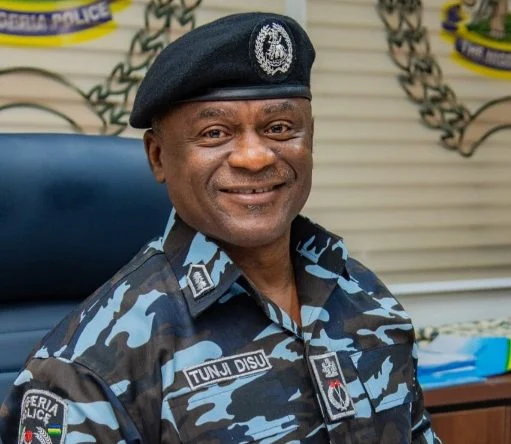
Nigerians have a constitutional right to record police officers carrying out official duties in public, according to a Federal High Court judgment. The ruling has returned to public attention after Inspector-General of Police Tunji Disu raised concerns about officers being filmed and turned into social media content.
For Nigerians living abroad who travel home, the issue is particularly relevant at checkpoints, during stop-and-search operations or other encounters with law enforcement. But the judgment should not be read as an unlimited right to film a police officer in every situation.
Court backs right to record police on public duty
The Federal High Court in Warri, Delta State, delivered the judgment on 17 March 2026 in a fundamental rights case brought by lawyer Maxwell Nosakhare Uwaifo.
Justice H. A. Nganjiwa held that citizens have a constitutional right to record, photograph or otherwise document police officers carrying out law-enforcement functions in public places.

The court also ruled that police should not harass, intimidate or arrest people simply for recording officers performing public duties, or confiscate their devices on that basis. Officers on public engagement duties were also required to display proper identification.
The case, Suit No. FHC/WR/CS/87/2025, followed Uwaifo’s encounter with officers near Sapele Roundabout in Delta State in May 2025.
He told the court that he tried to record the encounter after being stopped but was threatened with arrest. The judgment awarded him ₦5 million in compensation and ₦2 million in legal costs.
NewDailyPrime previously reported the Federal High Court judgment affirming Nigerians’ right to record police during stop-and-search operations.
IGP says concern is about misuse, not accountability
The controversy resurfaced after Disu said widespread filming of officers had become “very, very demoralising”.
However, the IGP also acknowledged that the public has a right to record officers doing their jobs in public.
“We are not saying they can’t exercise their rights of recording officers in public places while doing their jobs,” he said, while urging people not to turn officers into material for social media skits.
The Nigeria Police Force later clarified that the IGP was not seeking to prevent legitimate recording of officers. According to the clarification, the concern was about recordings intended to provoke, ridicule or exploit police encounters for online content.
Lawyer Inibehe Effiong has also argued that Nigerians can document law-enforcement officers performing their statutory duties in public.
NewDailyPrime reported Effiong’s response to the IGP’s position, including his argument that Section 39 of Nigeria’s Constitution protects freedom of expression and the communication of information.
What the ruling does — and does not — mean
The judgment is significant for police accountability, but it should not be interpreted as permission to interfere with police operations.
Recording an officer conducting a checkpoint, arrest, search or other public law-enforcement activity is different from deliberately following an off-duty officer, filming private activity or obstructing an operation.
The court case centred on police exercising official powers in public spaces. It did not decide every possible situation in which somebody might try to record an officer.
For members of the public, the safest approach is to record without obstructing officers or placing themselves in danger. If a disagreement arises, people should avoid physical confrontation, preserve any available evidence and seek legal advice or use the appropriate complaint process.
For officers, the judgment means that the presence of a camera during a lawful public encounter should not, by itself, be treated as wrongdoing.
Related news