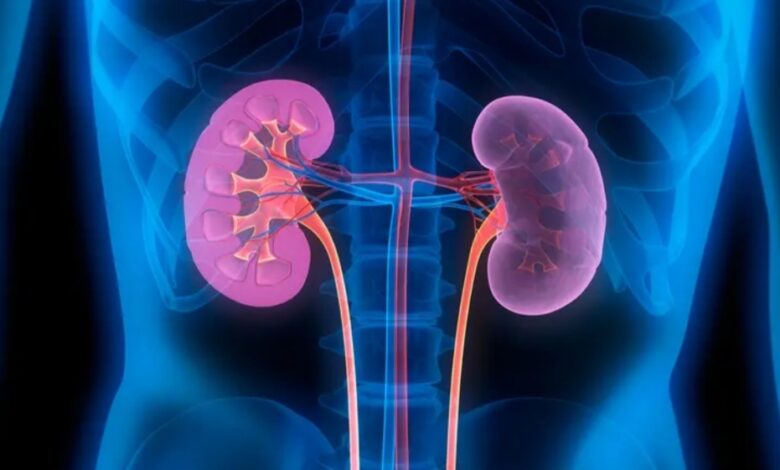
For hundreds of Nigerians living with advanced kidney disease, staying alive has become a financial calculation. Every week brings another dialysis bill, another search for assistance and, for some families, another painful choice between treatment and basic household needs.
The scale of the struggle was brought into sharp focus in August, when more than 150 kidney patients gathered under canopies at Park Lane Hospital in Enugu as they sought assistance with their treatment. Photographs and videos of the patients later circulated on social media, showing some in wheelchairs and others with visibly swollen legs, faces, and abdomens.
Many of those patients are living with end-stage kidney disease, a stage at which dialysis or a kidney transplant may be required to sustain life. Yet, the treatment that keeps them alive is beyond the reach of many households.
The weekly bill that never stops


A Consultant Nephrologist, Dr Danladi Nmadu, told journalists in a report published on September 11, 2026, that a dialysis session typically costs about ₦50,000, while patients often need two or three sessions every week.
That puts the basic dialysis bill at about ₦100,000 to ₦150,000 weekly.
“For most individuals, they cannot afford that,” Nmadu said.
The cost does not end with the dialysis machine. Patients may also need investigations, erythropoietin, iron treatment, and other forms of medical care.
In the same report, Consultant Nephrologist Dr Abdulwasiu Busari said a patient undergoing regular dialysis could spend about ₦600,000 each month when the additional expenses are included.
According to Busari, apart from dialysis itself, patients may have to pay for investigations, erythropoietin and iron treatment, pushing the overall monthly cost to about ₦600,000 for those receiving regular treatment.
Such a bill can quickly become impossible for a household already struggling with food, rent, transport, and other essentials.
Busari said about 90 per cent of Nigerian patients discontinue dialysis within one year, largely because they cannot sustain the cost.
A philanthropist caught between need and exhaustion
The financial crisis has forced some patients to depend heavily on private donations.
In Enugu, philanthropist Emmanuel Onyeka Okoh, popularly known as “Okwulora”, has been raising money to help patients settle treatment bills. Speaking to journalists, Okoh said he had sold personal property to support people undergoing dialysis.
Okoh said he had spent about ₦15 million at Park Lane Hospital, Enugu, this year alone, assisting patients with their medical expenses.
But even such intervention provides only temporary relief.
He said some patients wait for months, and sometimes up to a year, before receiving assistance. Others die after failing to raise enough money for continued treatment.
“My greatest worry was the number of children in the age bracket of eight to 10 years that have been brought down by kidney problems.
“These children of six to 10 years have not taken alcohol before. They have not smoked before. Yet, their future is hanging and bleak due to this illness,” Okoh said.
Okoh said the growing number of people seeking help had also taken a toll on him.
“I’m already tired,” he said.
His admission captures another side of the crisis: even charitable intervention cannot provide a dependable substitute for an affordable healthcare system.
A disease striking Nigerians in their working years
The crisis is not confined to older people alone.
Nmadu, a Consultant Nephrologist at the Federal Medical Centre, Ebute Metta, told Vanguard that most Nigerian patients with severe kidney impairment or those receiving dialysis were between 40 and 60 years old.
That age profile carries serious economic implications because many patients are still within their economically active years when the disease becomes severe.
“In most developed countries, kidney disease tends to accumulate in people in their 60s and above, while in Nigeria most patients that we have on dialysis or have severe kidney impairment are between the ages of 40 and 60,” he said.
Kidney disease can also progress quietly.
“The kidneys are very resilient organs. They don’t show signs until they are almost completely shut down,” Nmadu explained.
By the time symptoms become obvious, significant damage may already have occurred.
“If we catch them early, there are things we can do to stop or slow down the progression such that these patients do not develop kidney failure,” he said.
Nmadu attributed late presentation partly to poor health-seeking behaviour, particularly among younger Nigerians who may assume that the absence of obvious symptoms means they are healthy.
“Most young people don’t think they should go to the hospital. A lot of times when they present, it’s too late,” he said.
What is driving the disease?
Dr Ogunwale Kolawole Ayobami Tajudeen, a Chemical Pathology Scientist, Deputy Director at the University of Ilorin and Chairman of the Kwara State Association of Medical Laboratory Scientists of Nigeria, identified diabetes, hypertension, and persistent or untreated urinary tract infections among the common causes of kidney disease.
In an interview with New Daily Prime, Ogunwale said some risk factors were becoming increasingly relevant among younger Nigerians.
He listed sedentary lifestyles, unhealthy diets, local concoctions, and herbal preparations, inadequate sleep, repeated use of painkillers and inherited kidney conditions among the concerns.
He said kidney disease does not develop overnight and that early detection can make a significant difference in its progression.
The Nigerian Association of Nephrology said in February that about 10 per cent of Nigeria’s adult population, estimated at roughly 24 million people, lives with chronic kidney disease. The association described the burden as a growing national health concern.
Ogunwale said proper management of hypertension and diabetes, avoidance of unnecessary self-medication, healthier diets, and prompt treatment of infections could reduce the risk of kidney damage.
The signs Nigerians should not ignore
Because kidney disease may progress without obvious symptoms, Ogunwale advised Nigerians to pay attention to foamy or bloody urine, persistent swelling of the feet and face, and difficulty controlling blood pressure or blood sugar.
He recommended regular urinalysis, kidney function tests, blood glucose checks, and blood pressure monitoring.
“Kidney disease do not start overnight, it is gradual and once it is detected early the dysfunctionality is reversible,” he said.
Recent reports from Nigerian nephrologists have similarly highlighted late detection as a major challenge. In a March 12, 2026 Vanguard report, nephrologists at the Federal Medical Centre, Ebute Metta, warned that late detection was pushing some Nigerians into treatment costing up to ₦1 million monthly. The report also emphasised the importance of routine screening and early intervention.
When dialysis stops, the danger escalates
As for patients whose kidneys have deteriorated to the point of requiring dialysis, missing treatment is not yet another matter of postponing a hospital appointment.
Ogunwale explained that dialysis becomes necessary when kidney function has declined so severely that the treatment must replace some of the organs’ functions.
“If they stop receiving it, waste products, excess fluid and electrolytes begin to accumulate in the body to wreck the havoc to the entire body system, specifically heart and lungs.
“For someone who is dialysis-dependent, repeated missed sessions can become a medical emergency,” he said
The warning is sacrosanct, particularly Nigeria where specialists have repeatedly linked the high cost of dialysis to treatment interruptions. The March 2026 report revealed the financial burden of kidney treatment. It noted that kidney disease treatment could cost about ₦1 million monthly in some cases.
The hidden costs of kidney care
According to Ibraheem Olasunkanmi Qoseem, a Medical Laboratory Scientist with the Kwara State Young Medical Laboratory Scientists Forum, dialysis is only one component of the financial burden.
In an interview with New Daily Prime, Qoseem said patients may first have to pay for abdominal and pelvic scans, urinalysis, and repeated kidney function tests before or alongside dialysis.
Other expenses include consultation fees, hospital admission, blood transfusions, medications and treatment of complications.
Patients who live far from dialysis centres also face transport and, in some cases, accommodation costs.
Qoseem called for free dialysis sessions and medications for kidney patients, rather than relying solely on subsidies.
He also advocated stronger preventive care at primary healthcare centres, including affordable kidney function tests, urinalysis, blood pressure checks, and diabetes screening.
He called for greater health insurance coverage for kidney care and improved national data to help authorities determine where the burden is greatest and where resources are most needed.
Prevention starts before kidney failure
Qoseem also advised Nigerians to prioritise routine medical check-ups, particularly people at higher risk of kidney disease.
He recommended monitoring blood pressure and blood sugar, avoiding unnecessary medicines and unregulated substances, reducing unhealthy foods and sugary drinks, drinking more water, maintaining a healthy weight, exercising regularly, and moderating salt intake.
His advice, meanwhile, reflects the continued emphasis among Nigerian health specialists on prevention and early detection as a means of reducing the number of patients progressing to end-stage kidney disease.
However, prevention may appear too late for families already dealing with kidney failure. Their immediate concern is access to treatment they must continue paying for week after week.
The challenge is therefore two-fold: detecting kidney disease before it reaches an irreversible stage and making life-sustaining treatment accessible to those who have already progressed to kidney failure.
Until both problems are addressed, dialysis will continue to represent more than a medical procedure for many Nigerians. And for patients and their families, it will remain a recurring financial test of whether they can afford another chance to live.
READ RELATED NEWS UPDATES
Atiku: Nigerians should not sell kidneys to pay bills
UPTH Nephrologist warns against herbal remedies, bleaching creams over kidney disease risk
Ufuoma McDermott reveals kidney disease battle experience