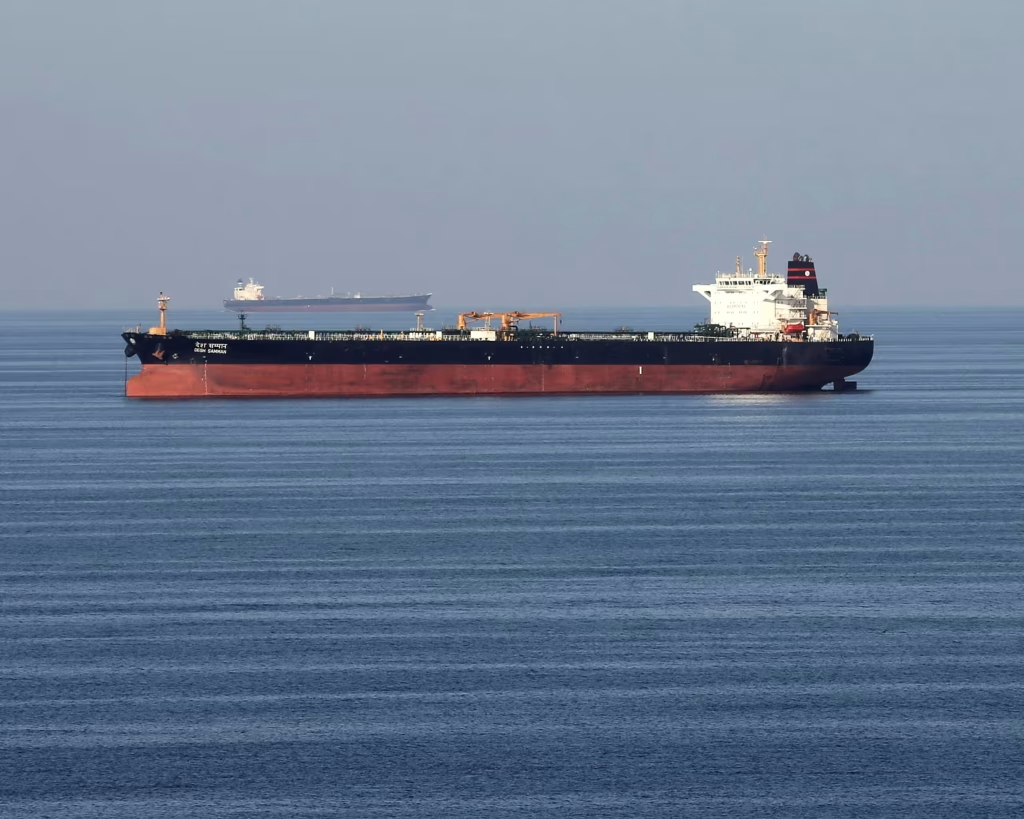
Global oil prices climbed towards $100 a barrel on Monday as escalating military tensions between the United States and Iran disrupted crude shipments through the strategically important Strait of Hormuz.
Brent crude, the international benchmark, rose to around $97 a barrel during trading on Monday after earlier reaching $97.93, its highest level since July 24. US West Texas Intermediate crude also traded above $92 a barrel as markets reacted to growing concerns over global energy supplies.
The latest price increase followed a series of military confrontations involving US and Iranian forces and vessels operating around the Strait of Hormuz, one of the world’s most important energy routes.
Reuters reported that US forces struck three Iranian oil tankers on Saturday, while Iran’s Islamic Revolutionary Guard Corps said it had targeted several vessels in retaliation.

READ RELATED STORY
Oil Prices Hit Six-Week High as Middle East Tensions Rise
US ‘to take over Venezuela’s oil for 100 years’ under Trump deal
Oil nears $100, raising fresh fuel price fears
The confrontation has significantly reduced tanker traffic through the waterway, raising fears that a prolonged disruption could restrict the movement of crude oil and other petroleum products to international markets.
The Strait of Hormuz, located between Iran and Oman, is a critical passage for global energy supplies. Large quantities of oil and liquefied natural gas normally pass through the waterway every day, making any prolonged interruption a major concern for governments, energy companies and consumers.
Reuters reported that tanker traffic through the strait has fallen sharply, with shipping companies becoming increasingly cautious about sending vessels through the area amid the heightened security risks.
The disruption is already affecting fuel markets. In the United States, gasoline prices reached a record Labor Day average of $4.14 per gallon, while diesel prices rose to a record average of $5.85 per gallon, according to Associated Press reporting.
Higher energy prices could also increase inflationary pressure globally. Economists and investors are closely watching developments because a sustained rise in oil prices could raise transportation and production costs, potentially slowing economic growth while making it more difficult for central banks to control inflation.
The Organisation of the Petroleum Exporting Countries and its allies, known collectively as OPEC+, has maintained its current production policy for October. The decision means the group is not immediately adding extra supplies to compensate for the disruption around the Gulf.
Analysts have warned that crude prices could rise above $100 a barrel if the Strait of Hormuz remains severely restricted for an extended period.
Iran has also indicated plans to establish a new restricted maritime zone in the Gulf, adding to concerns among shipping operators over the safety and movement of commercial vessels.
The developments have placed renewed attention on the vulnerability of the global energy market to geopolitical conflicts. While alternative routes and strategic oil reserves could provide some relief, analysts say they may not fully compensate for a prolonged disruption of such a major shipping corridor.
For consumers, a sustained increase in crude prices could translate into higher petrol, diesel, transportation and production costs in countries that depend heavily on imported energy.
With tensions between Washington and Tehran continuing to escalate, markets are expected to remain highly sensitive to developments around the Strait of Hormuz in the coming days.