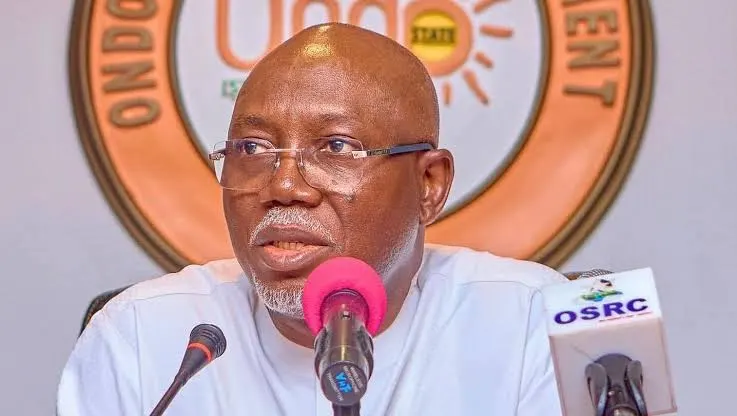
On Thursday, August 20, 2026, the state governor, Lucky Aiyedatiwa, appointed 90 Senior Special Assistants and 910 Special Assistants, as well as one commissioner and three special advisers.
So we dug into the appointments: What are these aides expected to do? What has the state already put in place for some of these appointments to click? What could all of this mean for Ondo’s resources?
In March 2026, Aiyedatiwa sacked all the Senior Special Assistants and Special Assistants in his administration. The reason? His government said it was part of an effort to improve “efficiency and deepen service delivery.”
At the same time, the governor announced plans to appoint about 1,000 new aides from the state’s 203 wards across its 18 Local Government areas. Five months later, the appointments arrived.


The government says the appointments are meant to “strengthen governance and improve service delivery.” But what exactly will 1,000 new political aides do that the previous ones couldn’t?
The government said the new appointments span different responsibilities. These responsibilities cut across youth empowerment and job creation, students’ affairs, scholarships, forestry, oil and gas, grassroots mobilisation, public engagement, photography, volunteer services, and community engagement. There are also three special advisers responsible for environment, rural and community development, and transport.
Some of these roles sound important. But then, we are curious to know what the state’s ministries, departments and agencies are doing. For instance, the state already has an education ministry and a scholarship structure.
The same concern applies to public engagement, youth empowerment, forestry, and several other portfolios. If the point of all this is to make the government more efficient, then transparency should be central: Nigerians should see what these new positions add to the existing system and who the people tasked with these positions are.
The Ondo government has not publicly disclosed the total annual cost of the 1,000 appointments. However, a recent report estimated that the appointments could cost the state more than ₦3.7 billion annually, based on applicable remuneration for the positions.
That figure is a reported estimate, not an official figure from the state government. But even without accepting the estimate as gospel, it prompts us to wonder just how much Ondo wants to spend on these appointments, and what the taxpayers will get in return.
Meanwhile, according to Nigeria’s 2007 remuneration schedule of the Revenue Mobilisation, Allocation and Fiscal Commission (RMAFC), the category listed as “Special Adviser/Member of (State) Commissions” had a total annual remuneration of ₦4,562,901.50, translating to ₦380,241.76 per month.
The same RMAFC schedule also lists “Special Adviser to include other categories like Speech Writers,” with a total annual remuneration of ₦7,091,493.75, or ₦590,957.81 monthly.
Now, let’s do the maths. If the state were to use the RMAFC figure of ₦380,241.76 monthly for Special Advisers as a benchmark for paying 1,000 aides, that would amount to about ₦380.2 million every month, or ₦4.56 billion a year.
And using the second category, which is capped at ₦590,957.81 monthly, the bill would rise to about ₦591 million monthly, or ₦7.09 billion annually.
So either way, and depending on which RMAFC category applies, the remuneration of 1,000 aides could amount to between roughly ₦4.56 billion and ₦7.09 billion a year.
Nobody needs to tell Nigerians that this is just huge.
We tracked back a bit and found that in 2024, BusinessDay investigated the cost of 344 political aides appointed by the governor and estimated their collective annual basic salaries at about ₦1.57 billion per year, excluding several allowances. At the time, Ondo was also dealing with an estimated 240,000 out-of-school children. Two years later, the number of aides has increased significantly.
So what exactly is the governor looking for in these appointments to justify the expenses when there are 240,000 out-of-school children?
The Big Daily is your weekday shortcut to the biggest news shaping Nigeria. We cut through the noise, connect the dots, and explain why the news actually matters, all in one quick read.
That’s another interesting detail about these appointments. When Aiyedatiwa first announced the plan in March, his government said the 1,000 new aides would be drawn from the state’s 203 wards.
That means roughly five people for every ward, on average. This could either primarily be an administrative structure or a grassroots political network. It would be hard not to assume the latter. But the government needs to explain why it needs such a large ward-level political structure and what measurable work each aide is expected to do.
After all, if these people are being paid from public funds, their responsibilities should go beyond helping the governor maintain political connections.
Ondo’s own education documents identify significant challenges in basic education, while previous reporting by BusinessDay cited 240,000 out-of-school children in the state.
The state’s Costed Recruitment and Deployment Plan identifies a gap of 8,083 teachers in basic education and estimates a total budget of about ₦3.94 billion for teacher recruitment, training, welfare and monitoring of the 8083 teachers.
That is worth keeping in mind when looking at the potential cost of the new political appointments. The reported ₦3.7 billion estimate for the 1,000 aides is already close to the entire estimated cost of that teacher recruitment and deployment plan. And if the higher RMAFC remuneration figure applies, the annual salary bill for 1,000 aides could be a lot higher.
The state also has challenges around healthcare, employment, infrastructure, and access to basic services.
₦3.7 billion is a lot of public money, and Ondo has plenty of problems that could use it. These are not problems that can be solved by simply appointing more people.
We did some maths to see what it could actually buy. Using the state government’s own estimated cost of about ₦3.94 billion for the recruitment, training, welfare and monitoring of 8,083 teachers, the ₦3.7 billion could fund almost the entire teacher recruitment plan.
In 2025, Osun State awarded a contract for a brand-new Toyota Hiace 18-seater bus for ₦73.83 million. At that price, ₦1.48 billion of the ₦3.7 billion could buy 20 buses to ease movement for civil service officials.
In July 2026, Sokoto State awarded a contract for 30 Toyota Hilux vehicles for security agencies at ₦1.59 billion, putting the cost of each vehicle at about ₦53 million. Another ₦1.06 billion could buy 20 of them to support security agencies in Ondo.
According to a 2025 report on public school construction in Abia State, three blocks of six classrooms cost ₦204.2 million, or about ₦68.1 million per block. The remaining ₦1.16 billion could build about 17 six-classroom blocks.
For roughly ₦3.7 billion, Ondo could build 17 classrooms, strengthen security with 20 vehicles, and provide 20 buses to improve transportation for its civil servants. Basically, the money could touch three major parts of the citizens’ lives: education, security, and transportation.
Ondo has 1,000 new aides now. What it needs next is proof that they are worth it. If these appointments are really about improving governance and service delivery, residents should feel the difference in their schools, hospitals, roads, jobs, and communities. Because taxpayers are paying for a government that works, all 1,000 of them better get to work.
What do you think about this?
Drop your opinion in the comment section.
FOLLOW US & Share this with someone who needs to see this.